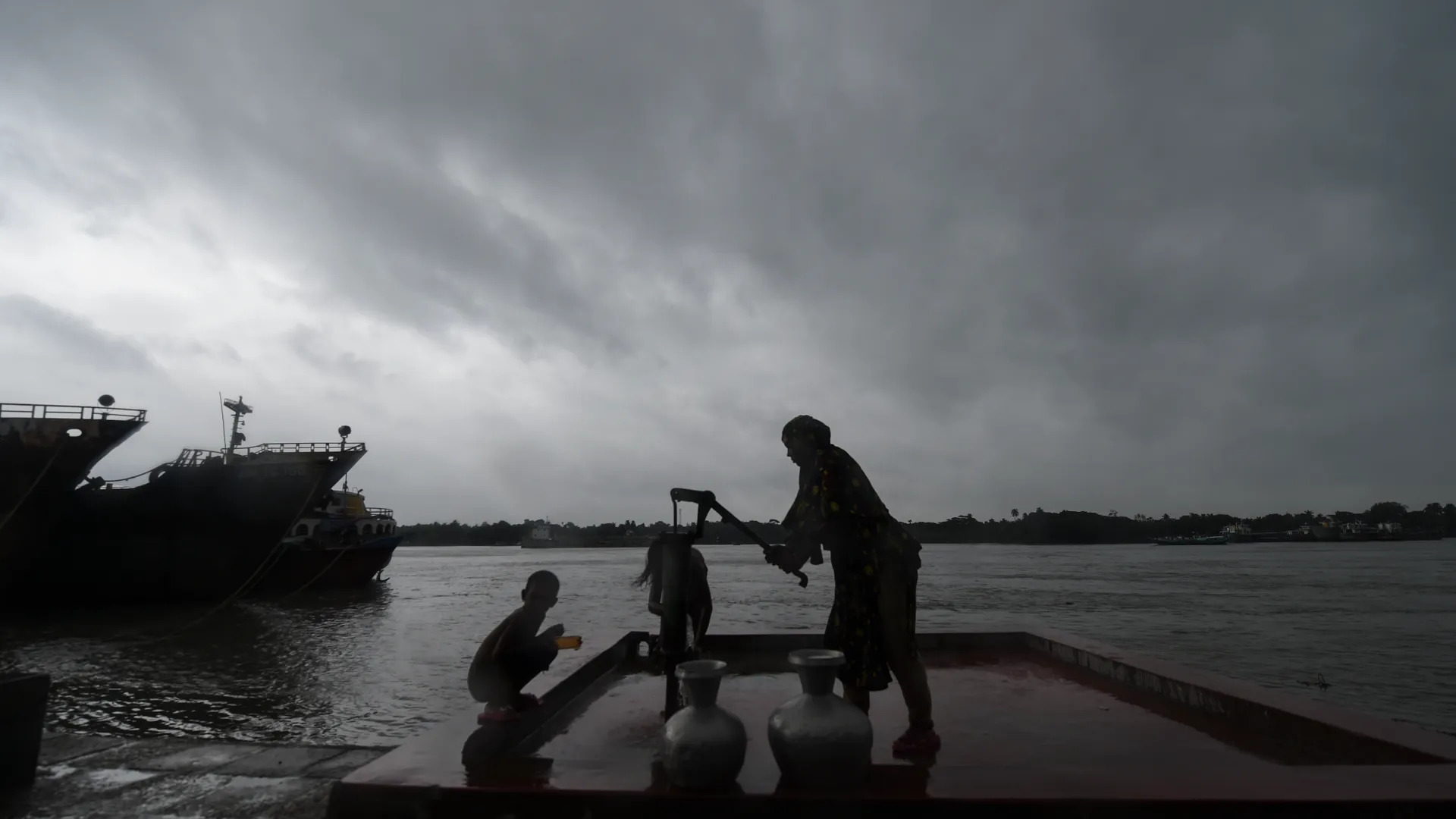
Climate change is worsening daily life for coastal communities in Bangladesh, where rising seas and stronger storms are destroying freshwater sources. Government experts say climate change is pushing saltwater deep inland and turning wells and lakes unsafe for millions of people. As a result, families in low-lying areas now struggle each day to find enough clean water for drinking and cooking.
Cyclones and floods have made the situation worse over the years. Cyclone Aila in 2009 broke embankments and pushed saltwater far inland, damaging homes and farms. Since then, the region has faced repeated water shortages as fertile land has cracked under salt layers. Many residents now live between land and sea, constantly adapting to new environmental dangers.
READ MORE:High-level military talks boost Pakistan–Bangladesh defence outreach
Life in Khulna and Satkhira has become increasingly unstable. Many families build homes on bamboo stilts to escape tidal floods. Children grow up bathing in salty yellow water, while frequent river erosion destroys homes and schools. Because of these harsh conditions, many men migrate for work and leave their families behind to face climate challenges alone.
Women and children bear much of the burden. They walk long distances across dry, cracked soil to collect water from distant ponds. Many rely on rainwater and store it in tanks provided by charities. Communities carefully ration every drop to survive until the next monsoon season arrives.
READ MORE:Bangladesh to receive 100,000 tonnes of Pakistani rice
The struggle for clean water has become a daily test of strength for millions affected by climate change. Residents continue fighting to protect their future, even as climate change keeps reshaping their land, their routines, and their hope for stability.