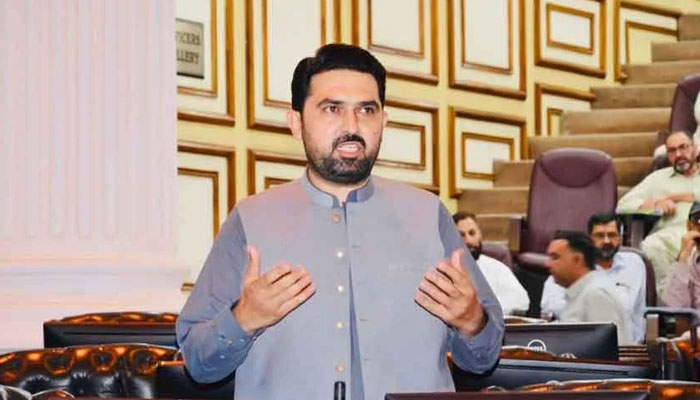
Chief Minister of Khyber Pakhtunkhwa, Sohail Afridi, has said that terrorism can only end through joint and open decisions. He stressed that leaders must step out of closed rooms and work together for lasting peace. Afridi said his government’s goal is to ensure peace through unity and transparency. He was addressing a peace jirga at the Khyber Pakhtunkhwa Assembly on Wednesday.
Afridi said the jirga aimed to find a sustainable solution to terrorism. He added that true peace will come only when terrorism is fully eliminated. According to him, long-term planning is needed instead of short-term security fixes. “We must make collective decisions with all political leaders,” he said. “Closed-door decisions have never brought real results.”
Read more: FIR filed against KP CM Sohail Afridi over alleged anti-state remarks
The chief minister reminded everyone that all parties and citizens have suffered from terrorism. He noted that bomb blasts do not target any specific group. “A bomb does not see if the victim is from PTI or PPP,” Afridi said. “Politicians, civilians, and security forces have all made sacrifices.” He recalled that Pakistan achieved peace in 2018 through unity, but now terrorism is once again resurfacing.
Afridi also criticized the federal government for withholding the province’s NFC share of 400 billion rupees. He said Khyber Pakhtunkhwa has paid the highest price in the fight against terrorism. “If we get even one percent because of terrorism, no one should question it,” he added. Afridi emphasized that peace is a shared goal despite political differences.
Read more: KP CM seeks to reform 3-MPO, 16-MPO, Section 144
The chief minister welcomed the ongoing Pakistan-Afghanistan peace talks and called war the last option. He said his government supports dialogue and inclusion. Afridi urged a policy shift from secret decision-making to open collaboration among politicians, the military, and other stakeholders. He concluded that only a joint, transparent policy can permanently defeat terrorism in Khyber Pakhtunkhwa.