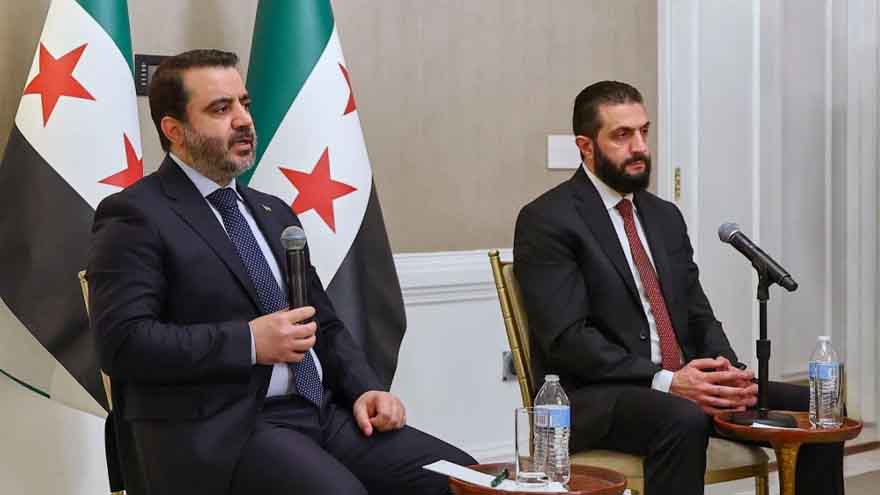
BEIRUT – Ahmad al-Sharaa, the former Syrian rebel leader who ousted Bashar Assad last December, will become the first Syrian president to visit Washington since the country’s independence in 1946. Al-Sharaa, who had previously fought alongside al-Qaida militants in Iraq but later severed ties, arrived in the U.S. on Saturday ahead of Monday’s meeting with President Donald Trump.
During the visit, al-Sharaa is expected to formally join the U.S.-led coalition against the Islamic State (IS) group and push for a full repeal of the Caesar Act, which imposed sweeping sanctions on Assad’s regime over human rights abuses. While the Caesar sanctions are currently waived by presidential order, permanent repeal requires congressional approval. Syrian officials emphasized that lifting sanctions would support economic recovery and investment growth.
Read More: Syrian president visits US after being removed from terrorism blacklist
Trump expressed optimism ahead of the meeting, praising al-Sharaa’s efforts and noting that he had already moved to lift certain sanctions. The U.N. Security Council recently lifted sanctions from al-Sharaa and his interior minister, and the U.S. removed them from its “specially designated global terrorist” list. Senators in the U.S. are negotiating conditions for a full repeal, including protections for religious and ethnic minorities and removing foreign fighters from security institutions.
Skeptics remain cautious due to past sectarian violence, in which pro-government Sunni gunmen targeted Alawite and Druze minorities. Advocates argue that retaining Caesar sanctions against the new authorities could deter international investment and reconstruction efforts. U.S. officials said Syria’s formal entry into the coalition would enable closer military cooperation to counter remaining IS cells.
Read More: UN lifts sanctions on Syrian president ahead of US visit
Al-Sharaa, formerly known as Abu Mohammed al-Golani, previously led Hayat Tahrir al-Sham in northwestern Syria, cracking down on IS cells while rival groups vied for control. Since assuming power, he has pursued diplomatic engagement with the U.S., including discussions on merging the Syrian Democratic Forces with the new Syrian army, though implementation has faced challenges.