
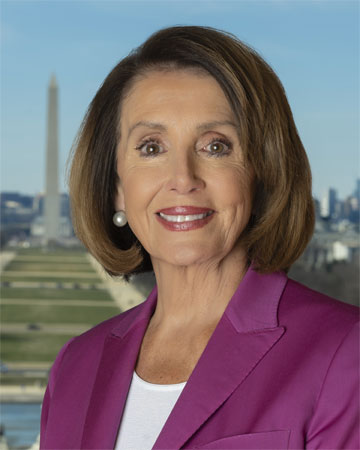
 Former US House Speaker Nancy Pelosi’s announcement that she will not seek re-election, ending a congressional career that began in 1987, marks the close of a historic chapter. Pelosi, 85, the first and only woman to serve as Speaker of the House, will retire at the end of her term in January 2027. Renowned as one of the most powerful Democratic leaders in modern US history, Pelosi’s legacy spans landmark domestic legislation and assertive foreign policy stances. Among the international relationships she helped shape was the US-Pakistan alliance, where Pelosi balanced partnership with pointed expectations. As she bids farewell after nearly four decades, observers are reflecting on how Pelosi navigated ties with Pakistan through tumultuous times–from the post-9/11 War on Terror to Pakistan’s return to civilian rule and beyond.
In January 2007, just weeks after becoming Speaker, she led a congressional delegation to Islamabad to meet President Pervez Musharraf. A US diplomatic cable later revealed Pelosi “noted that this was her first foreign travel in her new position,” underscoring the importance Congress places on the US-Pakistan relationship. At the time, Pakistan was a key US ally against Al-Qaeda, receiving billions in aid after 9/11 (about $10 billion by late 2007 alone). Yet Pelosi did not shy from scrutiny. When former Prime Minister Benazir Bhutto was assassinated in December 2007, Pelosi sharply questioned Islamabad’s commitment to fighting terrorism and demanded democratic accountability. Citing the 9/11 Commission law that conditions US assistance on Pakistan’s cooperation against terror, Pelosi warned that Musharraf’s refusal of outside help to investigate Bhutto’s murder “raise[d] troubling questions about whether those conditions are being met.” “These questions must be addressed by the Bush Administration before any additional US aid is sent to the Musharraf government,” Pelosi urged, calling for an international investigation into the “despicable” crime and pressing Pakistan to ensure upcoming elections were “free and fair.”
Pelosi’s stance during the Musharraf era mixed firm public pressure with continued engagement. Even as she pushed Pakistan’s military ruler to restore civilian rule, she affirmed the broader US-Pakistan partnership against extremist threats. Under Pelosi’s Democratic leadership in Congress, US aid began coming with more strings attached. For example, the House’s 2017 defence authorisation bill (NDAA) – passed by unanimous vote – blocked $450 million in military aid to Pakistan unless the Pentagon certified Islamabad was actively targeting the Haqqani network and not harbouring militants. Lawmakers added requirements that Pakistan arrest Haqqani leaders and refrain from misusing US-supplied arms against domestic dissidents. They even inserted a provision honouring Dr Shakil Afridi (who helped locate Osama bin Laden) as an “international hero” and urging Pakistan to release him from prison. While these measures were bipartisan, Pelosi supported the tougher line to ensure US funds bolstered counterterror goals and democratic values – consistent with her earlier warnings that “conditions” must be met.
Throughout her career, Pelosi often framed US relations with countries like Pakistan around democratic principles. After Pakistan’s turbulent 2007-08 political crisis, she voiced solidarity with the Pakistani people’s “struggle for democracy” and emphasised that America “must stand with the Pakistani people” in pursuing free elections. Even when Pakistan was a frontline ally, Pelosi did not overlook issues like minority rights or political freedom. In 2016, for instance, she condemned a terrorist bombing in Lahore-an Easter Sunday park attack that killed nearly 70 people, many of them women and children-as an abhorrent act of terror, while reaffirming US support for Pakistan’s fight against extremism. And as Pakistan grappled with militancy, Pelosi consistently urged that counterterrorism not come at the expense of the rule of law.
Pelosi’s public comments frequently balanced security cooperation with reminders about Pakistan’s own responsibilities. That dual message – partnership, but with accountability – became a hallmark of her statements on Pakistan across different administrations in Islamabad. Whether the interlocutor was a military ruler or an elected prime minister, Pelosi kept a steady focus on terrorism, democracy, and regional stability as the pillars of engagement.
By the time Prime Minister Imran Khan visited Washington in 2019, the tone from Speaker Pelosi was one of cautious optimism and warmth. Hosting Khan on Capitol Hill, Pelosi noted she first learned about Pakistan as a college student studying the country’s founder, Muhammad Ali Jinnah–a personal anecdote reflecting long-standing interest. Pelosi emphasised, “The United States values the critical relationship – the partnership – between the United States and Pakistan,” in pursuing peace in Afghanistan and efforts to “advance enduring peace in the region.” She outlined an agenda to “increase regional security and stability,” and “strengthen the vital ties between our economies, people, and nations.” Pelosi also highlighted the US immigrant community, saying America is “very blessed by many Pakistanis here” and “invigorated” by their contributions in fields from culture to healthcare.
As Nancy Pelosi exits the political stage, she leaves behind a nuanced record on Pakistan. On one hand, she was a champion of the US-Pakistan alliance, repeatedly calling Pakistan an “important partner” in global security and backing substantial US aid for Pakistan’s economic and military needs. She recognised Pakistan’s sacrifices – American officials often noted the 70,000 Pakistani lives lost in the fight against terrorism – and encouraged continued cooperation to defeat extremist groups. On the other hand, Pelosi remained one of Washington’s most consistent voices, insisting that Pakistan live up to its promises. From conditioning aid on anti-terror performance and democratic reforms to raising tough questions after political tragedies, she viewed accountability as integral to the alliance. Indeed, Pelosi’s own words perhaps best capture this balance. “We look forward to augmenting our counterterrorism [cooperation] and advancing enduring peace in the region,” she said in 2019, even as she had earlier cautioned that US aid requires that “those conditions are being met” by Islamabad.
Her departure comes as Washington again redefines its posture toward South Asia. President Trump’s renewed overtures to Islamabad, including unusually warm praise for Army Chief General Asim Munir as “a great, great guy,” mark a curious phase in bilateral diplomacy. Whether that warmth matures into substance will test both capitals anew.