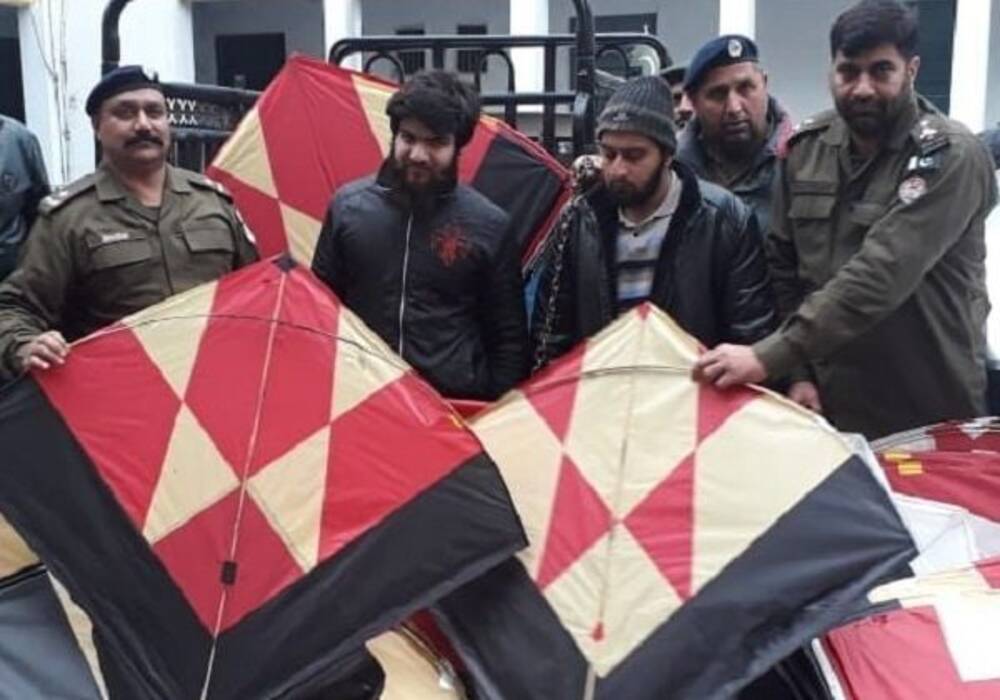
In a decisive move against illegal kite trading, Lahore’s Shafiqabad police have seized over 250 colourful kites during a crackdown on a citywide smuggling operation. The accused, identified as Azhar Mahmood, was reportedly transporting the banned kites in white sacks through local transport networks to various parts of the city. Police officials confirmed that Mahmood had been running an illegal supply chain for months, ignoring repeated government warnings and the long-standing provincial ban on kite flying and sales.
Superintendent of Police (SP) City Bilal Ahmed said the operation was part of a broader campaign to curb the dangerous practice that has claimed multiple lives in the past. Commending his team’s swift response, SP Ahmed praised SHO Shafiqabad and Sub-Inspector Sohail for their effective coordination in intercepting the consignment. He reiterated that the complete ban on kite flying, purchasing and selling remains in effect across Punjab, adding that violators would face strict legal consequences.
Read more : /improving-immunization-programs-in-pakistan/
A case has been registered against the suspect, and investigations are ongoing to identify other members involved in the network. While the crackdown highlights the authorities’ zero-tolerance approach, it also reignites debate over whether the ban unfairly targets cultural heritage events like Basant. Critics argue that instead of suppressing traditions, the government should focus on ensuring safe practices that prevent accidents and promote controlled festivities.
Meanwhile, the Punjab government recently discussed the possibility of reviving a “Safe Basant” during next year’s Jashan-e-Baharan. Officials from the Walled City of Lahore Authority (WCLA) and the Home Department agreed that nylon, metal, or chemically coated kite strings would remain strictly prohibited. Furthermore, all kite manufacturers and vendors would need to register with deputy commissioners, with any violations leading to registration cancellation, fines or imprisonment.
Read more : /pakistani-forces-shoot-down-indian-spy-drone/
The province-wide kite-flying ban, first imposed in 2005 after several fatal incidents caused by sharp or metallic strings, was strengthened earlier this year. Under current laws, offenders face prison terms of up to five years and fines reaching Rs2 million. Kite and string manufacturers found breaching the law could face even harsher penalties, including imprisonment of up to seven years and fines as high as Rs5 million, reaffirming the government’s resolve to ensure public safety above all.