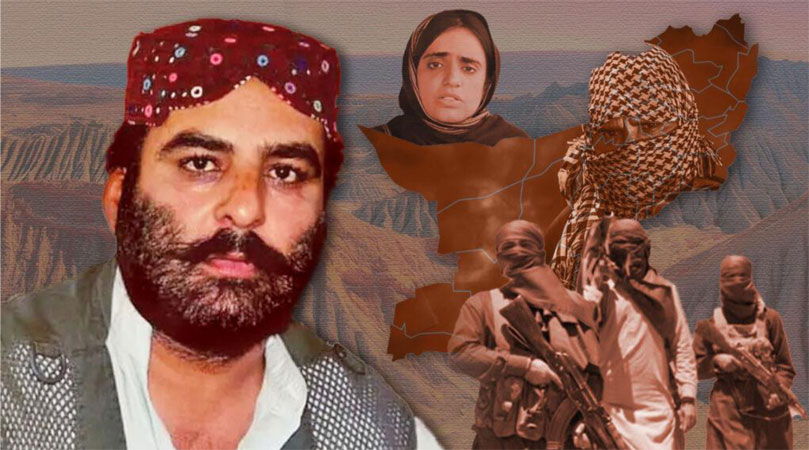
 The televised confessions of Sarfraz Bangalzai and Gulzar Imam Shambay, two former commanders of proscribed Baloch militant groups, have sparked a national debate on the deceptive machinery that fuels insurgency in Balochistan. Their revelations offered a rare, firsthand glimpse into the nexus between violent separatist outfits and the propaganda fronts that manipulate public emotions under the guise of “rights activism.” Both men, once deeply entrenched in the insurgency, now speak with the clarity of hindsight-exposing how young Baloch lives were sacrificed in the name of a “freedom” that never existed. Their accounts underscore a harsh reality: Balochistan’ s unrest has long been sustained not by local grievances alone, but by a network of foreign sponsors, media manipulators, and ideological brokers working to destabilize Pakistan from within.
BYC-BLA Nexus
According to Sarfraz Bangalzai, former commander of the United Baloch Army (UBA), the Balochistan Liberation Army (BLA), Baloch Liberation Front (BLF), and Baloch Yakjehti Committee (BYC) are not separate entities-they are different faces of a single structure of violence. While the BLA and BLF execute militant operations, BYC serves as their “political front,” mobilizing youth through rallies and sit-ins, especially on the emotive issue of “missing persons.” Bangalzai described BYC as the “soft facade” of terrorism-an organization that masquerades as a social movement but functions as a recruiting and ideological wing for outlawed groups. Its leadership has mastered the art of manipulating public sympathy, particularly on digital platforms.
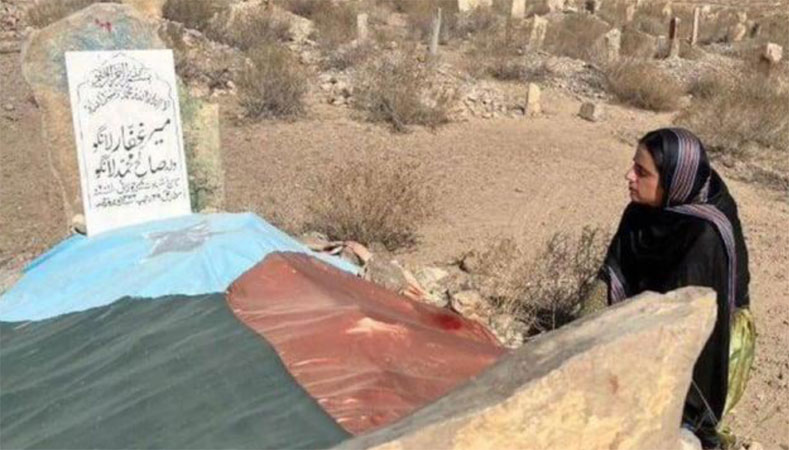
He pointed out that Dr. Mahrang Baloch, one of the most prominent BYC figures, carries an ideological lineage rooted in militancy. Her father, Ghaffar Langove, was a BLA commander killed during internal rifts, reportedly instigated by Hyrbyar Marri. Langove’s grave remains wrapped in the BLA’s flag-a potent symbol of continuity between armed rebellion and modern-day “activism.” This exposes the “familial and ideological thread” connecting BYC to banned groups, proving that the current protests are not independent civic struggles but rebranded extensions of a militant legacy.
RAW & the Digital Propaganda Network
Bangalzai’s disclosures also reaffirmed Pakistan’s longstanding allegations about foreign sponsorship of terrorism in Balochistan. He stated that India’s Research and Analysis Wing (RAW) directly funds, trains, and coordinates anti-Pakistan operations through its assets in Afghanistan and Europe.
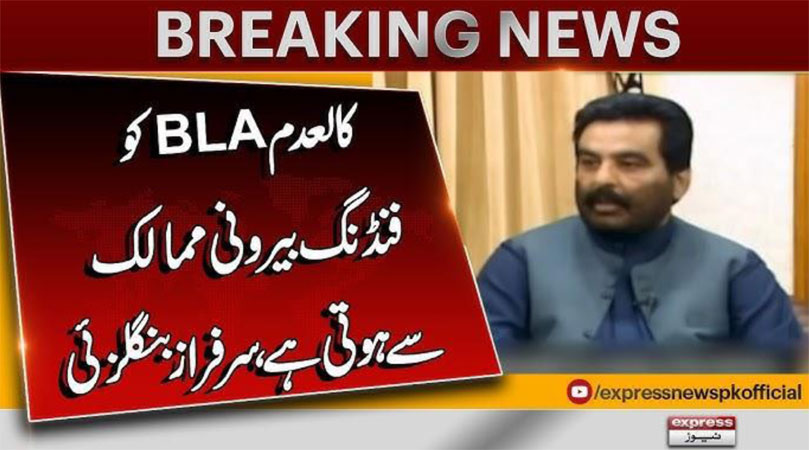
He revealed that propaganda outlets such as The Balochistan Post, Sangar, and Zrumbash operate as digital arms of this network, producing anti-state narratives, glorifying militants, and spreading misinformation to radicalize youth. These online portals, Bangalzai said, are not journalistic initiatives-they are psychological warfare tools, amplifying India’s agenda while masquerading as human rights platforms. Bangalzai also highlighted how Baloch National Movement (BNM) activists in Europe exploit asylum laws by posing as “political refugees” while actually orchestrating propaganda campaigns against Pakistan. Under the leadership of Dr. Naseem Baloch, these individuals enjoy the safety and luxury of the West while urging impoverished youth in Balochistan to die in the name of separatism.
Betrayal of the Baloch

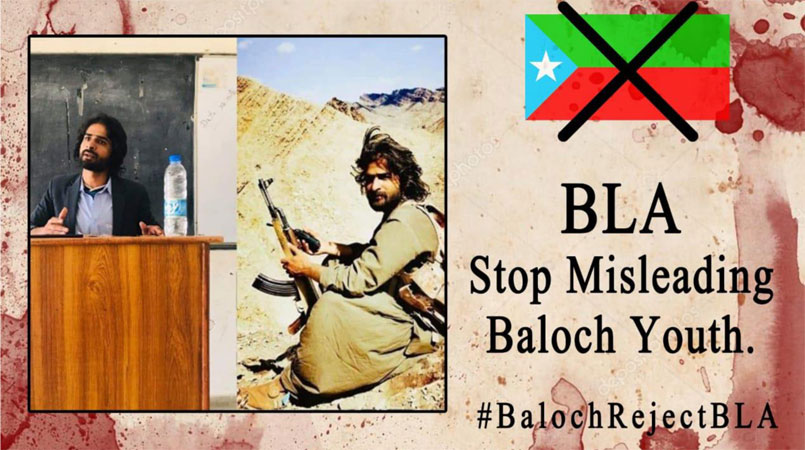
Youth Bangalzai admitted that Baloch youth have been the “greatest victims” of a long-standing deception. Lured by slogans of freedom, they were sent into battles that served only the ambitions of exiled leaders. “We were told we were fighting for our people,” he confessed, “but we were only fighting for their politics.” He pointed out that Dr. Allah Nazar, despite vowing never to abandon the mountains, now lives comfortably abroad, leaving behind a generation of orphans and widows. According to Bangalzai, even many “missing persons” cases are the result of internal rivalries and assassinations among terrorist factions-later falsely blamed on Pakistani security forces to sustain the narrative of state oppression. Bangalzai’s message was direct and powerful: “The Baloch youth must learn from their mistakes. The path of guns only leads to graves.”
Breaking the Cycle of Violence
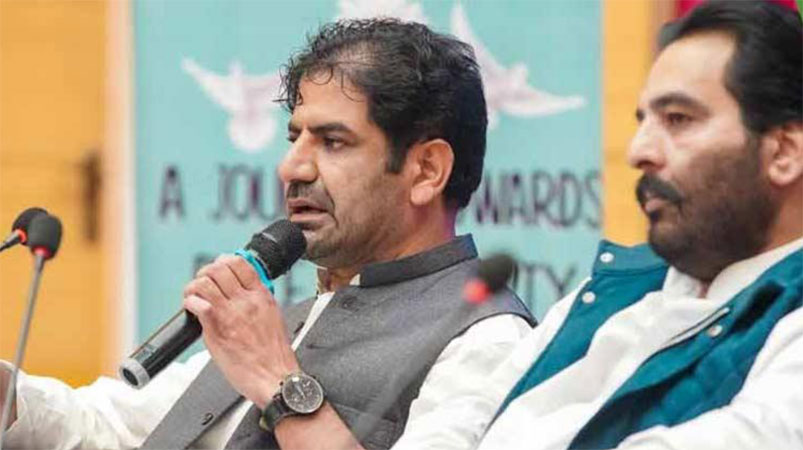
Gulzar Imam Shambay, former commander of the Baloch National Army (BNA), delivered an equally powerful testimony earlier. Once among the most feared militant leaders, Shambay has now reconciled with the state, describing armed struggle as “a failed and bloody experiment.”

In his interview with the private news channel, Shambay reflected on how decades of militancy were sustained by myths of deprivation and revenge, while the real issues-poverty, education, and development-remained unaddressed. He admitted that insurgent leaders deliberately weaponized cultural pride and family honor to keep violence alive, turning legitimate grievances into instruments of destruction. “Armed actions gave nothing to the Baloch people except bloodshed, displacement, and despair,” Shambay confessed. “The only way forward is through dialogue and political engagement, not through guns or foreign sponsorship.”
Continuity of Extremism Under New Faces
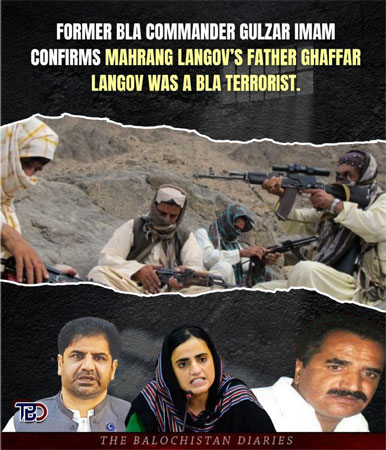
Shambay drew attention to how individuals like Dr. Mahrang Baloch are being presented as “humanitarian activists” while continuing the legacy of their militant forebears. He recalled that her father, Mir Ghaffar Langove, was a close associate of Sardar Khair Bakhsh Marri, and played a central role in spreading terror across Kalat, Mastung, and Turbat.
This legacy of bloodshed is now being revived under new names and slogans. Sit-ins in the name of ‘missing persons’ are not political struggles-they are the continuation of the same separatist narrative. He also cited Ataullah Mengal’s infamous remark- “Even if help has to be taken from the devil against Pakistan, it is justified”-as the ideological root of this extremism. According to Shambay, this willingness to seek foreign aid at any cost reflects the moral bankruptcy of separatist leadership, which values personal power over the well-being of the Baloch people.
Towards Reconciliation and Reintegration
Both Bangalzai and Shambay now advocate peace, rehabilitation, and reintegration-urging the state to expand programs that offer former militants a second chance at life. Bangalzai appealed for greater awareness campaigns against digital radicalization, while Shambay said, “Across the world, resistance groups eventually choose reconciliation. We too abandoned terrorism and returned to political struggle. Real objectives can only be achieved through politics, not militancy.”

Their transformation from militants to advocates of peace represents a turning point in Balochistan’s counterterror narrative. This shift among former insurgent leaders underscores a broader realization: that reconciliation, not rebellion, is the true path to Baloch prosperity.
The Strategic Takeaway
The twin confessions of Bangalzai and Shambay have unmasked the anatomy of insurgency in Balochistan. Foreign funding and media manipulation remain the lifelines of separatism in Balochistan, sustaining unrest through misinformation and external agendas. Organizations like the BYC and similar fronts act as soft shields for banned outfits, providing them with political cover and legitimacy under the guise of activism. These groups thrive on the emotional exploitation of youth, using grievances and identity politics to fuel radical recruitment and prolong violence. To dismantle this network, effective border control with Afghanistan and Iran is essential to curb the flow of arms, financing, and cross border infiltration that sustain militant operations. At the same time, comprehensive rehabilitation and reintegration programs must be strengthened, turning former militants into messengers of peace and demonstrating Pakistan’s enduring commitment to reconciliation and stability in the region.
The testimonies of Sarfraz Bangalzai and Gulzar Imam Shambay are not just confessions-they are warnings. Both men were once part of a machine that fed on the pain of their own people. Now, by exposing that machinery, they have given Pakistan a chance to dismantle it for good. The lesson is unmistakable: Terrorism in Balochistan is not a movement for rights-it is a business of manipulation. Only by rejecting propaganda, embracing peace, and trusting in dialogue can the Baloch people secure the justice and prosperity they deserve.