In 1999, I wrote that the plunderers, invaders, squanderers, and looters of South Asia who poured through the Khyber and Bolan passes left their marks on the DNA of this land.
At the time, I did not yet have the genetic profiles we now access through AI. Today, we can trace this story across 70,000 years—from the first waves of Indo-Asiatic peoples, to the Steppe migrations around 2000 BCE, to later layers of Greeks, Scythians, Kushans, Huns, Afghans, Turks, and Mughals. Each left footprints in our bloodlines.
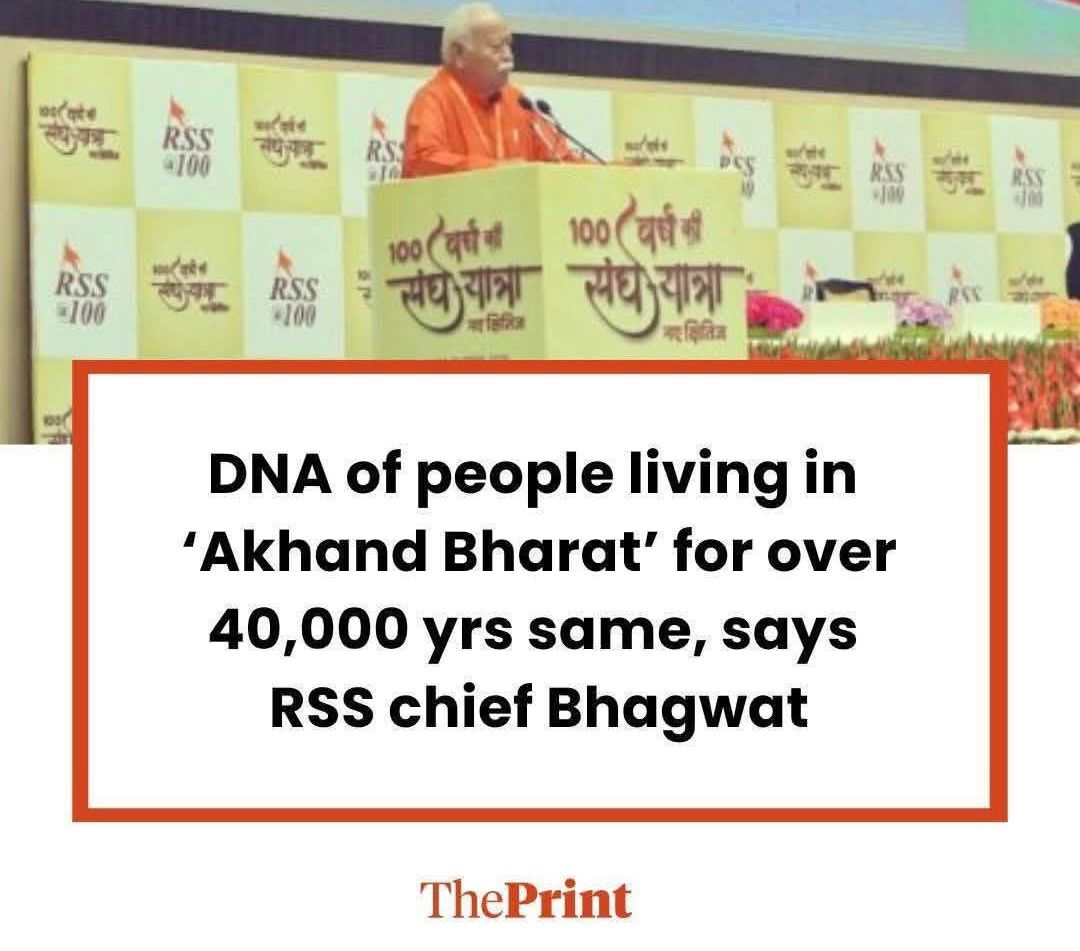
That is why Mohan Bhagwat’s claim that Indians have had the “same DNA for 40,000 years” is not merely wrong, it is dangerous. It replaces science with ideology and history with myth.
Hinduism is not 40,000 years old
The claim collapses on its face. Hinduism itself is nowhere near that old. The Rig Veda dates back about 3,000–3,500 years. The Mahabharata and Bhagavad Gita were composed between 400 BCE and 200 CE. There is no writing in India 40,000 years ago—the Indus seals date only to 2600–1900 BCE, and the first deciphered script, Brahmi, appears in Ashoka’s edicts of the 3rd century BCE
The genetic record tells a different story
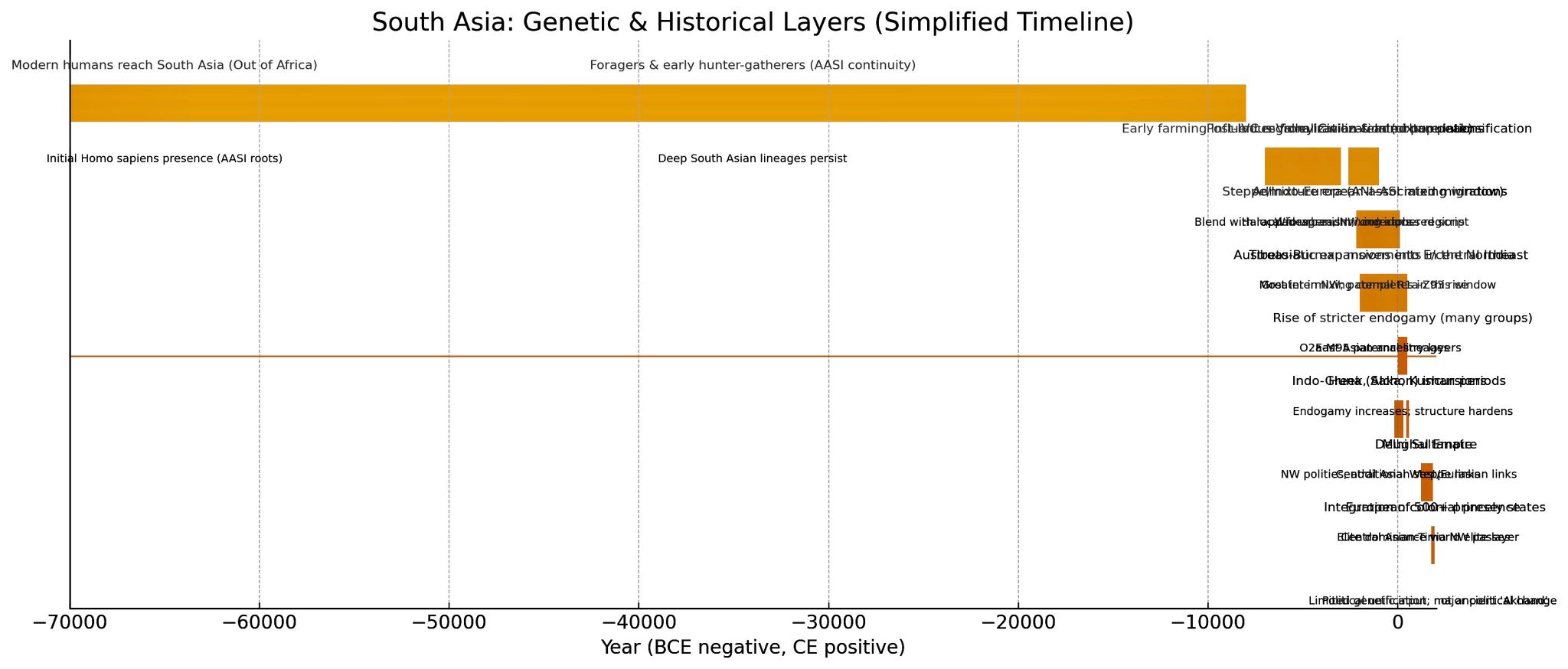
Modern science shows India is a mosaic, not a monolith. Northwestern Indo-European–speaking groups carry up to 30% Steppe ancestry, from migrations via the Khyber and Bolan passes around 2000–1500 BCE.
Southern Dravidian-speaking groups carry less.
Both are mixtures of ANI (Ancestral North Indians) and ASI (Ancestral South Indians).
Add to this Austroasiatic and Tibeto-Burman ancestries, and it becomes clear: India has never been one unchanging people.
Invasions left genetic marks
Male-biased signals in Y-DNA prove it. Steppe-derived R1a-Z93 lineages dominate in northern India, evidence of conquest and elite dominance. This perfectly matches the history of waves of plunderers, squanderers, and looters—Greeks, Scythians, Kushans, Huns, Afghans, Turks, Mughals—who entered through the northwest and left their genetic and cultural imprints.
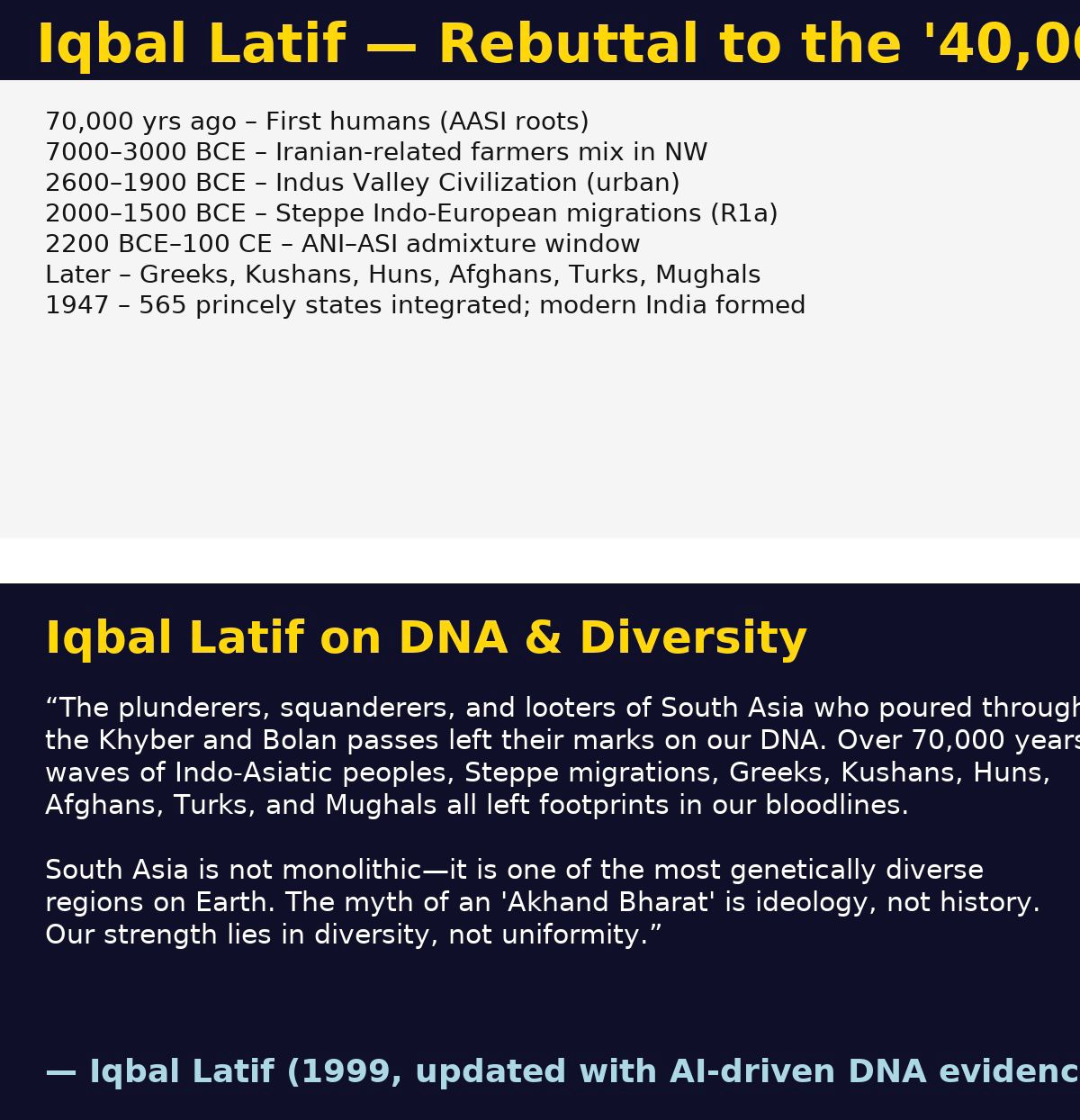
This is precisely what I argued in 1999: South Asia’s DNA carries the scars and signatures of centuries of incursions. Now, with AI-assisted analysis, we can trace it across millennia.
The myth of “Akhand Bharat”
Bhagwat’s claim dovetails with another falsehood: the fantasy of an eternal, unified “Akhand Bharat.” But history records a different truth. On the eve of independence in 1947, there were 565 princely states. India has always been politically fragmented, unified only temporarily under empires like the Mauryas or Mughals. There has never been a timeless civilizational unity stretching “from Rangoon to Samarqand.
Diversity is South Asia’s real strength
To claim otherwise is to radicalize thought—to insist that everyone must look alike, think alike, behave alike. That is the very opposite of critical thinking and skeptical inquiry.
The truth is richer: India and South Asia thrived because of diversity, not despite it.
From ANI–ASI mixtures that created the north–south gradient, to Austroasiatic and Tibeto-Burman infusions from the east, to elite invasions reshaping paternal lineages in the north— every layer deepened the mosaic.
The conclusion is clear
The claim that “our DNA has been the same for 40,000 years” is not science but ideology. It erases the complexity of who we are.
South Asia’s strength has always been diversity, not uniformity. To deny that truth is to step onto the dangerous road of radicalization.
Iqbal Latif is a writer and commentator who has long argued that South Asia’s real power lies in its plurality, not in myths of homogeneity.