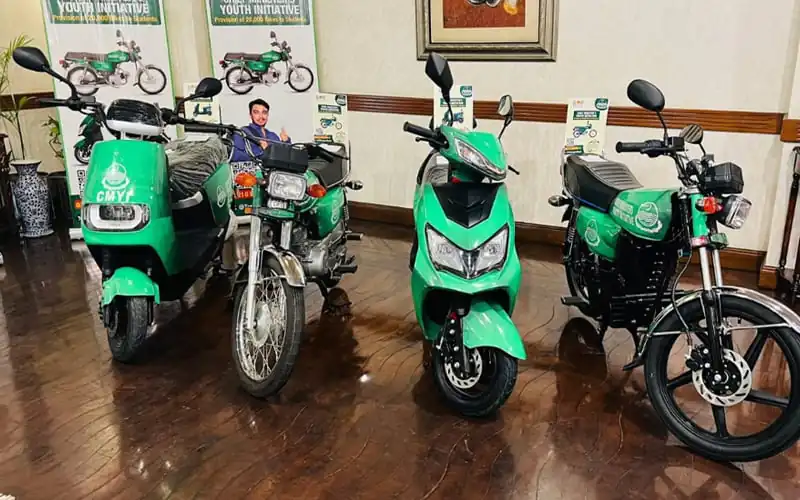
The Workers Welfare Board Sindh (WWBS) has announced new welfare measures for industrial workers, especially women and members of minority communities. As part of the Maarka-e-Haq and Independence Day celebrations, the board will provide electric scooters to improve mobility for eligible workers. Officials say this step aims to reduce transport costs, promote eco-friendly travel, and make commuting safer for female employees. The initiative reflects the government’s commitment to improving workers’ quality of life through practical and sustainable solutions. Distribution plans are expected to be finalised in the coming weeks.
Sindh Labour Secretary Rafiq Qureshi stated that the WWBS is also taking steps to strengthen its financial position to sustain such initiatives. To achieve this, the board will invest Rs3 billion in SECP-approved Shariah-compliant Sukuk Bonds. This investment is expected to generate steady income, enabling the organisation to expand its services and provide more benefits to workers in the future. Qureshi emphasised that financial stability is essential for delivering long-term welfare programs without delays or funding shortages.
The move is part of a broader effort to modernise support for industrial workers across Sindh. Authorities believe that shifting towards electric vehicles will not only cut fuel costs but also reduce environmental pollution in urban areas. Moreover, providing EV scooters to women workers is seen as a way to encourage female participation in the industrial workforce by addressing mobility challenges. Officials have said that priority will be given to those who face the greatest transportation difficulties.
WWBS representatives highlighted that the organisation has been consistently working to expand healthcare, education, and housing facilities for industrial workers. With the additional funds expected from Sukuk investments, these services will be upgraded to meet growing demand. The government hopes that such targeted initiatives will set an example for other provinces to follow, showing how sustainable planning can lead to meaningful change.
Stakeholders, including worker unions and minority community representatives, have welcomed the announcement, calling it a positive step towards inclusivity and equality. They believe that by combining environmental responsibility with social welfare, the government is addressing multiple issues at once. The distribution of EV scooters is likely to begin after the procurement process is completed, marking a significant milestone in Sindh’s worker welfare programs.