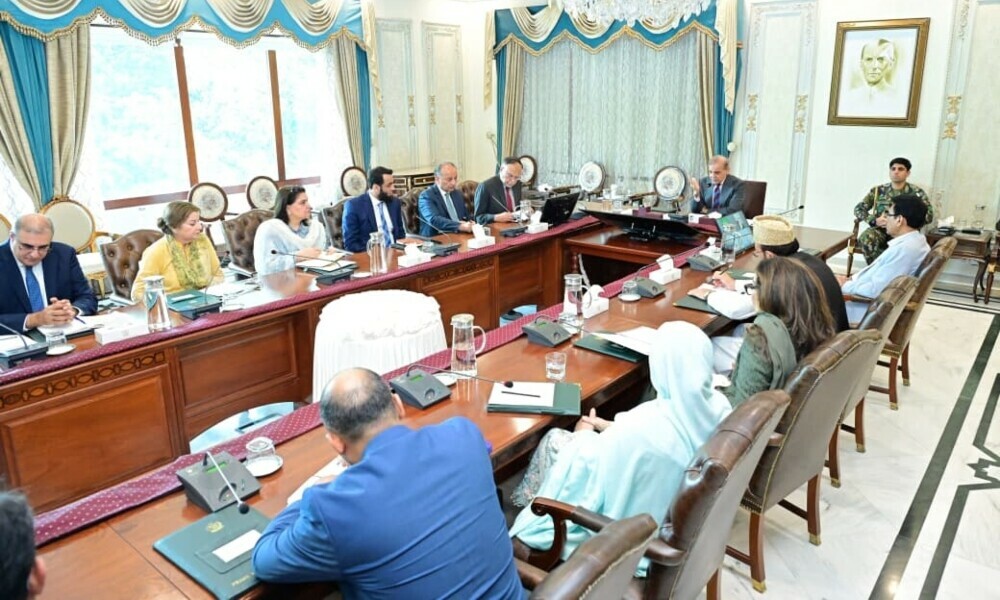
Prime Minister Shehbaz Sharif on Thursday called for an urgent and unified national policy to manage Pakistan’s rapidly increasing population, warning that the issue is directly linked to the country’s economic and social stability.
Chairing a high-level meeting in Islamabad, the premier ordered the formation of a special committee to draft a comprehensive and actionable population strategy, emphasizing that collaboration with all provincial governments is essential. He stressed that merely talking about the issue is no longer enough — concrete measures must now follow.
Pakistan’s population growth rate stands at 2.55%, among the highest in the region. Officials at the meeting projected that the population could exceed 386 million by 2050 if left unaddressed. The prime minister noted that such growth will place immense pressure on already strained national resources — including education, healthcare, jobs, and housing.
“Without effective planning, we will not be able to harness our demographic potential,” PM Shehbaz said. He emphasized the importance of investing in the country’s youth, who make up a significant portion of the population, calling them a valuable economic asset.
The premier also underscored the need to empower women, urging the government to ensure greater employment opportunities and workforce participation for them. “Women are an integral part of our economy. Without their inclusion, sustainable growth is not possible,” he said.
The meeting was attended by top federal ministers including Ahsan Iqbal, Khalid Maqbool Siddiqui, Attaullah Tarar, and Azam Nazeer Tarar, along with senior bureaucrats. They collectively agreed on the need for a nationwide awareness campaign to inform the public about the risks of unchecked population growth and the importance of family planning.
The proposed policy will aim to balance population control, economic planning, and resource management, with a special focus on education, healthcare access, and employment.