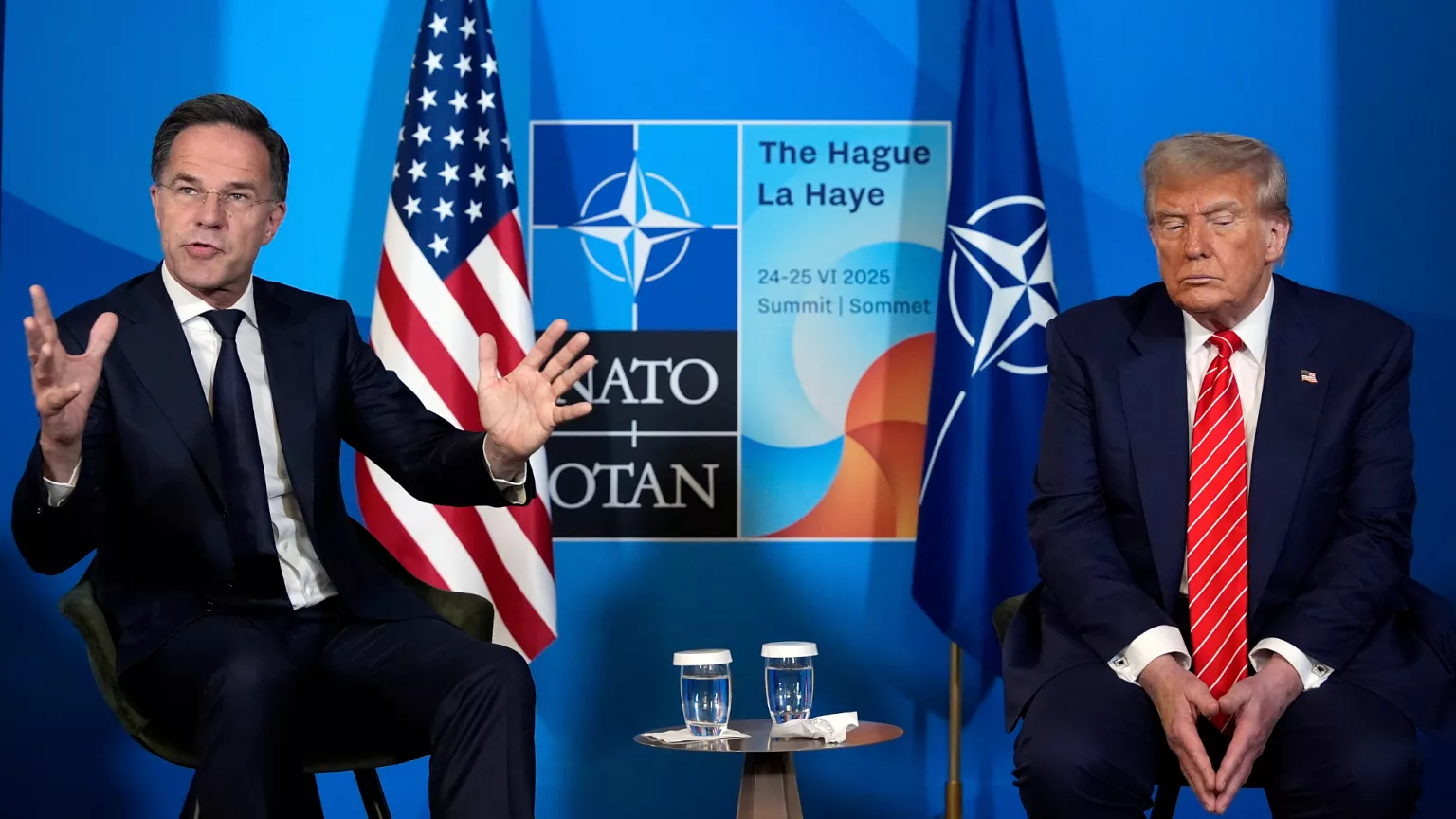
Former U.S. President Donald Trump is set to meet NATO Secretary-General Mark Rutte this week as preparations advance for a major weapons sales plan aimed at supporting Ukraine. The meeting, which will also involve Secretary of State Marco Rubio and Defense Secretary Pete Hegseth, is scheduled to take place in Washington on Monday and Tuesday.
Trump recently announced that the U.S. will sell advanced weapons to NATO allies, who will then transfer them to Ukraine. “They’re gonna pay us 100%,” Trump told reporters, referring to NATO countries buying the weapons. This marks a significant shift, as Trump had earlier criticized spending American taxpayer money on the Ukraine conflict.
Senator Lindsey Graham, a close Trump ally, said over the weekend that Ukraine will soon receive military aid at record levels. He noted that Russian President Vladimir Putin misjudged Trump’s stance. “There’s going to be a massive effort to get Putin to the table,” Graham said, suggesting an aggressive new U.S. strategy to pressure Moscow.
Rutte’s visit also comes ahead of a “major statement” Trump teased regarding Russia, though he has not yet provided any details. The announcement is expected amid escalating Russian air attacks on Ukraine and growing pressure for stronger Western support. Meanwhile, lawmakers from both parties are pushing to use $300 billion in frozen Russian assets to aid Ukraine’s defense.
In addition, the U.S. is working with European allies to speed up the delivery of weapons already stationed in Europe. Secretary Rubio explained that these weapons could be quickly redirected to Ukraine, with NATO countries later purchasing new stock from the U.S. France, however, has acknowledged it won’t be able to send more missiles until next year due to supply gaps.
At the same time, bipartisan calls are growing in the Senate to impose harsh sanctions on Russia’s oil trade. A new bill proposes a 500% tariff on imports from countries still purchasing Russian energy, potentially impacting major economies like China, India, and Brazil. This move aims to choke off Russia’s war funding while strengthening Ukraine’s position on the battlefield.