
On independence, Pakistan continued with the pre-independence Police Act 1861, which was framed by the British for policing a colony. This act has continued to be the basis of the police system in Pakistan with some minor amendments until 2002. In 2002, on the premise of introducing a police law that was politically neutral and operationally autonomous, a new law, called the Police Order 2002, was brought in to replace the Police Act 1861.
All the provinces adopted the Police Order 2002, except for the Islamabad Capital Territory (ICT) due to its constitutional status. When elections were held in 2004, political parties, which formed governments in the provinces as well as at the federal level, succeeded in doing away with a number of provisions in the law. These ostensibly made the police politically neutral, granted operational autonomy and the further curtailment of such laws after the next general elections in 2008 did away with the autonomy of the police. In fact, two provinces, Sindh and Balochistan, reverted back to the Police Act of 1861 with some amendments while the other two, Punjab and Khyber Pakhtunkhwa, opted for the Police Order 2002 with certain amendments.
As per the Police Act 1861 prevalent in Sindh and Balochistan and the ICT, the police are headed by an officer called the Inspector General (IG) of police. The 1861 law gives total control to the provincial government to select and remove the police chiefs at the provincial, divisional and district levels, as per its discretion. The provincial government nominates the provincial police chief out of a panel of three police officers sent to them by the federal government. The provincial police chief holds the post at the pleasure of the provincial Chief Minister (CM) and can be transferred any time without assigning any reason or being given any chance to explain his position. The CM is the elected head of the provincial administration and normally selects and removes provincial police chiefs on the basis of political expediency rather than public interest.
According to recent research, the average period of posting of a provincial police chief, from January 2011 to December 2013, was seven-and-a-half months. Sindh had six IGs in these three years, giving an average tenure of six months. Khyber Pakhtunkhwa had four IGPs in three years, giving an average of nine months. Balochistan had six IGs in three years, giving an average of six months. Punjab had four IGs in three years, giving an average of nine months. This gives an average tenure of seven-and-a-half months for a provincial police chief. It is obvious that stability of tenure for three years as stipulated in the rule books is not being followed for posting heads of police, which obviously has grave implications for command and control.
According to the same research by the Institute for Policy Reforms, the tenure for the most important post of Capital City Police (CCPO) officer was similarly analysed for four provincial capitals: Lahore, Karachi, Quetta and Peshawar. According to the study, the average tenure of a police chief in the capital city was seven months. In Lahore, the capital of the biggest province of Punjab, eight officers were posted as CCPO in three years, giving an average of four-and-a-half months. Similarly, nine officers were posted as CCPO Karachi in three years, giving an average of four months. In Khyber Pakhtunkhwa, five officers were posted as CCPO Peshawar in three years, giving an average of 7.2 months. Quetta had five CCPOs in three years, giving an average tenure of 7.2 months. This gives an average tenure of seven months for the police chiefs of the provincial capitals.
Similarly, in the districts, things are nearly the same. There are 117 districts in all, in the four provinces and the ICT. An analysis of tenure of district police officers in the 35 districts of the province of Punjab, in the year 2013, found the average period of posting to be less than six months. This is the state of affairs in other provinces as well, and there are no indications to think that things have changed significantly since then.
The national average for a police station is one police station for a population of approximately 100,000, there being 1,700 police stations in the country. This is the main node of interaction between the community and police, as a majority of citizens blame the corruption, highhandedness and incompetence at the police station level to be largely responsible for the prevalent mistrust and alienation between the police and the community in Pakistan.
Stability of tenure is necessary for the Station House Officer (SHO) to be truly effective in the community he serves. However, an analysis of the scenario reveals a dismal sight. In Karachi, for example, there are 96 police stations and the average period of posting of an SHO in Karachi during the last three years was less than three months. Another study of the 706 police stations of the biggest province, Punjab, reveals that the average tenure of the SHO in 2012 was three months. The impact of an average tenure of three months as in charge of a police station, in terms of crime control, community relations, knowledge of the area and the people can only be deleterious.
With frequent postings and transfers, the police leadership is constantly in the process of either joining new assignments or leaving old ones, with hardly any time to settle down and plan to take initiatives or be bothered about what the public thinks of their performance. Consequently, there is no institutional stability with officers unable to build up teams dedicated to carrying out organisational goals or implementing policies of the top police leadership at the ground level. Some areas like Karachi have whirlwind postings — ‘revolving doors’ — the effects of which are felt by the citizens. This malaise of short and unpredictable tenures afflicts all ranks and files of police departments in the country and obviously contributes to the degenerating institutional stability of the police and its efficiency.
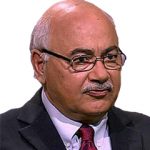
The author is an ex-IG of police and
ex head of the National Counter Terrorism Authority Pakistan