• Skip to primary navigation
  • Skip to main content
  • Skip to primary sidebar
  • Skip to footer
Trending:
  • Kashmir
  • Elections
Thursday, July 2, 2026

Daily Times

Your right to know

  • HOME
  • Latest
  • Iran-Israel war
  • Gilgit Baltistan Election
  • Pakistan
    • Balochistan
    • Gilgit Baltistan
    • Khyber Pakhtunkhwa
    • Punjab
    • Sindh
  • World
  • Editorials & Opinions
    • Editorials
    • Op-Eds
    • Commentary / Insight
    • Perspectives
    • Cartoons
    • Letters to the Editor
    • Featured
    • Blogs
      • Pakistan
      • World
      • Lifestyle
      • Culture
      • Sports
  • Business
  • Sports
  • E-PAPER
    • Lahore
    • Islamabad
    • Karachi

AFP

Ethiopia hits second-year target for filling Nile mega-dam

Published on: July 19, 2021 5:01 PM

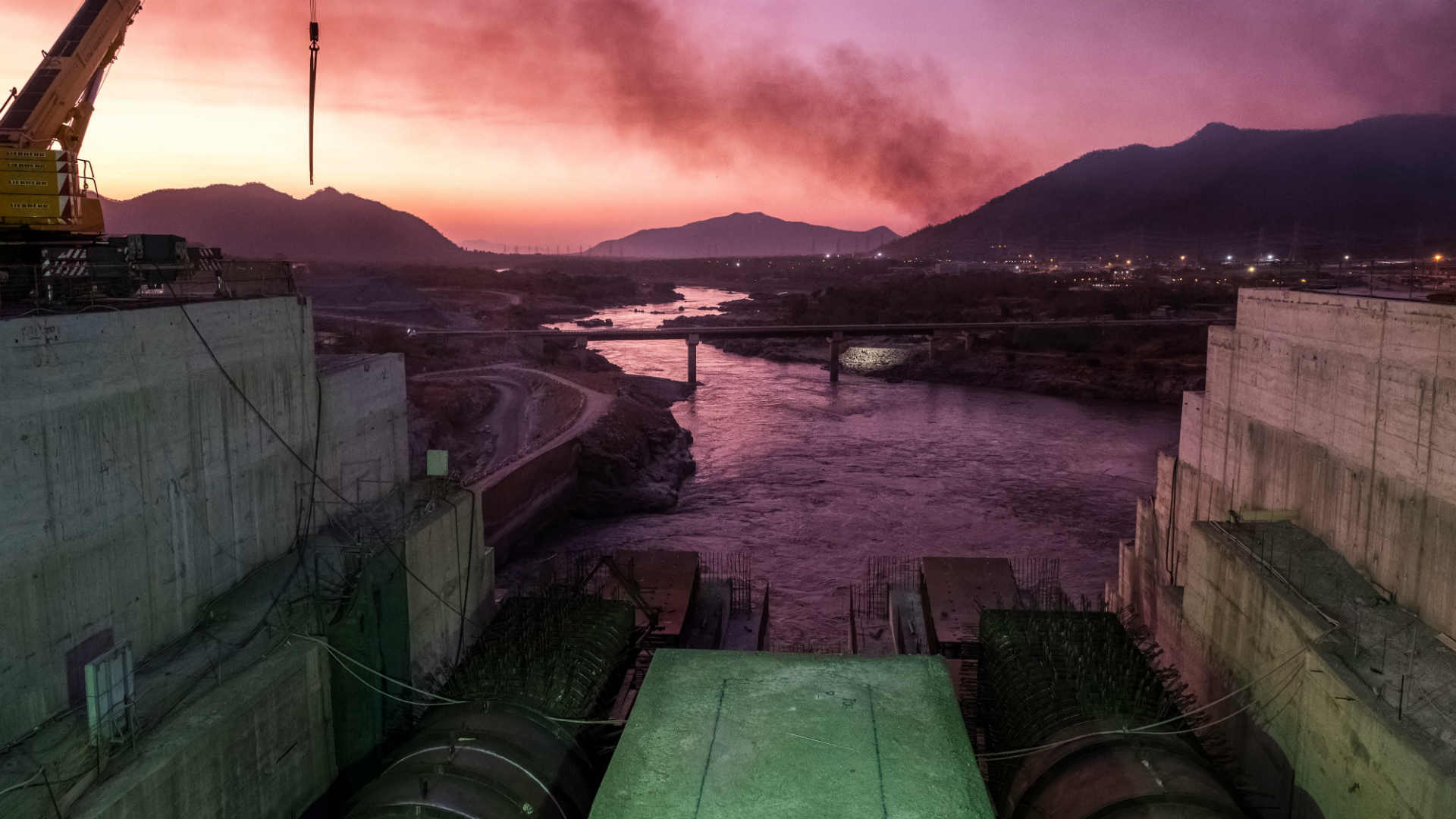
Ethiopia has attained its second-year target for filling a mega-dam on the Blue Nile River that has stoked tensions with downstream countries Egypt and Sudan, an official told AFP on Monday.

“The first filling already was done last year. The second one is already done today. So today or tomorrow, second filling will be announced,” said the official, adding there is now enough water stored to begin producing energy. The Grand Ethiopian Renaissance Dam (GERD) has been a source of dispute ever since Ethiopia broke ground on the project in 2011. Egypt and Sudan view the dam as a threat because of their dependence on Nile waters, while Ethiopia deems it essential for its electrification and development. Talks held under the auspices of the African Union (AU) have failed to yield a three-way agreement on the dam’s filling and operations, and Cairo and Khartoum have demanded Addis Ababa cease filling the massive reservoir until such a deal is reached. But Ethiopian officials have argued that filling is a natural part of the dam’s construction process and cannot be stopped.

The UN Security Council met earlier this month to discuss the project, although Ethiopia later slammed the session as an “unhelpful” distraction from the AU-led process. Egypt claims a historic right to the Nile dating from a 1929 treaty that gave it veto power over construction projects along the river. A 1959 treaty boosted Egypt’s allocation to around 66 percent of the river’s flow, with 22 percent for Sudan. Yet Ethiopia was not party to those treaties and does not see them as valid.

In 2010 Nile basin countries, excluding Egypt and Sudan, signed another deal, the Cooperative Framework Agreement, that allows projects on the river without Cairo’s agreement.

– ‘National symbol’ –

Ethiopian water minister Seleshi Bekele confirmed on Twitter early Monday afternoon that the second-year target had been hit, and that the milestone would enable the dam to run the first two of its 13 turbines. “Intensive efforts are being made for the two turbines to generate energy,” Seleshi said. The $4.2-billion dam will produce more than 5,000 megawatts of electricity, making it Africa’s biggest hydroelectric dam and more than doubling Ethiopia’s electricity output. Reservoir-filling began last year, with Ethiopia announcing in July 2020 it had hit its target of 4.9 billion cubic metres.

The goal for this year’s rainy season was to add 13.5 billion cubic metres. The reservoir’s capacity is 74 billion. It is unclear when exactly the dam will start producing energy, but the two turbines should produce 750 megawatts of electricity, increasing national output by roughly 20 percent, said Addisu Lashitew of the Brookings Institution in Washington. It is “a significant amount” for an economy that frequently faces power shortages and is sometimes hobbled by power rationing, he said.

The milestone would also have “political implications” for a country going through “a very difficult time” in no small part because of the eight-month-old war in its northern Tigray region, Addisu said. “The dam is seen as a national symbol, a unifying symbol. It’s one of the very few things that bring together people from all walks of life as Ethiopia,” he said. “Definitely the government will try to extract some political value from the second filling.”

Filed Under: World Tagged With: Dam, Egypt, Ethiopia, Latest, politics, Sudan, water

Submit a Comment


Primary Sidebar


Latest News

Knesset advances bill to ban Muslim call to prayer through loudspeakers at mosques

Diljit Dosanjh recalls performing for Rs5,000

UAE bans social media accounts for children under 15

Pakistan, Saudi Arabia signed an MoU to build cricket stadium

Government raises carbon tax on petrol, diesel

Pakistan

Pakistan, Saudi Arabia signed an MoU to build cricket stadium

Maryam, Punjab speaker meet to ease tensions

US, Iran enter tech talks to secure peace deal, shipping restart

Pakistan gives the lie to India’s remarks on terror strikes along Afghan border

Pakistan urges India to release 97 prisoners during exchange of lists

More Posts from this Category

Business

Pakistan eyes fully Shariah-compliant financial sector from 2028

Pakistan buys spot LNG cargo fearing disruptions over renewed ME tension

Gold prices dip by Rs 5,200 per tola

PSX rises by over 2% on back of bullish momentum

SECP unveils Pakistan’s first ESG mutual funds framework

More Posts from this Category

World

Knesset advances bill to ban Muslim call to prayer through loudspeakers at mosques

UAE bans social media accounts for children under 15

Iran, US talks to resume after Khamenei funeral

More Posts from this Category


Footer

Home
Lead Stories
Latest News
Editor’s Picks

Culture
Life & Style
Featured
Videos

Editorials
OP-EDS
Commentary
Advertise

Cartoons
Letters
Blogs
Privacy Policy

Contact
Company’s Financials
Investor Information
Terms & Conditions

Facebook
Twitter
Instagram
Youtube

© 2026 Daily Times. All rights reserved.

Manage Consent
To provide the best experiences, we use technologies like cookies to store and/or access device information. Consenting to these technologies will allow us to process data such as browsing behavior or unique IDs on this site. Not consenting or withdrawing consent, may adversely affect certain features and functions.
Functional Always active
The technical storage or access is strictly necessary for the legitimate purpose of enabling the use of a specific service explicitly requested by the subscriber or user, or for the sole purpose of carrying out the transmission of a communication over an electronic communications network.
Preferences
The technical storage or access is necessary for the legitimate purpose of storing preferences that are not requested by the subscriber or user.
Statistics
The technical storage or access that is used exclusively for statistical purposes. The technical storage or access that is used exclusively for anonymous statistical purposes. Without a subpoena, voluntary compliance on the part of your Internet Service Provider, or additional records from a third party, information stored or retrieved for this purpose alone cannot usually be used to identify you.
Marketing
The technical storage or access is required to create user profiles to send advertising, or to track the user on a website or across several websites for similar marketing purposes.
  • Manage options
  • Manage services
  • Manage {vendor_count} vendors
  • Read more about these purposes
View preferences
  • {title}
  • {title}
  • {title}