• Skip to primary navigation
  • Skip to main content
  • Skip to primary sidebar
  • Skip to footer
Trending:
  • Kashmir
  • Elections
Friday, June 5, 2026

Daily Times

Your right to know

  • HOME
  • Latest
  • Iran-Israel war
  • Gilgit Baltistan Election
  • Pakistan
    • Balochistan
    • Gilgit Baltistan
    • Khyber Pakhtunkhwa
    • Punjab
    • Sindh
  • World
  • Editorials & Opinions
    • Editorials
    • Op-Eds
    • Commentary / Insight
    • Perspectives
    • Cartoons
    • Letters to the Editor
    • Featured
    • Blogs
      • Pakistan
      • World
      • Lifestyle
      • Culture
      • Sports
  • Business
  • Sports
  • E-PAPER
    • Lahore
    • Islamabad
    • Karachi

AFP

Amazon hydropower plant contributes significant greenhouse emissions: study

Published on: June 26, 2021 12:09 PM

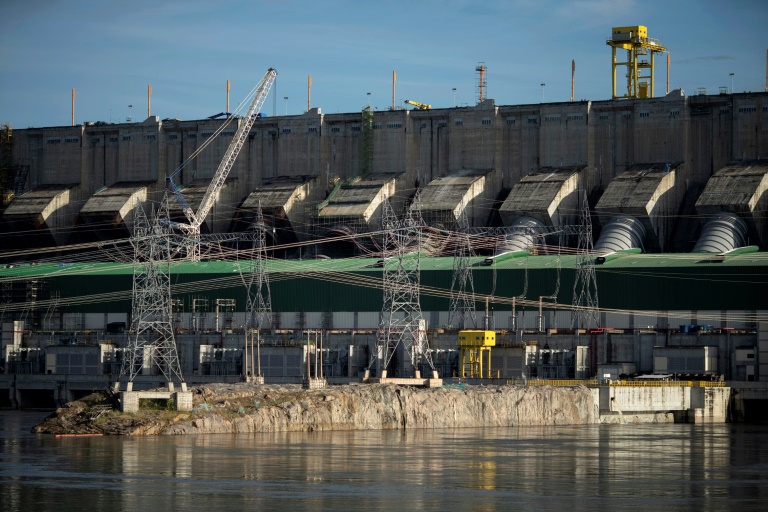
When climate researcher Dailson Bertassoli went to measure greenhouse gas emissions at the Belo Monte hydropower plant in Brazil, the first thing he noticed was the bubbles.

Developers have built hundreds of hydroelectric plants in the Amazon basin to take advantage of the allegedly “green” energy generated by its complex of rivers. But climate researchers now know hydropower is not as good for the environment as once assumed. Though no fossil fuels are burned, the reservoirs release millions of tons of methane and carbon dioxide as vegetation decays underwater. So called run-of-river (ROR) dams like Belo Monte along the Xingu River, which have smaller reservoirs and channels allowing reduced river flow, were meant to address the problem, but a study Friday in Science Advances found that has not been the case.

Bertassoli’s team studied methane and carbon dioxide emissions during Belo Monte’s first two years of operation and compared the results to levels prior to the reservoirs being filled, finding a threefold increase in greenhouse gas emissions. “Once you have the flooding of dry land, the organic matter that was trapped in the soil starts to degrade,” the professor of geology and climate change at the University of Sao Paulo told AFP. These were the source of the bubbles he saw at one of the plant’s reservoirs. “Instead of a natural river, we now have a reactor that favors the production of methane,” he added.

And as fellow author and climate researcher Henrique Sawakuchi pointed out, these “smaller” reservoirs are still quite large, with the largest on a partly dammed river where dead trees stand starkly white amid vast stagnant green channels. Sawakuchi’s brother Andre Sawakuchi, a University of Sao Paulo professor focusing on climate change and river systems who also participated in the study, added that this analysis highlights two issues to consider when building hydropower plants in the region. One is the local environmental impact on aquatic species unique to the area,” he told AFP. “The other is the social impact to indigenous communities that live along the river.”

– Checkered history –

Indigenous and environmental groups protested the Belo Monte’s proposed construction back in the 1990s, causing it to be abandoned before being revived again as an ROR plant in 2011. Environmental groups protested the loss of the forest that had to be cleared for the site while indigenous groups resisted the loss of flooded land and redirected or siphoned natural river flow. Andre Sawakuchi argues it is important to keep the Amazon flowing, despite increasing energy needs, and not to “disrupt this natural cycle with hydropower plants of any type. “This is the pulse of the river,” he said. “With a hydroplant, there is no more pulse.” The authors concluded in their study that if Brazil must continue to build ROR dams along the Amazon, then it is important to at least avoid flooding vegetation, thereby increasing greenhouse gases.

A 2019 study by the Environmental Defense Fund found that some of the world’s hydropower plants are carbon sinks — meaning they take in more carbon through photosynthesis by organisms living in the water than they emit through decomposition — while others are net emitters. “There is no utopia here,” Bertassoli said. “Especially for countries that look so hard at hydropower as a sustainable ‘green’ answer to their energy needs.”

Filed Under: World Tagged With: brazil, climate, ENVIROMENT, hydropower, Latest

Submit a Comment


Primary Sidebar


Latest News

Oil falls on hopes of broader peace after Lebanon, Israel halt fighting

Meat exports grow by 4.16%

SBP-held foreign reserves rise by $43m to $17.9bn

Gold prices up by Rs 1,523 per tola

Rupee strengthens against dollar

Pakistan

Bilawal seeks heavy public mandate to protect GB’s rights

PM directs pilot launch of automated tax collection system in Islamabad

Federal budget on June 10

PM hails special ties with Washington at event marking US 250th anniversary

FO rubbishes reports of Dar sharing Iran nuclear information with Rubio

More Posts from this Category

Business

Pakistan’s exports to US up by 1.70% to $5.12bn in 10 months

Pakistan, Tajikistan set $200 million trade target, deepen ties at 8th JCM

Services’ exports up by 17.68% to $8.26bn

OGDCL’s new wells deliver record oil, gas output in FY26

Buying returns as PSX gains nearly 1,000 points

More Posts from this Category

World

No sign of progress in US-Iran talks as Hezbollah rejects truce

Vast accelerates race to replace ISS

Gulf crisis drives India-Venezuela oil partnership

More Posts from this Category


Footer

Home
Lead Stories
Latest News
Editor’s Picks

Culture
Life & Style
Featured
Videos

Editorials
OP-EDS
Commentary
Advertise

Cartoons
Letters
Blogs
Privacy Policy

Contact
Company’s Financials
Investor Information
Terms & Conditions

Facebook
Twitter
Instagram
Youtube

© 2026 Daily Times. All rights reserved.

Manage Consent
To provide the best experiences, we use technologies like cookies to store and/or access device information. Consenting to these technologies will allow us to process data such as browsing behavior or unique IDs on this site. Not consenting or withdrawing consent, may adversely affect certain features and functions.
Functional Always active
The technical storage or access is strictly necessary for the legitimate purpose of enabling the use of a specific service explicitly requested by the subscriber or user, or for the sole purpose of carrying out the transmission of a communication over an electronic communications network.
Preferences
The technical storage or access is necessary for the legitimate purpose of storing preferences that are not requested by the subscriber or user.
Statistics
The technical storage or access that is used exclusively for statistical purposes. The technical storage or access that is used exclusively for anonymous statistical purposes. Without a subpoena, voluntary compliance on the part of your Internet Service Provider, or additional records from a third party, information stored or retrieved for this purpose alone cannot usually be used to identify you.
Marketing
The technical storage or access is required to create user profiles to send advertising, or to track the user on a website or across several websites for similar marketing purposes.
  • Manage options
  • Manage services
  • Manage {vendor_count} vendors
  • Read more about these purposes
View preferences
  • {title}
  • {title}
  • {title}
We use cookies to ensure that we give you the best experience on our website. If you continue to use this site we will assume that you are happy with it.