Pakistan is at the verge of two volcanic eruptions. One is population growth and the other is environmental degradation due to the burden of population. Both are reciprocating each other with potentially calamitous damage to the wellbeing of masses and economy. On one hand, more population is contributing to more consumption patterns, paving way directly to environmental degradation in the form of waste, and one doesn’t have to be a maths whizz to work out that. On the other side, national economic growth is not working parallel to overcome these issues. The developed world has coped with environment-population relationship to some extent. However, developing countries like Pakistan are struggling for basic necessities of life, rendering them not very well-equipped to address any such harm.
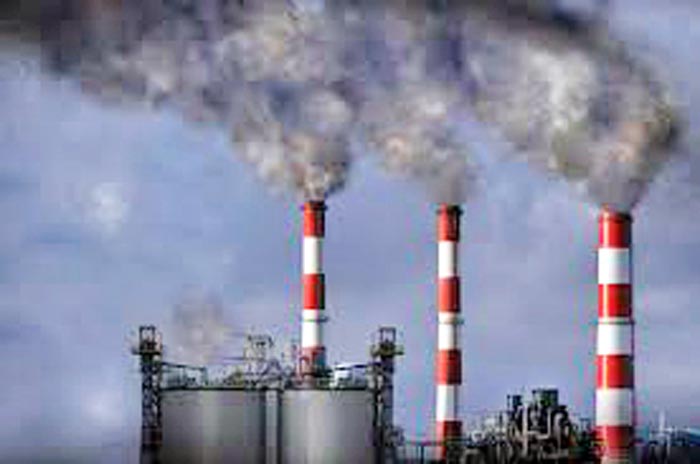 Environmental issues result from a combination of factors with variance from country to country, and continued poverty, population growth, unemployment, growing income inequality and disease burdens are supplementary apprehensions. The carrying capacity (the number of people, animals or crops that a region can support without environmental degradation), usually limited by the components of environment (e.g. food, habitat and resources), may not exceed, but the lowest technological advancement in our agriculture and other social domains have devastating effects. It is apparent that our population growth at 2.4 percent has serious repercussions for the economy and environment.
The connections among population growth, resource use and environmental quality are often termed as complex, which can’t be simply generalised for a simple causal relationship. However, it is made further complicated by unequal resource use patterns of different groups of people-haves and have-nots. If such correlations can be denied, there are ample evidences that could make it understandable.
Firstly, in the Global Hunger Index, Pakistan stands 94th among 117 qualifying countries. Almost 24 percent of Pakistan’s population is below the poverty line; it is a large figure and has challenges for the government. “One in every four lives of Pakistanis is in extreme poverty and, according to the Global Multidimensional Poverty Index 2018, Pakistan has the highest intensity of child poverty in South Asia, at 53 percent.” Consequently, the current government has committed to provide support in a more traditional way by providing langar, a good but not a satisfactory measure to insure the public out of poverty.
In this context, reports of many international organisations assert that poverty can cause damage to environment, which oftentimes results in larger families (due to high death rate and other insecurities). The damage includes deforestation, overexploitation of natural resources, more pressure on fragile land in order to survive, and unhealthy living conditions. Having insufficient knowledge also results in a decline in production.
Secondly, 34percent of the population is facing various mental illnesses. Karachi alone is home to two million people suffering from emotional, mental and social adjustment disorder as revealed by the president of the Pakistan Association for Mental Health, Dr S Haroon. In Pakistan, 13,000 people commit suicide every year; 95 percent of them, reportedly, having mental disorders.
Pakistan is at the verge of two volcanic eruptions. One is population growth and the other is environmental degradation due to the burden of population
There are other major reasons behind mental illnesses. Each university gives degrees to thousands of new graduates every year. It becomes a serious dilemma when job market reaches such saturation that there is only one vacant seat for those thousands of graduates. New graduates get pressurised by their families and their bad financial status to get a job. In such a troubled situation, there are people who succumb to serious psychological problems and stress. The situation becomes even more horrible when government has to serve such a large jobless population with limited resources.
The maternal and child health has been a neglected area. According to 2018 UNICEF report, one in every 22 newborns dies within a month in Pakistan, whereas 80percent of deaths could be easily preventable if proper hygiene, good nutrition and well-trained staff is provided. The report added that 64 percent of the population in Pakistan has no access to safe drinking water. These basic needs of population get ignored when it comes to serving a large population with a small-scale allocated resource.
Thirdly, in developing countries, the cropland degradation has intensified in the past 50 years, which is a consequence to ground water deterioration at unsustainable rate. Pakistan is already a water-scarce country, observed in the recent dam development initiatives on an urgent basis. Climate change intensifies the issue by reducing the vegetation zones and escalating the probability of droughts in the country. These hard-hitting issues cannot be ignored as they are serious threats to agricultural productivity and encourage food insecurity and malnutrition.
Pakistan and India have 38 percent of children under five who are exposed to malnutrition. Imran Khan asserted the issue in his first speech when he became the prime minister. He reiterated that in Pakistan, almost 44 percent of malnourished children are unable to build ability skills and live healthy lives.
Government can take serious initiatives for reduction of population by strengthening the family planning programme. That programme needs serious attention as it faces some difficulties regarding funding, lack of technical skills and negligible awareness among people. It can serve people in a best possible way. Health and population departments are working together in many areas; they need clear demarcation of their responsibilities. It has been seen after the 18th Amendment, 43 departments and 18 ministries have been abolished and transferred to provinces. We have seen the new resource distribution formula being shifted to provinces. The 18th Amendment has been described as a political move of that time that lacks in sorting of complex issues in education, health and other services. Although the devolution was enacted the political will to support education, health and population did not emerge. Provincial programmes and their implementation, monitoring and evaluation has been ignored, a consequence that has emerged from unplanned devolution.
Conclusively, to serve such a large population in a country dependent on agriculture, agricultural research and productivity have been the neglected areas for ages. They should be developed as part of the top priorities of the government.
The writer is a freelance columnist and can be reached at ijazaliqau23200 @gmail.com