• Skip to primary navigation
  • Skip to main content
  • Skip to primary sidebar
  • Skip to footer
Trending:
  • Kashmir
  • Elections
Tuesday, July 7, 2026

Daily Times

Your right to know

  • HOME
  • Latest
  • Iran-Israel war
  • Gilgit Baltistan Election
  • Pakistan
    • Balochistan
    • Gilgit Baltistan
    • Khyber Pakhtunkhwa
    • Punjab
    • Sindh
  • World
  • Editorials & Opinions
    • Editorials
    • Op-Eds
    • Commentary / Insight
    • Perspectives
    • Cartoons
    • Letters to the Editor
    • Featured
    • Blogs
      • Pakistan
      • World
      • Lifestyle
      • Culture
      • Sports
  • Business
  • Sports
  • E-PAPER
    • Lahore
    • Islamabad
    • Karachi

Agencies

Antarctica ice loss increases six fold since 1979: study

Published on: January 18, 2019 2:12 AM

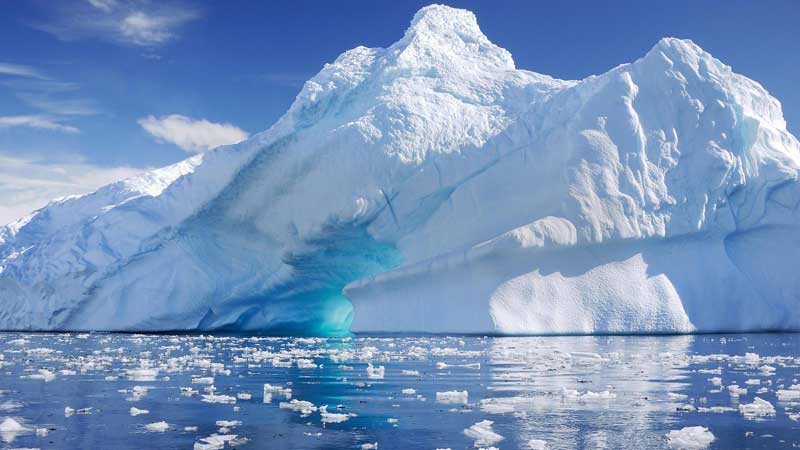
Global warming is melting ice in Antarctica faster than ever before —about six times more per year now than 40 years ago — leading to increasingly high sea levels worldwide, scientists warned Monday.

Already, Antarctic melting has raised global sea levels more than half an inch (1.4 centimeters) between 1979 and 2017, said the report in the Proceedings of the National Academy of Sciences (PNAS), a peer-reviewed US journal.

And the pace of melting is expected to lead to disastrous sea level rise in the years to come, according to lead author Eric Rignot, chair of Earth system science at the University of California, Irvine.

“As the Antarctic ice sheet continues to melt away, we expect multi-meter sea level rise from Antarctica in the coming centuries,” Rignot said.

A rise of 1.8 meters (six feet) by 2100, as some scientists forecast in worst-case scenarios, would flood many coastal cities that are home to millions of people around the world, previous research has shown.

For the current study, researchers embarked on the longest-ever assessment of ice mass in the Antarctic, across 18 geographic regions.

Data came from high-resolution aerial photographs taken by NASA planes, along with satellite radar from multiple space agencies.

Researchers discovered that from 1979 to 1990, Antarctica shed an average of 40 billion tons of ice mass annually.

By the years 2009 to 2017, the ice loss had increased more than sixfold, to 252 billion tons per year.

Even more worrying, researchers found that areas that were once considered “stable and immune to change” in East Antarctica, are shedding quite a lot of ice, too, said the study.

“The Wilkes Land sector of East Antarctica has, overall, always been an important participant in the mass loss, even as far back as the 1980s, as our research has shown,” Rignot said.

“This region is probably more sensitive to climate than has traditionally been assumed, and that´s important to know, because it holds even more ice than West Antarctica and the Antarctic Peninsula together.”

Ice loss

The total amount of ice in the Antarctic, if it all melted, would be enough to raise sea level 187 feet (57 meters).

By far, the most ice in Antarctica is concentrated in the east, where there is enough sea ice to drove 170 feet of sea level rise, compared to about 17 feet in the entire West Antarctic ice sheet.

The East Antarctic Ice Sheet is the world´s largest, containing roughly half of Earth´s freshwater.

Until now, most research has shown that the majority of melting is happening in the West.

A landmark study published in Nature in June last year found that Antarctic ice melt had tripled since 1992, but did not show significant melting in the east.

However, a subsequent study published in Nature in September 2018 analyzed layers of sediment from the ocean floor deposited the last time the Wilkes Subglacial Basin, part of the Eastern Antarctic due south of Australia, melted around 125,000 years ago.

That study found the massive basin would start melting again, with a sustained temperature rise of just two degrees Celsius (3.6 Fahrenheit), the cap called for in the landmark Paris climate deal to avert runaway global warming.

The latest research shows that East Antarctic melting deserves “closer attention,” according to the PNAS report.

Warming ocean water will only speed up ice loss in the future, and experts say sea levels will continue to mount for centuries, no matter what human do now to rein in climate change. Recent research has shown that oceans are heating up faster than previously thought, setting new heat records in the last few years.

Published in Daily Times, January 18th 2019.

Filed Under: Infotainment

Submit a Comment


Primary Sidebar


Latest News

Maryam Nawaz

Punjab Announces 4 Acres of Farmland on Rs100 Annual Lease for Poor Farmers

Mindanao shaken by 5.8 magnitude earthquake

Mumbai rains kill six, disrupt travel

UN seeks global safeguards for artificial intelligence

China raises Nanning flood emergency

Pakistan

Maryam Nawaz

Punjab Announces 4 Acres of Farmland on Rs100 Annual Lease for Poor Farmers

WB pushes Pakistan to cut spending

Bilawal Bhutto Zardari

Bilawal Bhutto Vows to Defend Indus River, Promises Constitutional Rights for Gilgit-Baltistan

Khyber Pakhtunkhwa federal funds

Khyber Pakhtunkhwa Received Over Rs34 Trillion in Federal Funds During Five Years

PM Shehbaz launches drive for overseas opportunities

More Posts from this Category

Business

Oil prices fluctuate amid market uncertainty

Gold prices fall by Rs2,400 per tola in Pakistan

Oil prices ease after Opec+ boosts output targets

Opec+ approves further oil output increase as Hormuz exports start to recover

Pakistan’s expanding forest cover sweetens honey industry, boosts rural livelihoods

More Posts from this Category

World

Mindanao shaken by 5.8 magnitude earthquake

Mumbai rains kill six, disrupt travel

UN seeks global safeguards for artificial intelligence

More Posts from this Category


Footer

Home
Lead Stories
Latest News
Editor’s Picks

Culture
Life & Style
Featured
Videos

Editorials
OP-EDS
Commentary
Advertise

Cartoons
Letters
Blogs
Privacy Policy

Contact
Company’s Financials
Investor Information
Terms & Conditions

Facebook
Twitter
Instagram
Youtube

© 2026 Daily Times. All rights reserved.

Manage Consent
To provide the best experiences, we use technologies like cookies to store and/or access device information. Consenting to these technologies will allow us to process data such as browsing behavior or unique IDs on this site. Not consenting or withdrawing consent, may adversely affect certain features and functions.
Functional Always active
The technical storage or access is strictly necessary for the legitimate purpose of enabling the use of a specific service explicitly requested by the subscriber or user, or for the sole purpose of carrying out the transmission of a communication over an electronic communications network.
Preferences
The technical storage or access is necessary for the legitimate purpose of storing preferences that are not requested by the subscriber or user.
Statistics
The technical storage or access that is used exclusively for statistical purposes. The technical storage or access that is used exclusively for anonymous statistical purposes. Without a subpoena, voluntary compliance on the part of your Internet Service Provider, or additional records from a third party, information stored or retrieved for this purpose alone cannot usually be used to identify you.
Marketing
The technical storage or access is required to create user profiles to send advertising, or to track the user on a website or across several websites for similar marketing purposes.
  • Manage options
  • Manage services
  • Manage {vendor_count} vendors
  • Read more about these purposes
View preferences
  • {title}
  • {title}
  • {title}