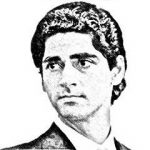
Imran Khan has become the twenty-second Prime Minister of Pakistan. His journey to the top has, amongst other things, generated curiosity about his hometown of Mianwali and some controversy about his surname. The debate on whether Mr Imran is a Khan or Niazi still rages on. The remainder of the article will attempt to briefly answer those queries.
‘Khan’ is a term of Mongolian origins meaning King as in Genghis Khan. It was later used for the aristocracy of the subcontinent. It eventually became specifically associated with Pathan chiefs, and then ultimately Pathans in general. In short, Khan is not an ethnicity but an atavistic title, freely used as a surname by a diverse multitude of people who often have no blood relation to each other. According to the original definition Mr Khan, as Prime Minister, is genuinely more of a ‘Khan’ than any other at the moment.
The surname Niazi on the other hand is more exclusive. Niazaey, the founder of the Niazi bloodline, is thought to have lived almost thirteen hundred years ago. He was the great grandson of Qais Bin Rashid, the legendary forefather of the Pathan people.
Qaisis believed to have been an Afghan chief that led a delegation to meet the Prophet Muhammad(S.A.W) on the invitation of General Khalid bin Walid. Qais then embraced Islam, and was given the title of Bathan, meaning a ship’s hull. It was meant to reflect Qais’ position as a leader and source of guidance for the rest of his people. At some point Bathan was translated into Pathan, and subsequently all the children of Qais were known as such.
The Pathan tribes have historically resided in and around Afghanistan and North-western Pakistan. The Niazi’s settled near the Afghani city of Ghazni. Over the centuries due to various factors like war and water scarcities, Niazi colonies kept migrating south-east going as far as Hoshiarpur in India. Majority of them eventually settled in Mianwali, and rather ungraciously turned out its previous inhabitants. One of those Afghani intruders was Imran Khan’s paternal ancestor.
By calling him ‘Niazi’, his opponents are trying to appeal to the ethnic prejudices of the public. The second is to subliminally insult him by reminding the public that the kaptaan hails from the same tribe as General A.A.K Niazi who signed the surrender of Dhakka in 1971
Imran Khan is very much a Niazi. He belongs to the sub-tribe of Sherman-Khel. One of Mr Khan’s forefathers evidently killed a lion with his bare hands during a hunting expedition. He entered Mianwali proudly with the dead lion over his shoulders. The sight was so spectacular for onlookers that his clan was henceforth known as Shermankhel or descendants of the lion killer. Considering how his party defeated PML-N, whose ballot symbol is a lion; one can only appreciate the irony.
The Niazis have been mentioned throughout history as mighty warriors famed for their bold fearless mannerisms and combative acumen. They caught the attention of the conqueror Amir Taimur or Tamerlane, in the fourteenth century and helped him sack Delhi. They were instrumental in Sher Shah Suri’s over throw of the Mughal King Humayun in the sixteenth century during which two of his key commanders Isa Niazi and Haibut Niazi were even promoted to Nobility. A status still literally claimed by a vast majority of Niazis; especially the Isa-Khel tribe.
In the eighteenth century The Afghani King Ahmad Shah Durrani also recruited Niazi soldiers who helped him invade India no less than seven times. Durrani’s campaigns finally concluded when he decimated the Maratha Empire forces during the third battle of Panipat.
Interestingly, many chapters on the military services of Niazis often end with them rebelling against their benefactors. It is not uncommon to read about Niazis fighting for and against the same royal-houses throughout history. Like a fire, they don’t seem to discriminate against anything but proximity. One British writer described them as rebellious “eighteenth-century Scots without alcohol”
The Niazis are still proud and gloriously enamored with themselves and their rich marshal history, which each Niazi accredits to his own clan more than any other. Infact most Niazi’s have a history-of-the-Niazi’s monologue memorized. It usually begins like the paragraphs above only to spinoff into another direction designed to dismiss the pedigree of other Niazi sub-tribes most of whom are in constant competitions with each other.
Apart from unawareness there are two other reasons why some people intentionally call Imran Khan, ‘Imran Niazi’. The first being that ‘Khan’ is a more national and neutral term, whereas ‘Niazi’ is more ethnically specific. By calling him ‘Niazi’ his opponents are trying to appeal to the ethnic prejudices of the public. The second is to subliminally insult him by reminding the public that the kaptaan hails from the same tribe as General AAK Niazi who signed the surrender of Dhakka in 1971. These are snide propaganda techniques that politicians must rise above. The fact is there are no compulsions or obligations in selecting a name. Every citizen is free to choose, and rightly so.
The writer is an agriculturist with degrees in Economics and Mass Communication. He can be reached at [email protected]
Published in Daily Times, August 31st 2018.