
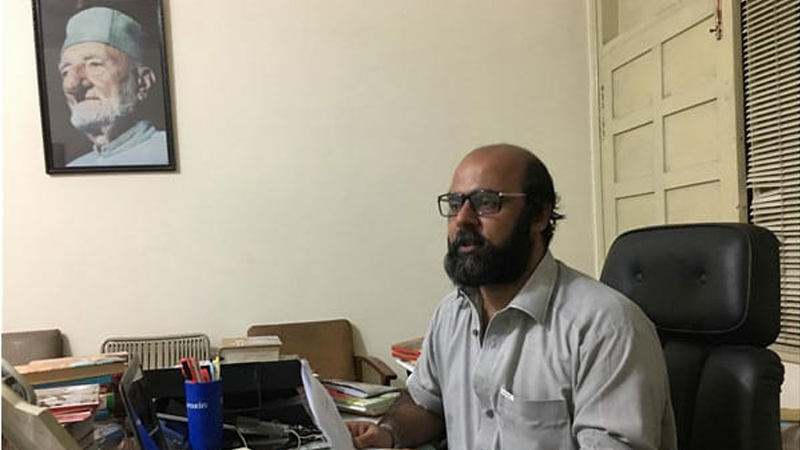
 Babrra massacre remains etched on the collective memory of the country’s Pashtun community, and part of the reason has to do with state institutions’ inability to recognise the tragedy and apologise for it, says Hayat Roghani, a Peshawar-based journalist who edits weekly The Pashtoon.
Over the years, he has gathered oral accounts of those who lost their loved ones in one of the violent episodes in Pakistan’s political history.
He says his interest in documenting the history of the incident stems from the fact that it hasn’t been recognised in the official account of the country’s history. “Our children should be taught about the trauma and suffering our earlier generations had to go through,” he says, adding that there were lessons to be learnt in all such events. “We live in a democracy. State forces exist to protect the citizens and not to coerce them into submission
“If some leaders in the past make our forces inflict violence on citizens, we must tell present and future generations about it so that they can remain on the guard and hold their leaders to higher standards of accountability.”
Roghani was born in Charrsadda, where the massacre took place on August 12, 1948.
He recalls that among the most striking feature of his conversations with families of those who died that day is their frequent references to a verse from the collection of popular Pashto poet Abdul Malik Fida. The English translation of the verse is:
On one side in the battlefield of Babrra, the Army equipped with artillery and guns … While on the other side, the protestors with empty hands … I was a mere spectator to death and mayhem
The violence unleashed by state forces in Babrra area in Uthmanzai, hometown of Khan Abdul Ghaffar Khan, aka Bacha Khan, is rooted in the precarious relationship between the central government put in place in Karachi and provincial setups, particularly on the western and eastern peripheries of the newly formed state of Pakistan. While the All India Muslim League (AIML) had won 1946 general elections in Muslim-majority Punjab , Bengal and Sindh provinces, it could not win the polls in the North West Frontier Province (NWFP), now known as Khyber Pukhtunkhwa. After the Cabinet Mission talks of 1947 ended in a decision to divide British India into two sovereign states, the NWFP went into a referrendum to decide which state will it side with. The referendum, boycotted by Bacha Khan and his Khudai Khidmatgars, resulted in favour of joining Pakistan, a decision the former came to terms with subsequently. However, hardly a year after the partition, Khan Abdul Jabbar Khan, aka Dr Khab Sahib, led provincial government was dismissed on directives of then Governor General Quaid-e-Azam Muhammad Ali Jinnah in June1948. State forces also took Bacha Khan into custody on charges of receiving funds from the Mirza Ali Khan, a Tori Khel Wazir known popularly as Faqir of Epi, to sabotage Pakistani state authorities. The charges were never proven.
The August 1948 violence was against peaceful and unarmed Khudai Khidmatgars who were staging a protest rally against their leader Bacha Khan’s arrest. State forces openned fire on the directives of the new governmment installed into office in Peshawar, with AIML’s Abdul Qayyum Khan as the chief minister. The official count of the dead was at 250. However, the families’ of the deceased claimed that at least 600 died that day. Many could not be accounted for because hospitals were full to capacity and they refused to take bodies.
In the story of Bacha Khan’s arrest narrated to Roghani by relatives of the deceased, those who arrested Bacha Khan could recover just Rs83 from his possession. Many of his subjects mentioned to him that the assembly in Uthmanzai had been arranged after a rumour spread in the area that there were plans to hang Bacha Khan in the prison. The purpose of the march, thus, was to put pressure on the government to provide due process to the incarcerated leader.
Roghani says official reports he has sifted document that 56000 bullets were fired on protestors that day. Adding insult to injury, the authorities announced afterwards that no body would be allowed to claim the body without paying for the bullets shot at the deceased. His research suggests that a sum of Rs11,390 was recovered by the authorities, at the rate of Rs50 per family, from relatives who claimed bodies from the massacre site.
Among those who died that day was the leader of the demonstration, a Khudai Khidmatgar known as Speen Malang. Oral accounts suggest that when he was shot at a group of women marchers came forward holding Holy Quran in their hands and pleading state forces for mercy, but the indiscriminate firing continued. Taju Bibi, first wife of Khan Abdul Wali Khan, also got bullet wounds in the massacre. She died on the injury at a hospital later.
Published in Daily Times, August 22nd 2018.