Policing requires officers that use good judgment and assess each situation. A political scientist Davis defined discretion as being “free to make choices.” Discretion is necessary because the nature of policing is filled with uncertainty and inefficiency. Policing is unique in that the employees at the bottom often seem to have more discretion than those at the top, ie making arrests at the scene. An Inspector General of Police in Pakistan does not make public arrests, but a constable does, and this is perceived by laymen to have powers sometimes exceeding those at the top, since the job of the IG is filled with checks and balances. In any case, he is rarely seen personally making arrests.
This automatically makes discretion of a police officer subject to scrutiny, especially with the activist media we have in Pakistan now. A wise officer learns that it is often better to ignore some behaviours and focus on others because an officer’s purpose should be to inspire voluntary compliance with the law. This is commonly referred to as enforcing the spirit of the law, as opposed to the letter of the law. However, when citizens routinely ignore a law, then law makers and Police officers must question whether it is in fact rational and serves a legitimate purpose, and whether they have the necessary discretion to enforce the law. Thus, societal norms are inextricably bound with discretion exercised by the Police.
Within the past few years of democracy in Pakistan, despite reforms like the Police order 2002, police have seen their ability to use discretion limited in many areas, often due to political expediency
Supposedly, concepts like community policing gives police officers more discretion to serve their communities. Interestingly, when police discretion was first “discovered” in a study commissioned by the American Bar Association, police administrators called for its elimination. They viewed discretion as the first step toward corruption, which is a perception our Pakistani public share to some extent too. Eventually, as community policing developed, it became apparent that discretion can be used positively and its judicious and wise use should be encouraged. Thus, the method of delivering police services (the policing model) is related to the nature of control of discretion. Police must be able to use judgment; adapt rules to local circumstances; make virtuous choices; and be accountable.
There are professional, community, legal and moral norms that require discretion. Within the past few years of democracy in Pakistan, despite reforms like the Police order 2002, police have seen their ability to use discretion limited in many areas, often due to political expediency. This loss of legitimate discretion weakens law. Natural law theory purports that unbridled discretion only enters as the law runs out. Thus, it is necessary that officers be selected, vetted, educated and trained so they have the requisite foundation to use discretion, within the limits of law and without political expediency.
We are going through a phase where transition from a political expediency trapped police to an independent police force may be possible. As Western policing evolved from the night watchman and a thoroughly politicized, often corrupt institution, it was replaced by a model centred upon discipline and a hierarchical structure that often used military ranks. The bureaucratic and professional model stressed Weberian ideas of “autonomy, efficiency, and internal accountability through command systems”. It is sometimes called the traditional model.
This model focused on improving policing, rationally and scientifically, through reform methods that emphasized improved recruitment and training, better supervision, hierarchical and structured command and control, efficient chains of command, and increased usage of technology. It aligned with the philosophy of chiefs of police like William Parker, Los Angeles, who used military language such as that used to describe British infantrymen to describe police officers. Instead of the “thin red line” — police officers were the “thin blue line” and arrayed against “forces of evil.” Chiefs like Parker pushed professional policing, not just against crime but against political bosses who wanted unbridled control over police.
Studies of so-called “professionalised police departments” indicate that traditional negative functions such as coercive law enforcement and order maintenance are predominant in the role perceptions of most officers. The professional model grew parallel to a technological movement as well, in which radios, automobiles, forensics, criminal investigation methods, and other advances were developed. We have these advances in Pakistan now as well, as well as access to them. We just need to integrate all these processes and technologies in a coherent manner, which in turn demands a politically neutral police force which knows how to use its discretion.
In the 1990s, a movement was waged in public service to become more customer-oriented and use “best practices” derived from business models. Similarly, there was a desire to identify and address the underlying problems contributing toward crime and public disorder, and the research being conducted at the time was beginning to follow suit. The basic elements of this newer model include: community input when determining community needs, flattened organizational hierarchy so that response is determined at a level close to the community, assistance and response by agencies other than the police if necessary, and fixing the underlying societal disorder problems through problem-solving.
Policing agencies tend to be structured for emergency response; a good fit with the hierarchical military model, yet business model policing calls for a more decentralised structure. In reality, very little has changed in the organisational structure of police agencies regardless of what model they profess to follow. Though officers may be given more discretion to solve problems — agencies are still hierarchical, rule-bound, and decidedly “militaristic” in their organisational and rank structures.
Essentially, there are two overarching methods of delivering police services. One, the professional method is focused on security and suppression of crime. The other, community policing, is more concerned with community development and inoculating communities against crime. Though they may be called other things, and there are many variations and shades here, the underlying philosophy is the same — security (which encompasses crime reduction) versus community service. And herein lays a major problem when working on police reform — the security situation very much affects which method of delivery is even possible. Though police organisations assisting in reform efforts (in Pakistan too) often propose that community policing is the way to go, it may not be possible, when the political environment is just geared towards security and hampered by political expediency.
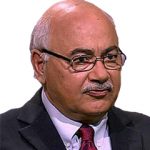
The writer is a retired inspector general of police and ex head of Pakistan’s national counter terrorism authority
Published in Daily Times, July 10th 2018.