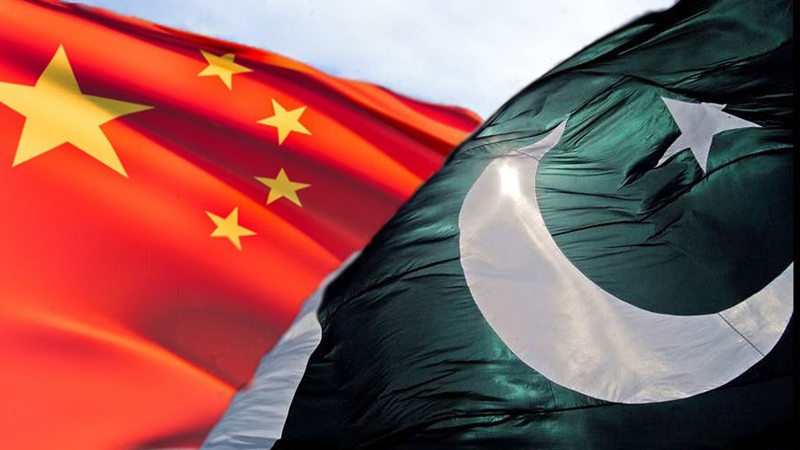
 ISLAMABAD: The all-weather time-tested relationship between Pakistan and China stands out as a perfect example of relationships in the international community, said former Chairman Joint Chiefs of Staff Committee (CJCSC) General (r) Ehsanul Haq on Wednesday.
“This multi-dimensional strategic partnership has always been a cornerstone of Pakistan’s foreign policy and has steadily deepened over the decades,” he said while speaking as the chief guest during the launching ceremony of a book titled Cheeni Saqafat Ke Tabinda Naqoosh written by Group Captain (r) SM Hali
The book unveils every aspect of Chinese culture and provides a detailed description of norms and traditions of China. The book was launched by the China-Pakistan Study Centre (CPSC) during a ceremony at the Institute of Strategic Studies, Islamabad (ISSI), which was attended by foreign diplomats, scholars, journalists and students.
ISSI Chairman Khalid Mahmood introduced the author in his welcome remarks. He mentioned about the lack of awareness in Pakistan about Chinese culture and traditions and said that since not many books had been published on the subject, the work of Mr Hali was a seminal contribution to this field. “It explains the significance to Pakistani readers about different dynamics of the Chinese culture, making it a handy reference for Pakistani readers.”
General Haq stated that although there was a very strong bond of friendship between Pakistan and China, there was woeful inadequacy about Chinese knowledge in Pakistan. He added that culture forms the core of what was defined as soft power, which, in the emerging international dynamics was the decisive power. “Chinese culture is an amalgamation of both balance and harmony.”
He went on to say that the implementation of the China-Pakistan Economic Corridor (CPEC) project had opened up many vistas for Pakistan and was rightfully viewed as a game-changer for Pakistan with a potential for transforming the lives of the Pakistani people. “As the world increasingly awakens to the rise of China, there is a strong desire for the better understanding of Chinese culture. This is reflected in how 516 Confucius institutes have come up in 142 countries since 2004 alone.”
Zhao Lijian, deputy head of Mission at the Embassy of the People’s Republic of China in Islamabad, termed the book a great effort to introduce Chinese culture to Pakistan. He called the research a thorough study and lauded the magnanimous task undertaken by the author of trying to compress the diverse aspects of Chinese culture.
He highlighted two aspects: first, that this book is written in Urdu, which will ensure maximum readership in Pakistan; second, how the author has incorporated a chapter on Chinese etiquettes, which Zhao said was extremely significant. These etiquettes, he added, were important not only in China but would prove to be useful while interacting with people the world over.
Former Lok Virsa executive director Uxi Mufti said that China was one of the most ancient civilisations of the world. He talked at length about Chinese artistry and commended the insight and broad vision of the early leadership of modern China who encouraged ethnic minorities and promoted cultural expression. He said every region in China and every ethnic minority had its unique cultural expression.
Ambassador (r) Syed Hasan Javed, director Chinese Studies Centre, School of Social Sciences and Humanities at National University of Science and Technology (NUST), lauded the extensive research by the author and said that the book was an inspiration for writing more books in Urdu. “At the time of CPEC, the book covers the cultural corridor and will serve as a bridge for better cultural connectivity between the two countries.” He suggested that this book should be made part of the syllabus in Pakistani universities in order to better understand the rich culture of China.
The author of the book thanked the esteemed reviewers for reviewing and acknowledging his work. He especially thanked Dr Ahmad Rashid Malik, director CPSC, ISSI, for organising the event and making it a success.
In his concluding remarks, Ambassador Mahmood commended the author for making a valuable, all-encompassing contribution to the study of Chinese culture.
He thanked the audience for gracing the occasion with their presence.
Published in Daily Times, February 1st 2018.