Do we need a war correspondent in the age of internet and internal conflicts? If we define war in the traditional sense of the word, we don’t have any. We live in an age of proxy wars and violent inner conflicts. The sense of conflict is very different from going to war. The conflict reporter, the witness to loss of life, dignity, and identity of mankind all over the world is the new face of the war correspondent. Telling the truth in the age of fake news and neo-liberal agendas is not easy. How would one report the truth about a human misery, brought out by the very custodians of human dignity, who are also the paymasters of the media monsters, paying the subsistence of a man or woman reporting from zones of conflict? This is a contradiction.
The contradiction was always there, but the world was too far afar. Internet and modern gadgets of communication have brought the world closer; also bringing its players to the light of human inquiry. We now know if something goes wrong. The media, instead of reporting conflicts, is busy in twisting these in favour of their agendas. These agendas serve anything but the truth. The embedded journalist is one such instrument of control and distortion used by the power wielders among parties to conflict. Their function is the same as the war correspondent of yonder years who travelled with their forces to narrate the partial truth. But the emergence of local and regional conflicts that don’t involve countries directly has pitted the same people against each other.
This is the new world of journalism. International and even national media organisations use the conflict as a rating instrument. The blood that spills, the destitution that ensues every violence, is a huge business asset. There are but inhuman benefits beyond this obvious. Weaker human groups within a society or state as well as internationally are made a spectacle to legitimise inhumanity and crimes against humanity. Naming them, blaming them, and ultimately killing them becomes very difficult without the support of the media industry. This task is being amicably achieved through doling out falsehood with a pinch of truth.
The problems a conflict reporter faces in modern times are enormous. Going through continuous psychological trauma with the omnipresent fear of physical harm to oneself and family has become part of the package. The trauma emanates from the fact of reporting about people one knows in a style that is tilted towards the policy of the media organisation. This policy is never a stand alone for one outlet, but is a global reality, encompassing the world of journalism, thus becoming an ethical value in itself. One knows the truth but doesn’t know where and how to express it.
Unlike the war correspondent, one deals with the friends and foes at the same turf. This is a million times more dangerous than covering a war. Global interest in local conflicts makes it even more dangerous. The global agenda is never in any way in consonance with local realities. This makes the task even harder. Balancing the truth and doing objective reporting is more of a myth than anything real.
The conflict reporter, the witness to loss of life, dignity, and identity of mankind all over the world is the new face of the war correspondent
The journalist could only do dissonance reduction by saying something between the lines. This is never sufficient and is often dangerous. Parties to the conflict, both local and global, are too sensitive to information in the age of information and communication explosion. They monitor every word and image and get nasty at hint of the tiniest suspicion. The consequences are always disastrous. But most of the journalists lose the cool and look for trouble. They go to social media and think they could advance their mission with secrecy. The illusion of privacy on the internet is one of the biggest enemies of safety of a truth speaker. There is no hiding place for the one who dares to challenge the established narrative. The fates of whistleblowers in our times are witness to the fact that in our modern times there is no room for going against the tide.
The biggest asset the conflict reporter has is knowledge. Knowledge has become all the more important in our modern times as ever before. One needs to learn newer and more safe ways of expressing truth. One needs to learn how human life and misery operate? How could one support people in grief and trauma? This is beyond our customary definition of journalism. But this is an imperative, since the reach of our word has gone too far beyond that of our predecessors. The instruments of oppression, ours and the people we report on, have also advanced enormously. There is no single event or story in our modern times. There are series of different stories; of courage, of despair, of death, those of survival, and so on. We need to keep our eyes open to capture them all through all possible mediums and use these strategically, whenever possible.
We need to be more sensitive towards our responsibility to the human kind. The stories we narrate could become our own predicament any moment. We should be willing to help those in need with this recognition in front of us. The world has become so sickly fond of conflict that it could happen at any place, anytime. Therefore, we should always be prepared.
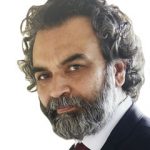
The writer holds a PhD from the Institute of KMW, University of Leipzig, Germany. He has had a long career as a working journalist and trainer. Currently, he is Professor of Journalism at the University of Peshawar
Published in Daily Times, December 12th 2017.