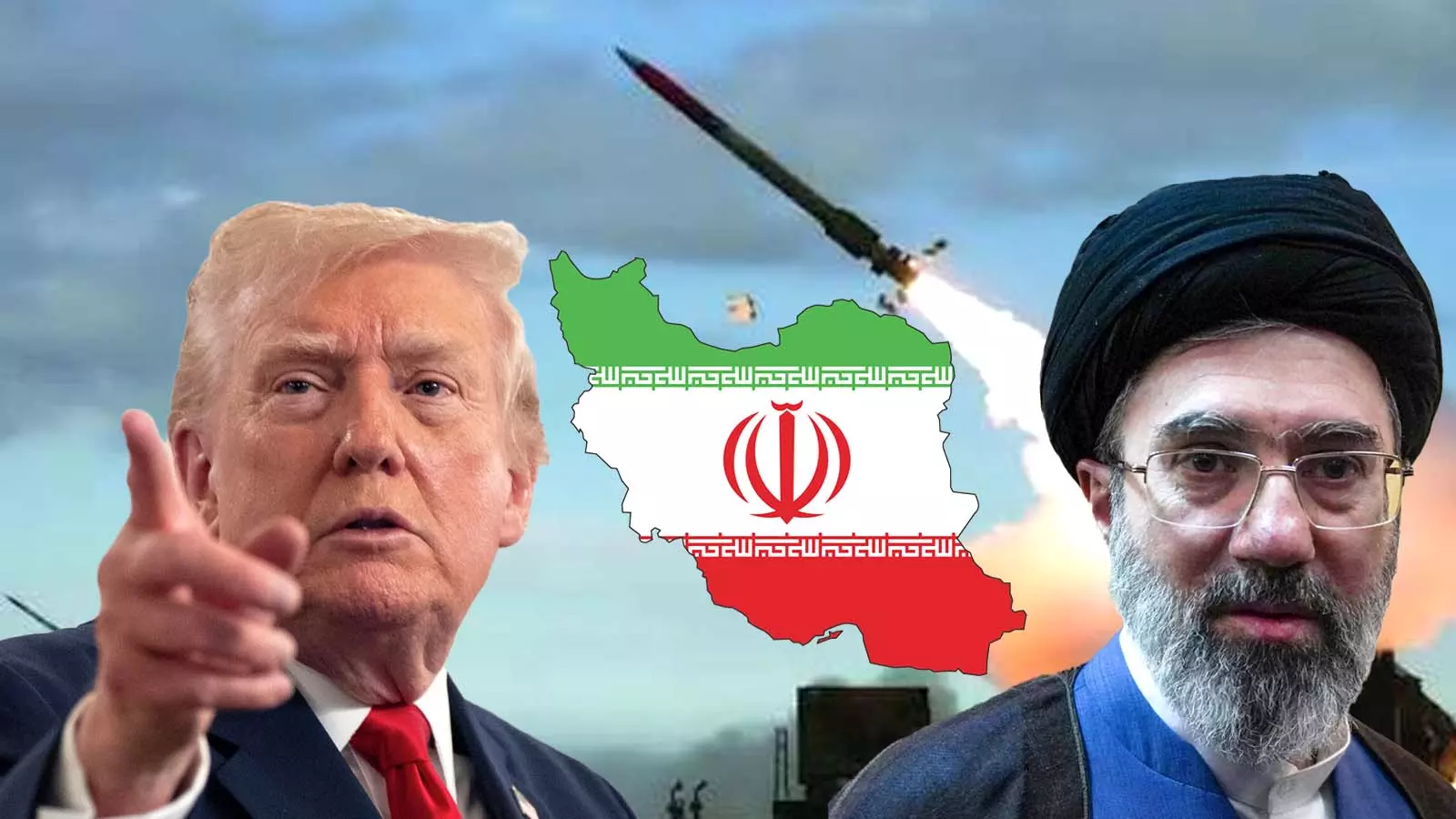
The conflict between the United States (US) and Iran intensified sharply on Tuesday as Washington launched a third consecutive night of air strikes against Iranian targets, while Iran’s Islamic Revolutionary Guard Corps (IRGC) claimed retaliatory attacks on American-linked assets in Bahrain and Jordan.
Read More: Trump declares Iran blockade back, says US will charge Hormuz fees
According to the US military, its latest five-hour operation targeted coastal defence systems, missile sites, drone facilities and maritime capabilities in Bushehr and Bandar Abbas. US Central Command said the strikes were aimed at reducing Iran’s ability to threaten commercial shipping in the Strait of Hormuz, where more than 50,000 American troops remain deployed across the wider Middle East.
In response, the IRGC announced that it had launched missiles and drones at facilities linked to US forces in Bahrain, including military infrastructure, weapons depots and communications centres near the Juffair naval base. The group also claimed to have damaged radar systems and fuel storage facilities. However, neither US nor Bahraini authorities immediately confirmed the reported damage.
Jordan also reported intercepting four missiles that entered its airspace from Iranian territory. Later, the IRGC said it had targeted an air base in Jordan hosting US personnel, while insisting its operations were directed solely at American military interests in the region.
The renewed fighting followed President Donald Trump’s announcement that the United States would reimpose a naval blockade on Iranian ports and introduce a 20 per cent cargo fee for vessels using the Strait of Hormuz. Tehran condemned the move, calling it unlawful, while Iranian Foreign Minister Abbas Araghchi criticised the proposal and accused Washington of escalating tensions.
Despite the military confrontation, President Trump maintained that a negotiated settlement with Iran remained possible. Iranian officials also confirmed that diplomatic contacts through mediators, including Pakistan, Qatar and Oman, were continuing in an effort to prevent the conflict from expanding further.
Read More: US–Iran tensions spiral as Hormuz becomes flashpoint again
The latest escalation has heightened concerns over regional security, global energy supplies and the prospects for reviving a lasting peace agreement.