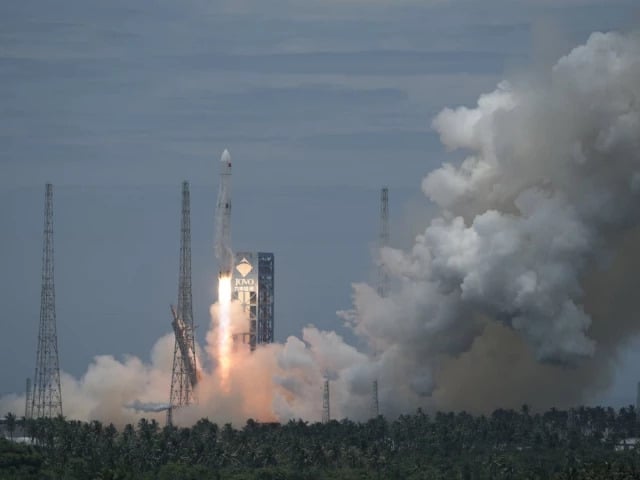
China has successfully tested a sea-based rocket booster recovery system, marking its first successful retrieval of an orbital-class rocket and a major step toward reusable launch technology. The experimental system uses a net mounted on an offshore platform to recover rocket boosters after launch. The achievement strengthens China’s ambitions to compete with the United States in the commercial space sector.
The Long March 10B rocket lifted off from the Hainan Commercial Space Launch Site and successfully placed a satellite into its planned orbit. About six minutes after stage separation, the booster returned vertically and was captured using the offshore net-based recovery system. Chinese state media described the test as a significant milestone in the country’s reusable rocket program.
Read more: China submarine missile test raises Indo-Pacific security concerns
Developed by the China Academy of Launch Vehicle Technology (CALT), the Long March 10B is designed to carry payloads of at least 16 metric tons into low-Earth orbit. Unlike SpaceX’s Falcon 9, which lands vertically on deployable legs, the Chinese system uses four landing hooks to engage a specially designed recovery net. Engineers say this approach reduces rocket weight and increases payload capacity.
China has spent nearly a decade developing reusable launch technology to lower the cost of satellite missions and support its rapidly growing commercial space industry. Previous landing attempts by state-owned and private Chinese companies failed to recover boosters successfully. The latest achievement is expected to accelerate future reusable rocket development and attract greater investment in the country’s aerospace sector.
Read more: US Expresses Concern Over China’s Ballistic Missile Test in Pacific
The Long March 10B is also being developed as part of China’s planned crewed lunar missions before 2030. Chinese authorities said the recovered booster is expected to be reused for another launch later this year, providing valuable data for future commercial and lunar space missions.