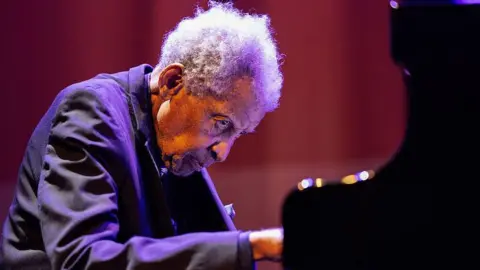
South African jazz pianist and composer Abdullah Ibrahim, a globally celebrated figure in music and a powerful cultural voice against apartheid, has died at the age of 91 in Germany, his family confirmed on Monday.
According to a family statement, Ibrahim passed away peacefully surrounded by relatives after a short illness. Over a career spanning several decades, he recorded more than 70 albums and became one of the most influential jazz musicians to emerge from Africa.
Born in Cape Town, Ibrahim began performing professionally at just 15 years old. His early talent later brought him international recognition when he was discovered in 1963 in a Zurich jazz club by legendary American pianist Duke Ellington. The encounter marked a turning point in his career, leading to recording opportunities and global performances.
In 1965, Ibrahim and his wife, jazz singer Sathima Bea Benjamin, moved to New York, where he performed with leading jazz artists, studied at the prestigious Juilliard School of Music, and occasionally fronted the Duke Ellington Orchestra.
During the era of apartheid in South Africa, jazz became a symbol of resistance, with mixed-race collaborations defying the country’s segregationist policies. Ibrahim’s music and international presence contributed to the global cultural opposition to apartheid.
After returning to Cape Town in 1968, Ibrahim converted to Islam and adopted the name Abdullah Ibrahim. His music continued to reflect themes of struggle, identity and liberation.
One of his most iconic works, “Mannenberg — Is Where It’s Happening,” released in 1974, became an unofficial anthem of resistance against apartheid, resonating deeply with South Africans living under oppression.
Ibrahim’s legacy extends beyond music, as he is widely regarded as a cultural icon whose artistry bridged continents and political movements. His influence shaped generations of jazz musicians worldwide, and his contributions remain central to the history of both jazz and South African resistance culture.
His passing marks the end of an era in global jazz history.