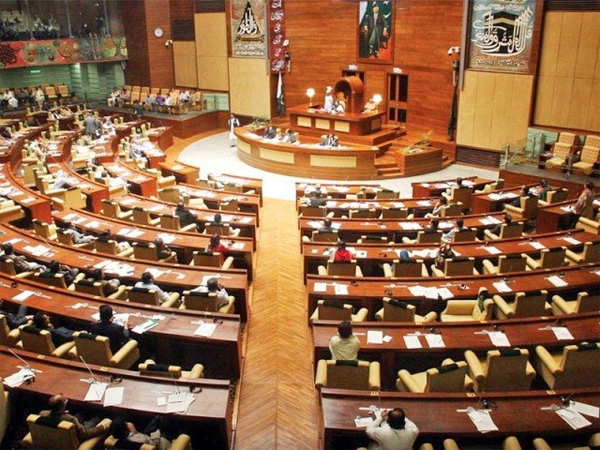
 More than one-third of the standing committees of the provincial legislature in Sindh have remained inactive, with no meetings held over the past two years, raising questions about parliamentary oversight, legislative scrutiny and political commitment to institutional accountability.
An analysis of the performance and composition of standing committees in the Sindh Assembly shows that 11 out of 34 committees – around 32 percent – have not held a single meeting since their formation in June 2024. In addition, four committees are yet to elect chairpersons, while women remain entirely excluded from seven committees.
Standing committees, often described in parliamentary systems as the “eyes, ears and brain” of the legislature, are empowered to monitor government departments, review policies, examine bills, summon officials, scrutinize records and make recommendations in matters of public interest.
Under assembly rules, standing committees are to be constituted within 90 days of members taking oath, followed by the election of committee chairpersons within 30 days. However, despite nearly two years having passed since the committees were formed, several remain dormant.
The committees on Local Government, Transport, Food and Population Welfare have yet to elect chairpersons, effectively leaving them non-functional. The absence of a Local Government committee is particularly striking at a time when debate around local governance and the proposed 28th constitutional amendment remains politically relevant.
Committees on School Education, Industries and Commerce, Forest and Wildlife, Information, Auqaf, Irrigation, Planning and Development, Mines and Minerals, Services and General Administration, Cooperatives, Minority Affairs and Livestock have not held a single meeting in two years. Of these, the Livestock Committee is chaired by an opposition-backed lawmaker from PTI, while the remaining committees are headed by members of the ruling Pakistan Peoples Party.
Committee activity overall has remained limited. Until May 13, 2026, the 34 standing committees collectively held only 58 meetings. Eight committees convened only once, mostly for introductory sessions. The Higher Education Committee held the highest number of meetings – six – but all focused on legislation referred by the house, with none examining departmental performance.
The powerful Home Committee met four times during the period.
Legislative output has also been modest. Of 16 bills referred to committees, 12 have been reviewed and returned to the house with recommendations, while four remain pending.
Gender representation within committees also reveals a significant imbalance. Seven committees have no female representation at all, including Energy, Information Technology, Livestock, Revenue and Land Utilization, Services and General Administration, and Works and Services.
In contrast, the committee on Women Development includes no male member. Five committees comprise 10 male members and only one woman, while women chair only four of the 30 committees where chairpersons have been elected – roughly 12 percent.
Committee memberships are allocated according to the parliamentary strength of political parties, with each committee comprising 11 members. Political parties nominate lawmakers to these bodies, which are expected to function as key accountability forums of the legislature.
Parliamentary observers say the lack of interest in committee leadership reflects a broader institutional challenge, with some senior lawmakers – including former ministers – reportedly reluctant to take up committee chairmanships despite their experience.An unusual case has also emerged in the Population Welfare Committee, whose chairperson is yet to be appointed.
According to parliamentary sources, one contender being considered for the role reportedly has more than 10 children – an irony not lost on legislators familiar with the committee’s mandate.