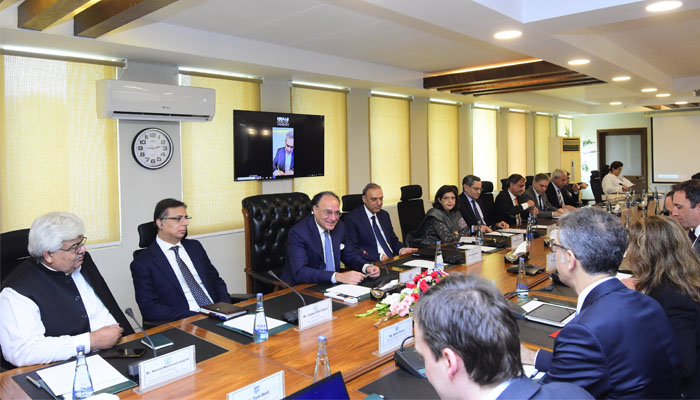
Pakistan and the International Monetary Fund continued budget negotiations as both sides discussed key economic targets for the next fiscal year. Meanwhile, the IMF recommended an 18 percent increase in the petroleum levy target to boost government revenue. Currently, the levy on petrol stands at 108 rupees and 17 paisas per litre. Moreover, the IMF mission extended its Pakistan visit by two days to finalize budget discussions and unresolved matters. Sources said both sides had already agreed on several important financial and taxation issues.
According to sources, the IMF asked provinces to collect an additional 430 billion rupees in revenue during the next fiscal year. Furthermore, the lender demanded provinces provide nearly two trillion rupees surplus to the federal government. Officials also set the Federal Board of Revenue tax collection target at 15,264 billion rupees for the upcoming year. In addition, the FBR’s half-year target until December 2026 was fixed at 7,022 billion rupees. Pakistan also presented a debt reduction framework to the IMF during the ongoing talks.
Read more: IMF proposes higher BISP payments in Pakistan talks
Sources revealed that Pakistan’s external financing needs could reach 21.2 billion dollars during the next fiscal year. Meanwhile, the IMF proposed new tax measures worth 430 billion rupees to improve revenue generation. The lender also estimated Pakistan’s economic growth rate at 3.5 percent for the upcoming year. Additionally, average inflation is expected to remain around 8.4 percent. Officials said discussions continued over several policy measures linked to economic reforms and fiscal discipline.
The IMF also pushed for an increase in payments under the Benazir Income Support Programme. Sources said both sides temporarily agreed to raise BISP payments from 14,500 rupees to 18,000 rupees. Moreover, provincial income could rise to nearly 1,950 billion rupees during the next fiscal year. The IMF mission remains in Pakistan to finalize recommendations before the federal budget announcement. However, the condition to increase gas and electricity prices twice yearly still remains active.
Read more: IMF says Pakistan’s economic recovery holds despite regional risks
Meanwhile, the IMF recommended ending new tax exemptions for special economic zones and technology zones. It also proposed gradually removing incentives for these zones until 2035. Officials said the measures aimed to widen Pakistan’s tax base and reduce fiscal pressure. Furthermore, negotiations between Pakistan and the IMF are expected to continue until all remaining issues are resolved. The final budget proposals will likely reflect several conditions discussed during the ongoing talks.