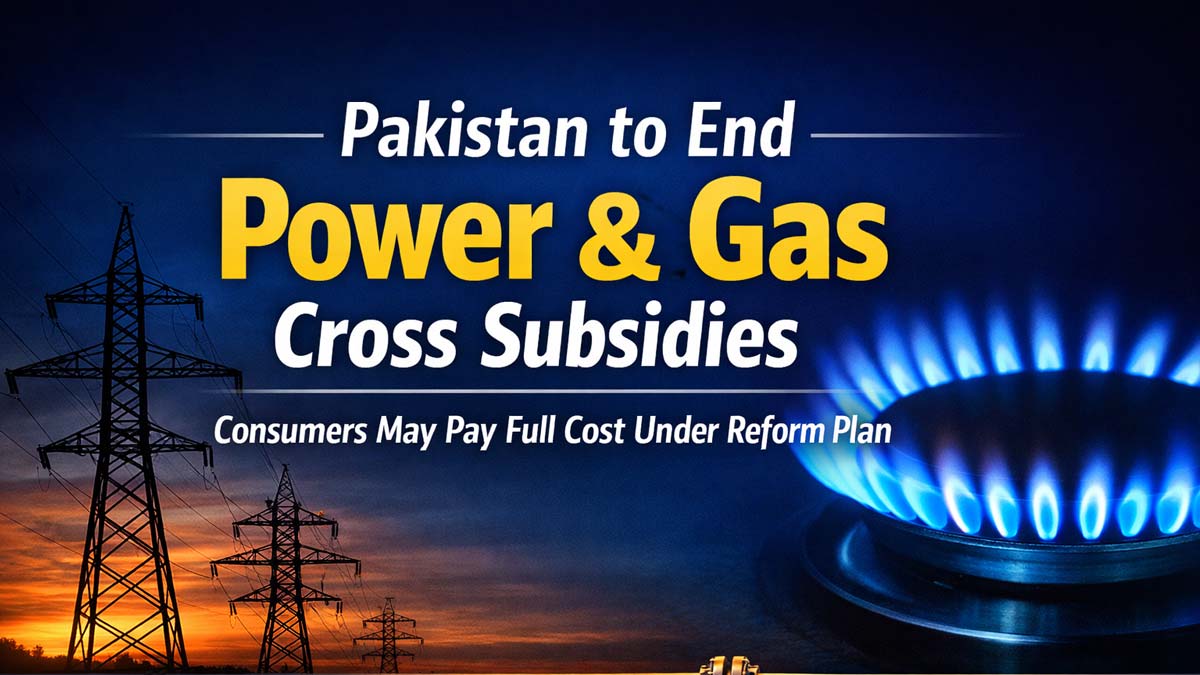
The government has decided to phase out the Rs140 billion cross-subsidy currently provided to gas consumers as part of its economic reform commitments linked to the International Monetary Fund programme.
According to officials from Pakistan’s Petroleum Division, the government has assured the International Monetary Fund that the subsidy mechanism will be fully eliminated by January 2027.
Pakistan agrees with IMF to end Rs. 140 billion gas cross-subsidy and move support to BISP-targeted system.
As per a national daily report, the reform must be completed by January 2027 under an IMF structural benchmark.
Under the new system, all consumers will be charged a… pic.twitter.com/8P4XVYEGWC
— Bloom Pakistan (@bloom_pakistan) May 13, 2026
Under the existing system, protected and some non-protected gas consumers receive natural gas at subsidised rates, while the financial burden is transferred to industries, commercial users, CNG stations, cement manufacturers and higher-consuming domestic households.
Read More: Report says petrol consumers pay Rs145 per litre in taxes
Officials say this cross-subsidy model has created pricing distortions across sectors and placed additional pressure on businesses and bulk consumers.
Following the proposed reforms, the government plans to replace consumption-based subsidies with an income-based support system.
This means relief on gas and electricity bills will no longer depend on how much energy a household uses, but instead on the financial status of consumers.
Authorities said low-income households will receive direct financial support, while all consumers will gradually move toward paying uniform average gas tariffs.
To identify eligible households, the government intends to use beneficiary data from the Benazir Income Support Programme.
Officials believe this targeted approach will ensure subsidies reach genuinely deserving families while reducing fiscal pressures created by broad-based utility support.
At present, the average gas tariff stands at Rs1,750 per MMBtu, but protected consumers currently pay significantly lower rates under the subsidy structure.
Read More: Petroleum levy collections cross Rs1.2 trillion in nine months
The move is part of wider structural reforms aimed at improving energy sector sustainability, reducing circular debt and aligning domestic tariffs more closely with actual supply costs.
Economic managers have argued that broad subsidies are financially unsustainable and often benefit consumers beyond the intended low-income segment.
The planned transition is expected to affect pricing for millions of households and businesses over the coming months.
The decision also reflects Pakistan’s continued efforts to meet reform targets under its IMF-backed economic stabilisation programme while restructuring its energy pricing system.