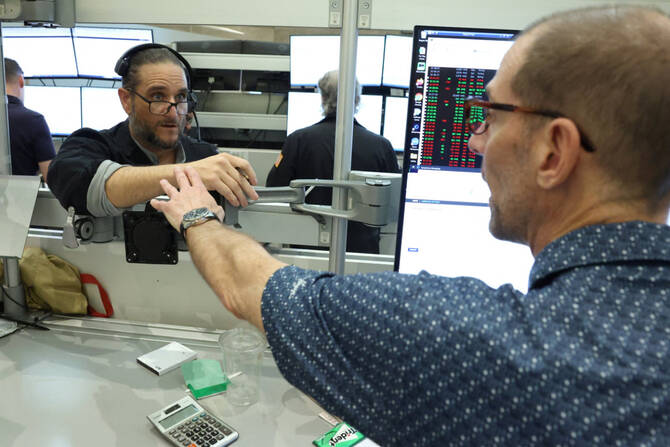
Dow Jones Industrial Average, S&P 500, and Nasdaq Composite futures declined on Monday as investors reacted to renewed geopolitical tensions in the Middle East following a strong rally in previous sessions. The market sentiment shifted as concerns over the Iran conflict reduced risk appetite among traders. Consequently, futures tied to major US indexes moved lower in early trading. The pullback followed record highs reached in the prior week.
Investor confidence weakened after Iran ruled out a second round of talks with the United States, raising concerns over stalled diplomatic efforts. In addition, tensions escalated after reports of maritime restrictions in the Strait of Hormuz, a key global oil shipping route. Therefore, markets reacted quickly to uncertainty surrounding potential supply disruptions. The situation added pressure to already volatile global financial conditions.
Read more : Middle East escalation drives Trump‑Modi dialogue
Energy markets moved in the opposite direction as oil prices climbed sharply, driven by fears of supply constraints linked to the ongoing geopolitical standoff. As a result, major US energy companies recorded gains in premarket trading. Furthermore, investors shifted focus toward defensive sectors amid uncertainty. This trend reflected broader concerns about the economic impact of sustained regional instability.
Market analysts noted that fluctuations in sentiment were closely tied to developments in diplomatic negotiations between the United States and Iran. They suggested that short-term escalation could continue as both sides attempt to strengthen their negotiating positions. Therefore, uncertainty remains high as traders assess potential outcomes. In addition, expectations of a long-term resolution still support cautious optimism in financial markets.
Read more : Pakistan stocks rise on Middle East de-escalation hopes –
CBOE Volatility Index, often known as the Wall Street fear gauge, also rose after several days of decline, signaling increased market uncertainty. Meanwhile, small-cap futures linked to the Russell 2000 index slipped slightly despite recent record performance. Consequently, volatility indicators reflected growing caution among investors. Attention now shifts toward upcoming corporate earnings reports for further market direction.
Looking ahead, major companies including defense and technology firms are expected to release earnings reports that could influence investor sentiment further. In addition, attention remains on large-cap technology stocks and their performance outlook amid geopolitical uncertainty. Therefore, market participants are closely monitoring both economic data and international developments. The combination of earnings and global tensions continues to shape short-term market direction.