The Taliban’s self-styled rule in Afghanistan is widely considered to be a strict, parochial interpretation of Sunni Islamic law (Sharia), heavily influenced by rural Pashtun tribal customs and deeply influenced with the 19th-century sub-continental sectarian ideology. Many Islamic scholars and Muslim-majority nations argue that the Taliban’s policies deviate from true Islamic Sharia by prioritizing outward conformity, repression, and political control over the moral, ethical, and compassionate principles of the faith. Governance is closed, secluded and unaccountable. Decision-making is confined to a small inner circle, with no transparency, no institutional oversight and no public participation. There is no parliament, no independent judiciary and no free media. Afghanistan ranks among most restricted environments for press freedom globally. Taliban Emirate is neither a legitimate Islamic system nor a representative government. It is a coercive, exclusionary, centralized order built on force, ethnic dominance, repression and ideological control, functioning as an authoritarian monarchy under religious cover.

Major Deviations from True Islamic Shariah
Coercive & Personalized Rule: Islamic governance requires consultation, consent and accountability. Caliph Abu Bakr al Siddiq established legitimacy through public acceptance, while significant Islamic scholars reject rule by force as usurpation. Current Taliban regime under one Supreme Leader reflects none of these principles. Taliban’s governance system is coercive and personalized rule contradicting Islamic principles. Taliban supreme leader claims authority as Amir al-Mu’minin, yet his rule lacks legitimacy. Power was seized on 15 August 2021 through force, with promises of a Jirga never fulfilled. No public pledge of allegiance was secured and authority was unilaterally consolidated despite lack of consensus even within Taliban ranks. Decision-making is concentrated in Kandahar within a closed circle of fewer than 20-25 key figures.
Repressive System: Taliban regime operates through repression and fear. Dissent is criminalized, criticism labeled rebellion and even internal disagreement suppressed. Under legal frameworks introduced under Supreme Leader, critics face detention, torture and in some cases execution. Reports indicate dozens of public punishments, including floggings reinstated since 2021.

Denial of Education and Work for Women: The Taliban’s ban on girls’ secondary and university education, as well as restricting women from working, directly contradicts the Islamic mandate that seeking knowledge is compulsory for both men and women. System combines political domination with ideological and social control. Over 100 decrees have been issued restricting women’s rights, including bans on secondary and higher education and most employment sectors. Women are excluded from public life, while dissent and modern governance frameworks are rejected. Case of Abbas Stanakzai, a senior Taliban commander, highlights internal repression. After advocating for women’s education and consultation in 2023-2025, he faced restrictions, marginalization and reported threats of detention. Even senior leadership figures are denied independent voice. Not only this, Abbas Stanakzai reportedly faced arrest orders and travel restrictions from leadership under Hibatullah Akhundzada, was removed from his position, and subsequently left Afghanistan. He is widely reported to be living in de facto exile in United Arab Emirates, remaining outside active Taliban decision-making.

Misinterpretation of Modesty and Gender Interaction: While Shariah encourages modesty, the Taliban’s mandatory face-and body covering (burqa) and bans on women’s voices in public go beyond Islamic requirements. The segregation policies suggest that women’s presence is “temptation,” violating the Islamic ethos of mutual respect and cooperation between genders.
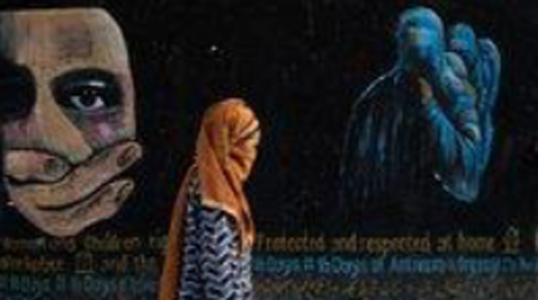
Arbitrary Punishments and Violations of Due Process: The Taliban utilizes public floggings and executions to enforce their rules, often failing to uphold the rigorous requirements of evidence demanded by traditional Islamic jurisprudence. This includes punishments for minor violations, which critics say aligns more with authoritarian control than divine law.
Institutionalized Inequality: The Taliban’s implementation of a new criminal code creates a rigid hierarchy, offering relative immunity to their own leadership (clergy) while enforcing severe penalties on the lower classes, contradicting the principle of equality before the law in Islam. Taliban criminal code enforces ideological control and sectarian hierarchy. Only Hanafi followers are recognized, while others are labelled deviant. Religious disagreement is criminalized, with penalties ranging from imprisonment to death. Legal framework also introduces class-based punishment, where same offense carries different consequences depending on social status.

Ethnic Marginalization & Disparity: Afghanistan is a multi-ethnic country; Pashtuns 40-45%, Tajiks 25-30%, Hazaras 9 15%, Uzbeks and Turkmen 10-13%. Yet Taliban leadership is overwhelmingly Pashtun. Rahbari Shura of approximately 20-25 members is estimated 85-95% Pashtun. The 49-member cabinet includes only 2 Tajiks, 2 Uzbeks, 2 Baloch and 1 Nuristani, with zero Hazara and zero female representation. Over 85% of key ministries, including Interior, Defence, Finance and Justice, are controlled by Pashtun figures. Kandahar-based governance structure reinforces exclusion. Non-Pashtun officials hold symbolic roles, while security institutions of over 200,000 personnel remain dominated by one group. Tajiks, Uzbeks, Hazaras and Turkmen are effectively excluded from meaningful authority.
Compromised Religious Freedom: The Taliban’s treatment of Shia (specifically Hazara) and other religious minorities, including forced conversions and persecution, runs against Islamic teachings of protecting minorities within an Islamic state. Religious freedom is systematically dismantled. In Badakhshan, Ismaili communities are coerced into conversion through financial incentives, security guarantees and employment offers. More than 50 individuals were forced to convert in first three months of 2025 alone. Shia students face pressure to adopt Hanafi doctrine or risk expulsion from universities
Conclusion
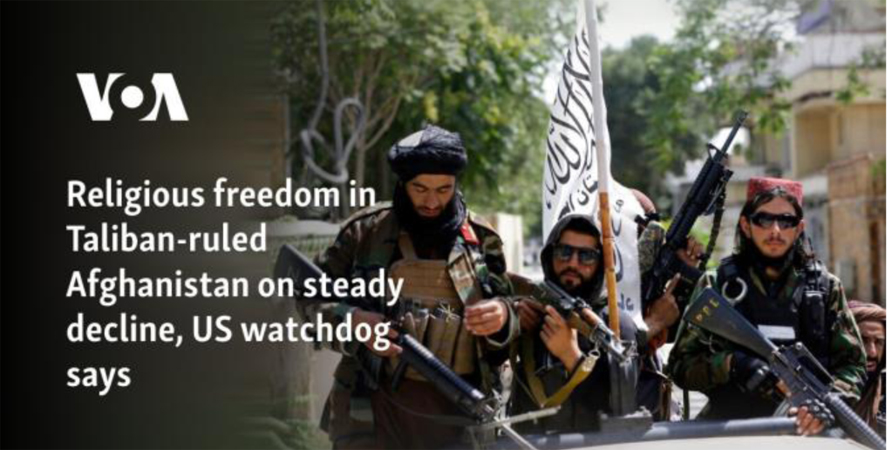
The Taliban’s “Islamic Emirate” is widely seen as an extremist model that swaps the core Islamic values of dignity and justice for rigid social control. This governance has led to a humanitarian crisis, with over 90% of the population in poverty and millions facing hunger. While the leadership claims to have brought “peace,” critics describe it as a “peace of the graveyard” . More evidently , a silence enforced by fear and the total suppression of dissent rather than genuine stability. By banning girls’ education and silencing critics, the Taliban ignores the foundational Islamic principles of shura (consultation) and the right of citizens to hold their leaders accountable. In this system, power is absolute, leaving no room for the responsible, transparent leadership required by Islamic tradition.