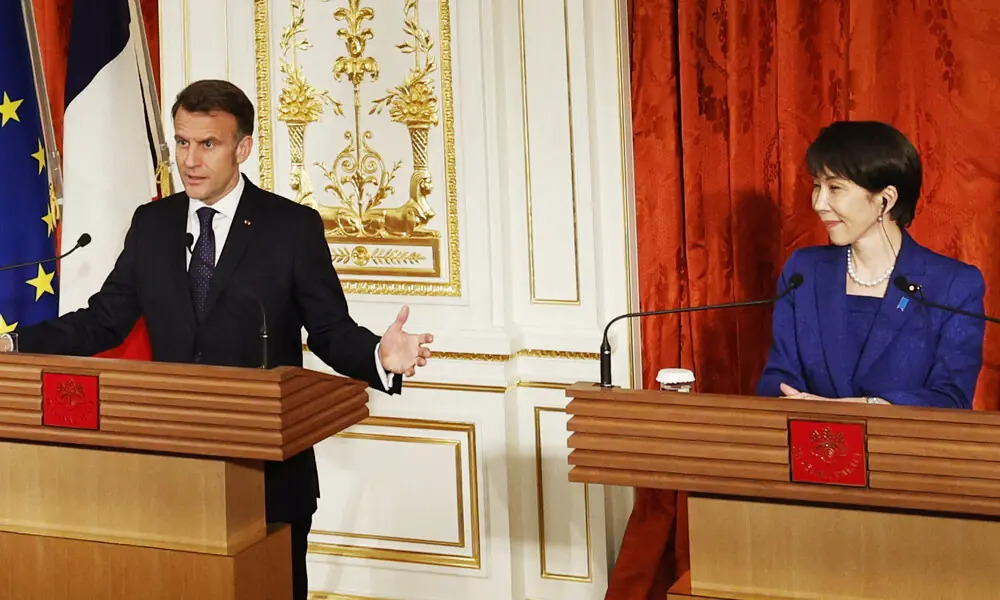
Japan and France agreed on Wednesday to coordinate closely to end the U.S.-Israeli war with Iran and reopen the Strait of Hormuz. The leaders emphasized the strategic importance of the waterway, which carries about 20% of global oil and LNG shipments. Their cooperation affects global energy security and regional stability amid the ongoing Middle East conflict.
Prime Minister Sanae Takaichi said that deepening personal ties with French President Emmanuel Macron strengthens international cooperation during a challenging security environment. Talks focused on security, industrial collaboration, and joint responses to rising energy costs due to the blockade.
Read more: Japan, France, US plan their first joint military drills in May
Macron highlighted the need to restore freedom of navigation in the strait and noted that France has consulted dozens of countries for proposals to reopen the waterway after the conflict ends. Japan has considered dispatching minesweepers, though constitutional limits would constrain its role.
The two leaders also committed to closer security cooperation in the Indo-Pacific and signed agreements on critical mineral supply chains, civilian nuclear technology, and artificial intelligence. They stressed that multilateral coordination is key to managing both energy and security risks.
Read more: Japan is the fittest country worldwide with the longest life expectancy
Japan, which imports about 90% of its oil from the Middle East, has started using its reserves to cushion economic impacts. Analysts say Tokyo and Paris’s collaboration signals stronger international pressure for peace in the region and highlights the importance of securing maritime trade routes.