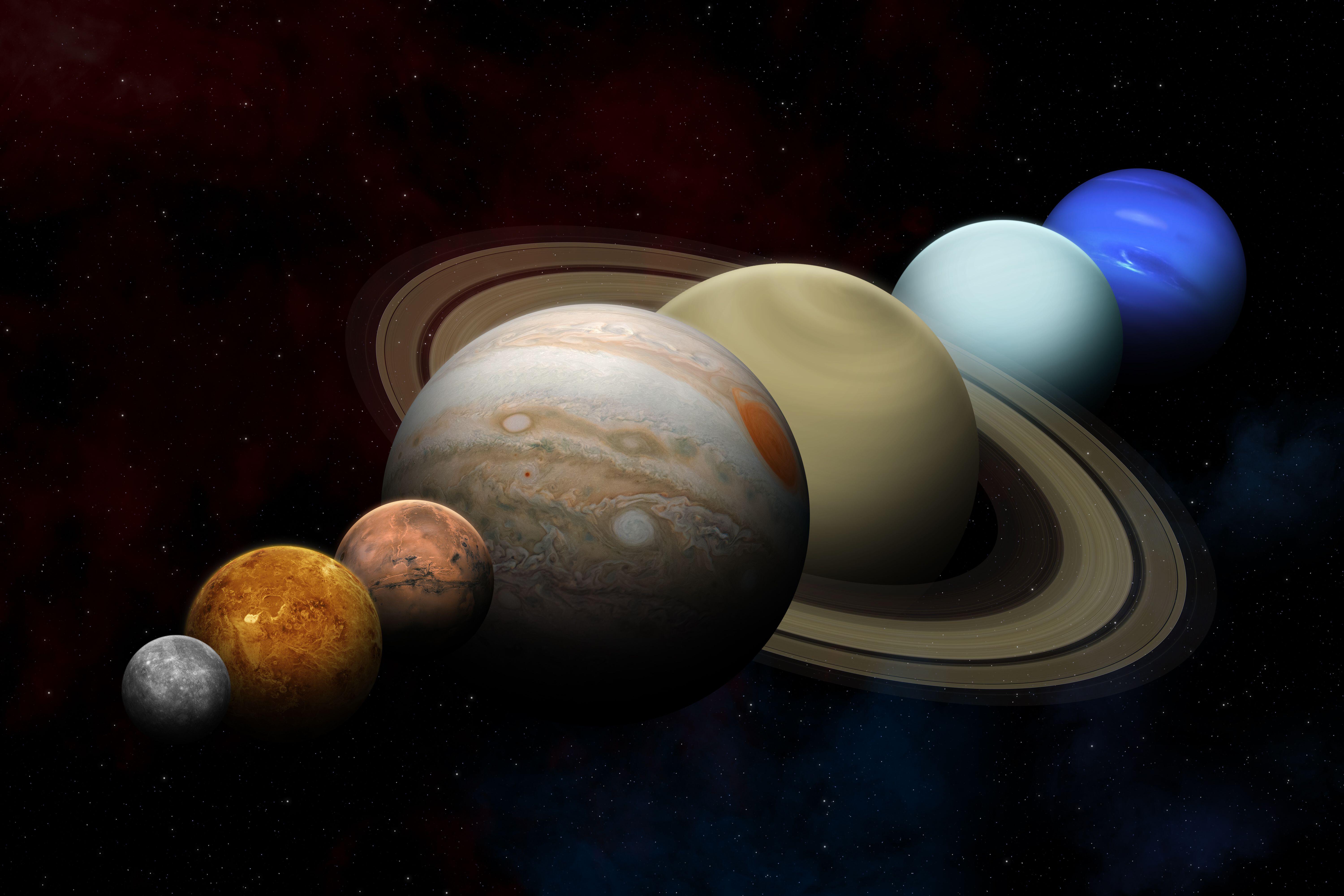
Scientists discover new moons around Jupiter and Saturn using advanced telescopes, marking a major step in space observation. Researchers say the solar system holds far more objects than many people expect. Moreover, recent studies reveal previously unknown celestial bodies orbiting these giant planets, expanding our understanding of the cosmic neighborhood.
The latest research confirms the discovery of 15 new moons, raising Saturn’s total to 285 and Jupiter’s count to 101. As a result, the total number of known moons in the solar system has reached 442. Furthermore, scientists note that these findings show how rapidly observation technology is improving and uncovering hidden objects.
Most of the newly discovered moons are extremely small, measuring less than three kilometers in diameter. Their distant orbits make them very faint and difficult to detect with standard equipment. In fact, their brightness ranges between magnitude 25 and 27, far dimmer than Earth’s moon. Researchers like Scott Sheppard and David Tholen identified Jupiter’s new moons, while Edward Ashton and his team discovered Saturn’s additional satellites.
In conclusion, scientists discover new moons around Jupiter and Saturn using advanced telescopes, and more findings are expected in the future. Upcoming missions like Europa Clipper and JUICE may reveal even more moons. These discoveries continue to reshape our understanding of the solar system and highlight ongoing progress in space exploration.