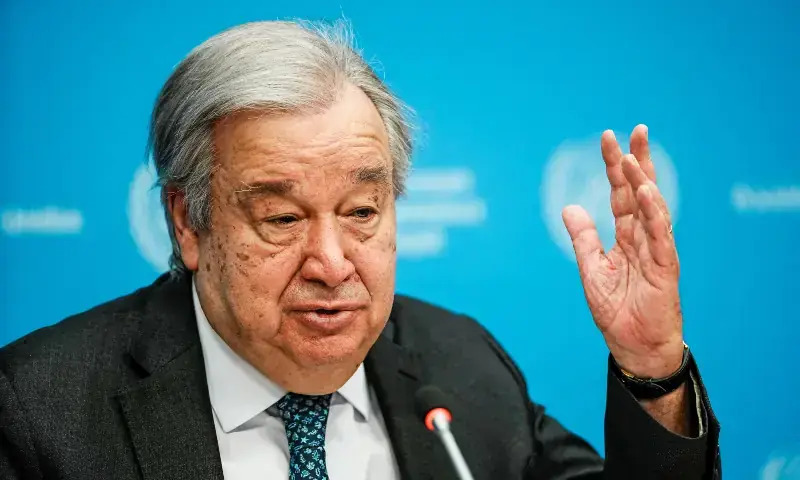
United Nations Secretary-General Antonio Guterres on Thursday called on the United States and Israel to end the ongoing war on Iran, while urging Tehran to stop attacking its neighbours. His remarks highlight escalating regional tensions and the global economic impact of the conflict, particularly on vulnerable countries.
Speaking to reporters in Brussels after meeting European Union leaders, Guterres warned that the war risks spiraling out of control, causing immense civilian suffering and severe disruptions to the global economy. He stressed that least developed countries are especially vulnerable to the conflict’s consequences, including rising energy prices and inflation.
Read more: UN Chief Guterres demands immediate ceasefire in Lebanon
Turning to Iran, Guterres urged Tehran to halt attacks on neighbouring countries, noting that they are not parties to the conflict. He emphasized the importance of respecting international law and avoiding escalation in the Gulf region, particularly around key energy routes.
I have two clear messages:
First, to the United States & Israel:
It’s high time to end this war that is risking to get out of control, causing immense suffering on civilians, with dramatic effects on the global economy & potentially tragic consequences, especially for the least… pic.twitter.com/1GGzoK2LNM
— António Guterres (@antonioguterres) March 19, 2026
The UN chief’s statement follows US and Israeli strikes on Iran that began on February 28, including the assassination of Supreme Leader Ayatollah Khamenei. Since then, Iran has targeted US assets and bases in Gulf countries, further intensifying the conflict. The UN Security Council condemned the attacks and called for the reopening of the Strait of Hormuz.
Read more: UN chief warns rule of force replacing rule of law
Guterres warned that prolonged disruption of the Strait of Hormuz causes global economic pain for countries not involved in the conflict. He concluded, “It’s time for the force of law to prevail over the law of force. Diplomacy must prevail over war.”