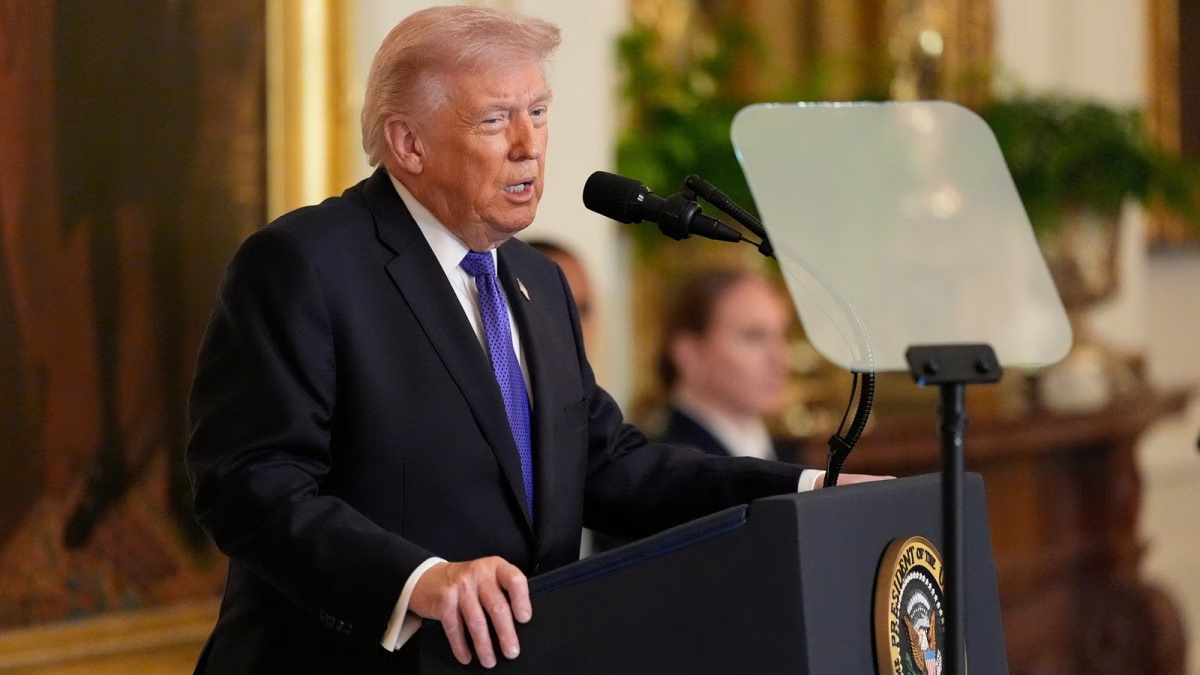
TEHRAN — U.S. President Donald Trump has called on NATO allies and China to assist in reopening the Strait of Hormuz, the vital oil shipping route effectively blocked by Iran, as global oil prices surged amid escalating Middle East conflict.
Read More: Trump orders US military to draft Greenland invasion plan
The strait, a crucial passage for crude exports, was closed after Iran launched attacks on energy and shipping targets in retaliation for the ongoing U.S.-Israeli war against the Islamic Republic. Oil prices rose 40–50 percent, with crude hovering around $100 per barrel as the conflict entered its third week.
Trump on China deploying troops to get the Strait of Hormuz open: “China is an interesting case study. They get most of their oil through the Strait … they should come in, in my opinion” pic.twitter.com/ZSTB65QaRK
— Aaron Rupar (@atrupar) March 16, 2026
Trump told the Financial Times that the United States was in talks with Iran, though Tehran was not yet ready for a deal. He urged countries including China, France, Japan, South Korea, and Britain to deploy naval escorts to protect commercial tankers. Trump warned that failure to assist could affect NATO’s future and potentially delay his planned summit with Chinese leader Xi Jinping. However, Tokyo and Canberra confirmed they would not send ships.
Iran has warned other nations against involvement. Foreign Minister Abbas Araghchi called on countries to avoid actions that could escalate the conflict and urged expulsion of foreign military forces from the region.
The war has intensified across the Middle East, with attacks on U.S. and allied bases in Iraq, Kuwait, and Lebanon. Saudi Arabia intercepted over 60 drones, while Dubai airport temporarily suspended operations after a drone-related fire. France condemned an Iranian-designed drone attack that killed a French soldier in Iraq.
Read More: European forces deploy to Greenland amid Trump tensions
On the economic front, the International Energy Agency announced the release of 400 million barrels of oil from strategic reserves, starting with Asia Oceania nations, followed by Europe and the Americas. Japan began releasing reserves immediately to stabilize markets. Rising prices have affected daily life worldwide, from increased fuel costs in Australia to cooking gas shortages in India.
Despite the conflict, life in Tehran has shown signs of limited normalcy, with bazaars and restaurants reopening and citizens adjusting to the economic strain.