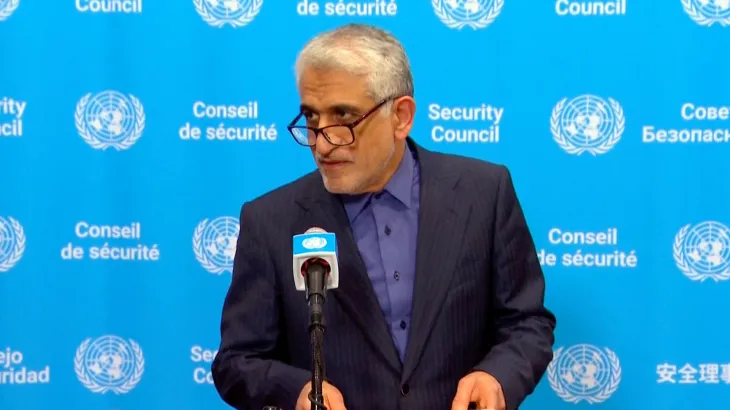
Iran’s ambassador to the United Nations has clarified that Tehran has no plans to close the strategically important Strait of Hormuz despite rising regional tensions. The statement came amid global concerns that escalating conflict in the region could disrupt maritime traffic through one of the world’s busiest oil shipping routes. Iranian officials stressed that maintaining stability in the waterway remains an important priority. However, they also emphasized the country’s right to safeguard security in the region.
Speaking to reporters at the United Nations, Iran’s UN envoy Amir Saeid Iravani said the country would not block the Strait of Hormuz. His remarks came in response to comments made earlier by Iran’s new Supreme Leader, Mojtaba Khamenei. Khamenei had suggested that the possibility of blocking the waterway could remain a strategic option for Iran. Nevertheless, Iravani clarified that closing the passage is not currently part of Tehran’s plan.
Read more : Iran vows retaliation, keeps Strait of Hormuz closed amid escalating …
Iravani stated that Iran remains committed to the principle of freedom of navigation under international maritime law. He explained that Iran respects global shipping rights and understands the importance of maintaining open sea routes for international trade and energy transportation. According to him, the country supports lawful navigation through the strategic corridor. Therefore, Iran intends to ensure stability while protecting its national security interests.
At the same time, the envoy argued that current tensions in the region are not the result of Iran exercising its right to self-defense. Instead, he blamed destabilizing actions by the United States for increasing insecurity across the region. Iravani said these developments have contributed to growing instability in areas surrounding the Strait of Hormuz. Consequently, he stressed that regional peace requires reducing military pressure and restoring diplomatic balance.
Read more : Attacks on ten vessels disrupt traffic in Hormuz Strait –
Meanwhile, Iravani declined to comment on remarks made by US Treasury Secretary Scott Bessent regarding possible naval escorts for commercial ships. The US official had suggested that the US Navy, potentially supported by an international coalition, could escort vessels through the Strait if necessary. Analysts say the situation highlights the growing strategic importance of the Strait of Hormuz for global energy markets. Any disruption in the waterway could have serious consequences for international oil supply and trade routes.