The escalating conflict between the United States, Israel, and Iran widened dramatically as fresh strikes and counterattacks rippled across the Gulf and into Lebanon. US President Donald Trump said operations could last four to five weeks or longer, describing the campaign as necessary to curb Iran’s nuclear and ballistic missile programs. However, the expanding battlefield has already drawn multiple regional actors into direct confrontation, raising fears of a prolonged and destabilizing war.
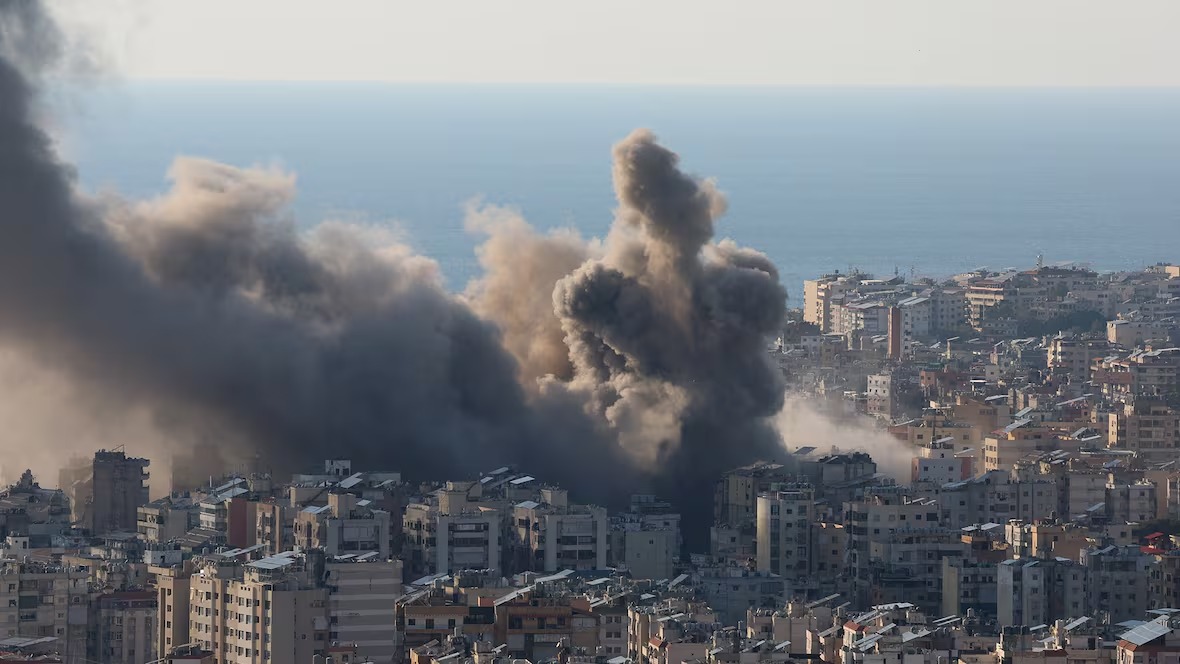
In a significant escalation, Lebanon’s Hezbollah movement launched missiles and drones toward Israel, opening a new front in the conflict. Israel responded with extensive airstrikes on Hezbollah-controlled areas in Beirut’s southern suburbs, where Lebanese authorities reported at least 31 deaths and 149 injuries. Meanwhile, explosions echoed across Tel Aviv as Israeli air defense systems intercepted incoming Iranian missiles during sustained overnight barrages.
Read more : Shehbaz, Al-Sharaa urge restraint amid Gulf crisis
The war has also spilled into Gulf states hosting US military bases, underscoring the growing risks of miscalculation. In a dramatic incident, Kuwait mistakenly shot down three American F-15E fighter jets during an Iranian attack, according to US Central Command. All six crew members safely ejected and were recovered, but the episode highlighted the volatility gripping regional airspace as missiles and drones crisscross national boundaries.
Furthermore, the conflict has disrupted global trade and energy markets, particularly after shipping through the Strait of Hormuz halted amid security threats. Roughly one-fifth of the world’s oil trade passes through this narrow waterway, and its closure has sent oil prices sharply higher. Qatar suspended liquefied natural gas production, while Saudi Arabia shut its largest refinery after drone strikes sparked fires at key energy facilities.
Read more : Middle East conflict risks $3bn remittance hit
On the political front, Trump’s decision has triggered intense debate in Washington, with critics questioning whether sufficient evidence of an imminent threat existed. Secretary of State Marco Rubio defended the strikes as preemptive, arguing that intelligence showed Iran would target US forces if Israel acted alone. Nevertheless, rising US casualties, mounting civilian deaths across Iran, Israel, and Lebanon, and growing global condemnation suggest the crisis could deepen further before any diplomatic path emerges.