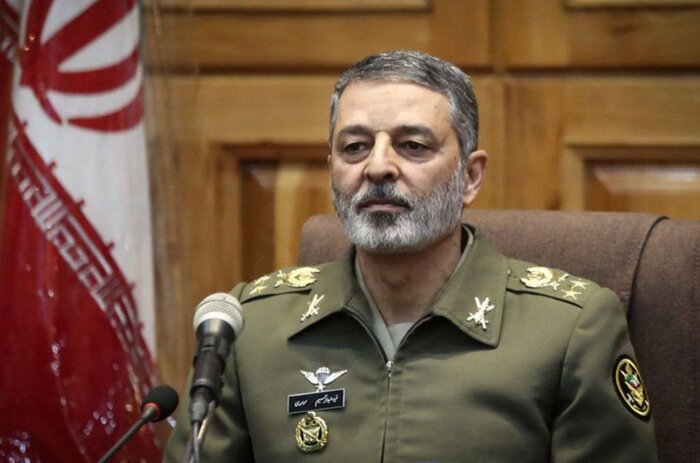
Iranian state television reported on Sunday that Armed Forces Chief of Staff Abdolrahim Mousavi was killed during large-scale airstrikes targeting key military and political figures. The announcement came a day after coordinated United States and Israeli operations struck multiple locations across Iran. Officials said Mousavi was among nearly 30 senior leaders and commanders reportedly targeted in the high-profile attacks. His death marks another significant blow to Iran’s top military command structure amid escalating regional tensions.
The strikes formed part of a broader joint campaign that reportedly aimed at crippling Iran’s strategic leadership and military capabilities in a single decisive wave. According to Iranian broadcasts, several high-ranking regime officials and military chiefs were present at facilities struck during the operation. Explosions were heard in various parts of Tehran and other sensitive areas, indicating the scale and coordination of the assault. Authorities have not yet released a full list of casualties but confirmed heavy losses within senior ranks.
Read more : Joint strikes on Iran spark massive Middle East conflict –
Mousavi played a central role in overseeing Iran’s armed forces and coordinating between conventional military units and the Revolutionary Guard. As chief of staff, he influenced defense planning, military readiness, and regional security strategies during a period of intense confrontation with Western powers. His leadership became particularly visible during recent crises involving Israel and United States forces in the region. Therefore, his reported death creates uncertainty over immediate command transitions within Iran’s defense establishment.
Read more : Iran strikes 14 US bases, claims heavy casualties –
Meanwhile, Iranian officials vowed swift retaliation and promised that the country’s defense structure would remain intact despite the losses. State media emphasized that military operations and national security mechanisms continue without disruption, signaling an effort to project stability. Analysts warn, however, that removing multiple top commanders at once could complicate operational coordination in the short term. Consequently, the situation raises fears of further escalation as both sides prepare for possible next moves.
The reported killing of Mousavi follows a series of strikes that have already reshaped the region’s security landscape within days. Regional governments and global powers are closely monitoring developments, concerned that leadership losses could push tensions toward broader conflict. Although Tehran has not disclosed succession plans publicly, officials insisted that the chain of command remains functional. As events unfold rapidly, the Middle East faces another uncertain chapter marked by heightened military confrontation.