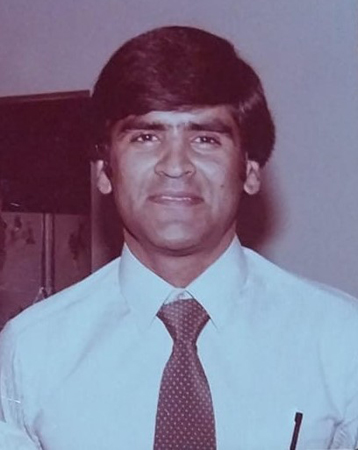
 Sajjad Muneer, who passed away in Lahore a few days back after a short illness, was a prominent squash player of the late 1960s and early 1970s – reached a world ranking of eight.
He was the son of Muneer Ahmed, chief engineer of Pakistan Railways, a keen player in Lahore who helped form the West Pakistan Squash Rackets Association, and who promoted the sport in the region, especially in Lahore.
Sajjad was initially part of a youngsters group arranged by the association and coached by Safirullah Khan – father of Mohibullah Senior- the 1963 British Open winner . Sajjad’s sister Azra was also one of the group – she would later become Pakistan number two.
Pakistan’s two greats, Gogi Alauddin and Hidayat Jahan, future world no two & four respectively, were also the products of this scheme. The renowned sports writer Rex Bellamy, the squash and tennis correspondent of Times of London, wrote how together the three started the “green shoots of revival” for Pakistan squash in the late 1960s. They came to be known as the “three musketeers.”
Sajjad made his maiden international appearance in the first World Amateur Team Championships in 1967 at Sydney. His best result on the professional circuit was the quarter final appearance at the 1974 British Open.
Like his father, Sajjad was also a civil engineer. After getting his bachelors in civil engineering from Lahore’s University of Engineering and Technology, he did specialization in materials and construction from the University of Birmingham in England. He worked for some of the world’s leading engineering firms such as URS, Knight Piesold, Wardell Armstrong and Baker O’Brien. That took him to around 12 countries. In Pakistan, Sajjad’s consulting services were acquired by some of the biggest corporations including Engro, Fauji and Hubco.