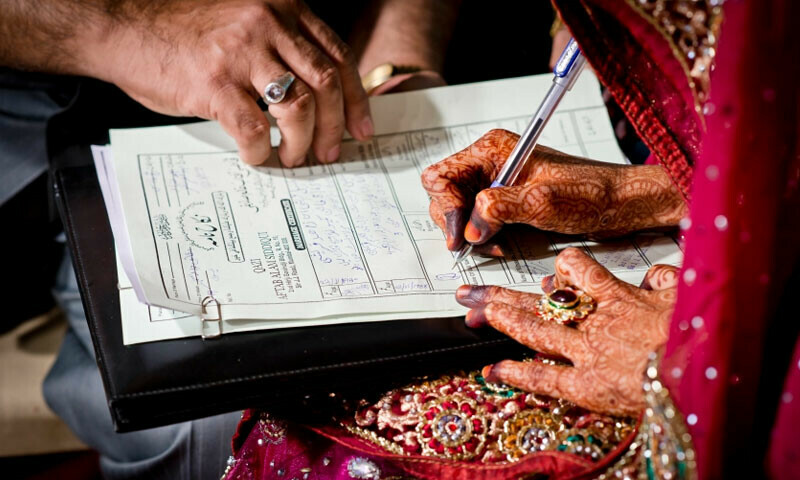
The Supreme Court of Pakistan emphasized that husbands are legally bound to pay the full haq mehr stated in the nikahnama, underlining that these payments form an essential part of a marriage contract.
During hearings on petitions related to dowry and haq mehr, Chief Justice Yahya Afridi led a two-member bench that stressed the legal enforceability of the amounts or items recorded in marriage documents.
Petitioners’ lawyers argued that 40 tolas of haq mehr was excessive and requested the court to allow partial payment, suggesting 20 tolas instead, but the bench maintained that courts cannot alter personal agreements in marriage contracts.
Read more : CJP consults bars on judicial reforms, citizen-centric justice
The Chief Justice noted that offering a little extra voluntarily could resolve disputes amicably, but reiterated that the legal obligation remains with the husband to fulfill what was agreed and recorded in the nikahnama.
Following the deliberations, the Supreme Court dismissed multiple petitions challenging dowry and haq mehr payments, highlighting that judicial interference in such personal contractual obligations is limited by law.
The ruling reinforces the importance of adhering to marriage contracts in Pakistan, ensuring women’s financial rights are protected and disputes over haq mehr or dowry are handled within legal frameworks.