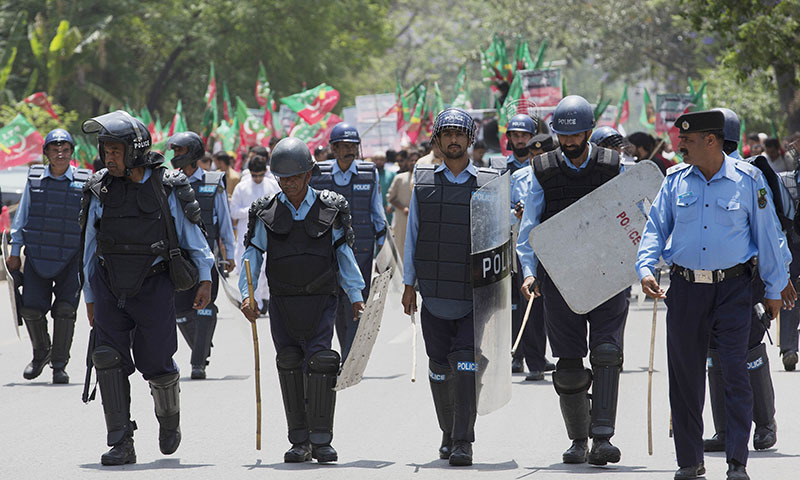
The government has requested the deputation of Pakistan Army personnel to support the Islamabad Capital Territory Police amid growing security and operational demands. A formal letter has been sent seeking two army majors and sixteen Special Services Group personnel. The move comes as ICT Police faces challenges ranging from law enforcement to crime prevention, highlighting the need for additional trained manpower to maintain order effectively.
According to the Office of the Inspector General of Police Islamabad, the city police are responsible for restoring law and order, preventing crime, taking action against criminal elements, and managing security and route duties. The expanded responsibilities have stretched existing resources, prompting the government to seek army support. This step reflects the administration’s proactive approach to enhancing urban security in the capital.
Read more : Golden hand monument in Islamabad sparks confusion on social .
Of the sixteen requested SSG personnel, ten will be assigned to the National Police Academy Islamabad, where they will assist in training and operational preparedness. The remaining six personnel, along with the two army majors, will be integrated into various ICT Police units to strengthen field operations. Their deployment is expected to improve both strategic and tactical policing capacity in the city.
Officials emphasized that collaboration between the Pakistan Army and ICT Police will allow more efficient handling of complex security tasks. Furthermore, the trained personnel will bring experience in specialized operations, counter-terrorism measures, and rapid response, boosting the effectiveness of law enforcement in high-risk areas. The decision also underscores the growing coordination between civil and military institutions for public safety.
The government has highlighted that this temporary deputation aligns with existing vacant posts within ICT Police, ensuring legal and administrative compliance. By integrating army officers and SSG personnel, authorities aim to enhance the city’s operational readiness during peak security periods and large-scale events. Citizens can expect improved policing, faster response times, and strengthened preventive measures.
Authorities also noted that the deployment will serve as a model for future cooperation between military forces and civil law enforcement agencies. This initiative highlights the importance of trained personnel in supporting urban policing while maintaining law, order, and public confidence in the capital’s security infrastructure. Continuous monitoring and evaluation will ensure the initiative meets its operational goals effectively.