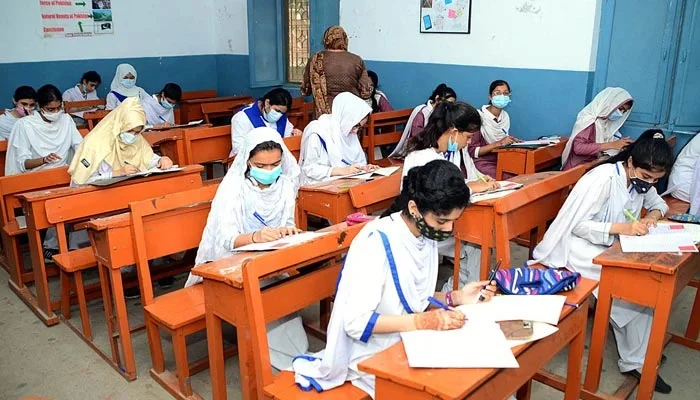
The Sindh government has officially approved a major education reform by abolishing the traditional marks-based examination system and introducing a new grading framework for matriculation and intermediate students across the province.
Sindh Minister for Universities and Boards Ismail Rahoo announced that the decision aligns with national-level reforms approved by the Inter Board Coordination Commission, aiming to modernize assessments and ensure uniform academic standards nationwide.
Read more : Sindh CM orders inquiry, promises compensation –
Moreover, the minister explained that the long-standing marks system has been replaced with an internationally recognised grading structure, which focuses on broader performance evaluation rather than numerical competition among students.
The new grading system will be implemented in phases, starting in 2026 with Class 9 (SSC-I) and Class 11 (HSSC-I) examinations, and extending to Class 10 and Class 12 annual exams in 2027.
Read more : Sindh govt sets up helpline for information on plaza fire
Under the approved policy, students must score at least 40 percent in each subject to pass, while those falling below this threshold will receive an ungraded status and may reappear to improve results.
Additionally, the provincial government plans to introduce a Grade Point Average system in the future, with officials stating that the reforms aim to reduce pressure on students and improve learning outcomes.
Approved grading structure:
A++ (96–100%), A+ (91–95%), A (86–90%), B++ (81–85%), B+ (76–80%), B (71–75%), C+ (61–70%), C (51–60%), D (40–50%), U (Below 40%)