Skywatchers are in for a spectacular show as the January 2026 new moon has created darker skies, offering ideal conditions to spot bright planets, stars, and winter constellations across the globe.
The U.S. Naval Observatory reported that the new moon peaked on January 18, leaving the night skies free of moonlight and providing a rare opportunity for clear observation of celestial objects.
A new moon occurs when the moon aligns between Earth and the sun, with its illuminated side facing away from our planet, making it almost invisible and resulting in darker skies perfect for stargazing.
Read more : Russia seizes 300 sq km of Ukraine in January
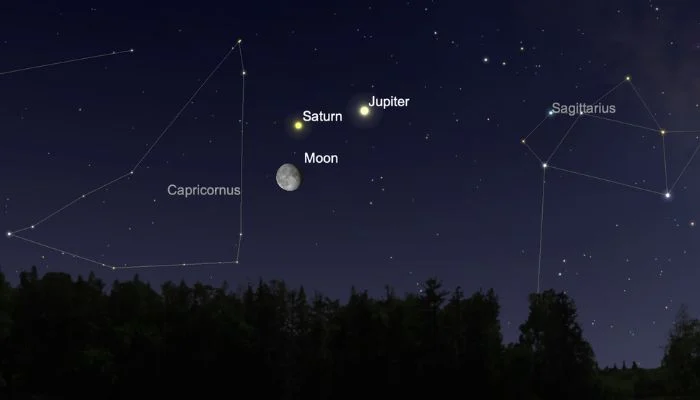
This month, Jupiter and Saturn are standout sights visible to the naked eye, with Saturn appearing in the southwestern sky after sunset while Jupiter rises in the east before nightfall.
Winter constellations such as Orion, Taurus, Gemini, Auriga, and the brightest star Sirius are now prominent in the Northern Hemisphere, and even faint objects like the Orion Nebula can be seen from dark locations.
In the Southern Hemisphere, Saturn and Jupiter are also observable in the evening sky, accompanied by star formations like Carina, Vela, and Puppis, while astronomers note that nights following a new moon provide the best viewing conditions.