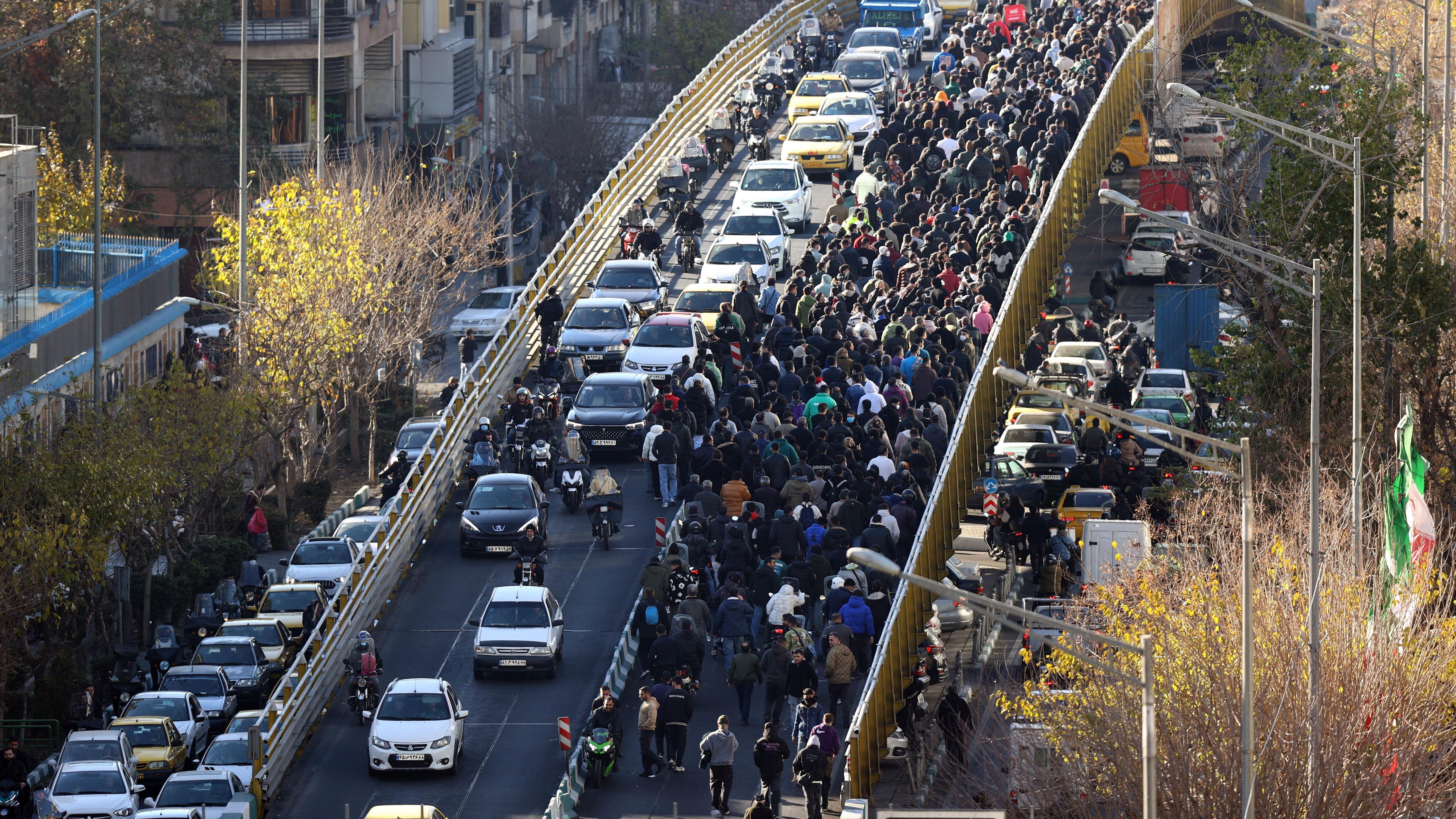
Iran signalled it would not be swayed by external pressure on Monday, maintaining a tough stance against what it called “rioters” while insisting that peaceful protest remains a legitimate right. The position comes as demonstrations triggered by economic hardship continued across several parts of the country.
Read More: Iran vows firm action amid protests
Judiciary Chief Gholamhossein Mohseni Ejei instructed prosecutors nationwide to take firm legal action against those accused of causing instability. He stressed there would be no leniency for individuals involved in violence or destruction, while drawing a distinction between protesters voicing grievances and those engaged in unrest.
Protests began in late December after shopkeepers in Tehran staged a strike over rising prices and currency depreciation. Since then, gatherings have spread to at least 45 cities in 23 provinces, mostly involving small to medium-sized crowds, according to official statements and media reports.
Authorities say at least 12 people, including members of the security forces, have been killed in clashes since December 30. While officials have adopted a conciliatory tone on economic complaints, they have also vowed to prevent what they describe as attempts to destabilise the country.
The unrest has unfolded against the backdrop of renewed warnings from US President Donald Trump, who said Washington was monitoring events closely. He warned that Iran would face severe consequences if authorities killed more demonstrators, remarks Tehran has dismissed as interference.
Read More: Rights groups say at least 16 dead in Iran during week of protests
Iran’s economy continues to struggle under international sanctions, with the rial losing over a third of its value against the dollar in the past year and inflation remaining high. In response, the government announced a monthly allowance for all citizens aimed at easing pressure on household incomes.
Security forces reported seizing weapons and materials for making improvised explosive devices from a suspected hideout in Tehran. Meanwhile, local media indicated a decline in the number and spread of protests, with many shops reopening and daily life gradually resuming in the capital.