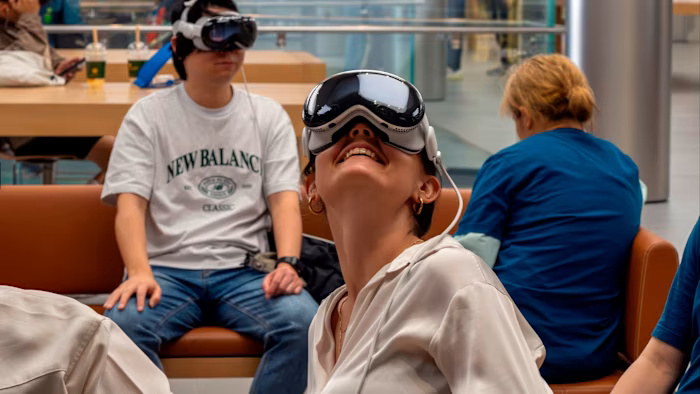
Apple has reportedly cut production of its Vision Pro headset after sales failed to meet expectations, marking a rare setback for the world’s most valuable technology company. The mixed reality device, unveiled as the future of “spatial computing,” has struggled to gain traction since its launch at a premium price point.
Read More: One year later, vision pro users call $3,500 headset a costly Mistake
Market intelligence firm Sensor Tower reported that Apple reduced marketing spend for the $3,499 headset by more than 95% last year, signaling waning confidence in near-term demand. While Apple has not disclosed official sales figures, industry analysts say the slowdown has been significant across key markets.
According to estimates from the International Data Corporation (IDC), Apple sold around 45,000 Vision Pro units in the final quarter of 2025, a modest figure compared with the company’s typical product launches. IDC also said Apple’s manufacturing partner Luxshare halted production at the beginning of 2026, reflecting lower-than-expected orders.
The Vision Pro has so far been released in only 13 countries, limiting its reach. Analysts say the combination of a high price, bulky design, and limited everyday use cases has discouraged mainstream consumers from adopting the device.
Reviews of the headset have been mixed, with critics highlighting its weight, comfort issues, and relatively small ecosystem of apps. Morgan Stanley analyst Erik Woodring noted that the cost, form factor, and lack of native VisionOS applications were key factors preventing mass appeal, with only about 3,000 apps currently available.
Apple’s challenges with Vision Pro have drawn comparisons to Google Glass, which failed to achieve widespread acceptance more than a decade ago. Concerns over social acceptability and safety also surfaced after videos showed users wearing the headset in inappropriate settings, including while driving.
Read More: Apple buys AR headset startup Mira
Industry attention is now shifting toward Apple’s broader strategy, with reports suggesting the company has paused development of a next-generation high-end headset. Instead, Apple is said to be prioritizing AI-powered wearable devices, following a similar shift by Meta, which dominates the VR market with lower-cost headsets.
Despite the slowdown, analysts believe Apple could revisit the category with a more affordable headset in the future, keeping its long-term ambitions in mixed reality alive.