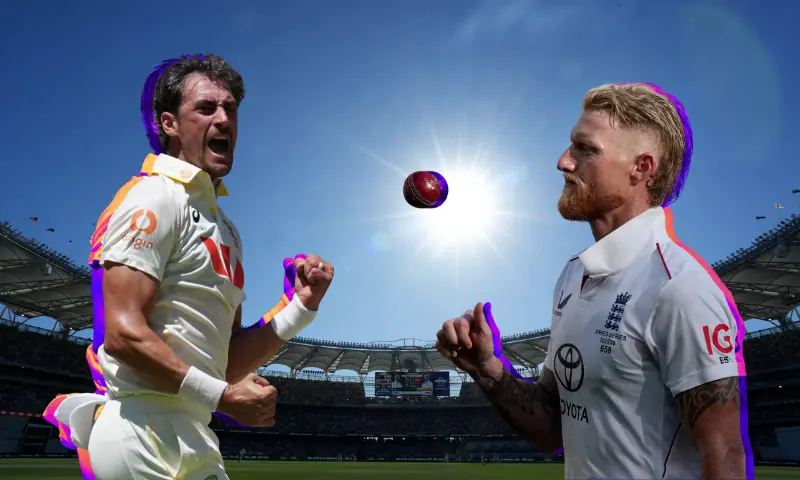
What was meant to be a five-day Test match between Australia and England instead ended in just two days, leaving fans stunned, disheartened, and searching for meaning. For many, the collapse felt like the loss of a ritual — a Test match that never truly began.
Read More: Pakistan vs South Africa two-match Test series starts today
The abrupt finish sparked reflection among followers from Karachi to Oxford who struggled to process the disappointment. One such fan turned to writing as a form of therapy, using the remaining “lost” days of the match to explore the emotions behind the collapse.
Conversations with friends across the world revealed a shared grief, particularly among those who hold Test cricket as a slow, unfolding drama that mirrors human endurance. The unspent anticipation only deepened the collective frustration.
The unraveling began late on Friday when early optimism turned to disbelief. England, dominant in the first session, unravelled quickly after Steve Smith’s pivotal catch. Their approach, bold on day one, became reckless on day two, marked by impatience and misjudgment on a difficult Perth pitch. Their bowlers pushed too hard, and their batters misread the moment.
For fans, the loss felt symbolic of a broader crisis facing Test cricket — an era shaped by T20 leagues, commercial pressure, and shrinking global attention spans. Many fear that young cricketers now chase quick fame instead of long-form mastery. As one observer put it: “T20 is TikTok; Test cricket is Tarantino.”
The spotlight eventually turned to England captain Ben Stokes, whose vision to reinvent Test cricket has thrilled audiences in recent years. But the Perth defeat highlighted the missing ingredient in his bold experiment: longevity. Analysts argue that sustaining brilliance across five days remains England’s biggest challenge.
Read More: ICC may cut test matches to four days for smaller nations: British media
Yet, despite the heartbreak, faith remains. Supporters believe England’s project is far from over — that this Test was not a dead end but a necessary failure in the evolution of modern cricket’s most ambitious redesign.