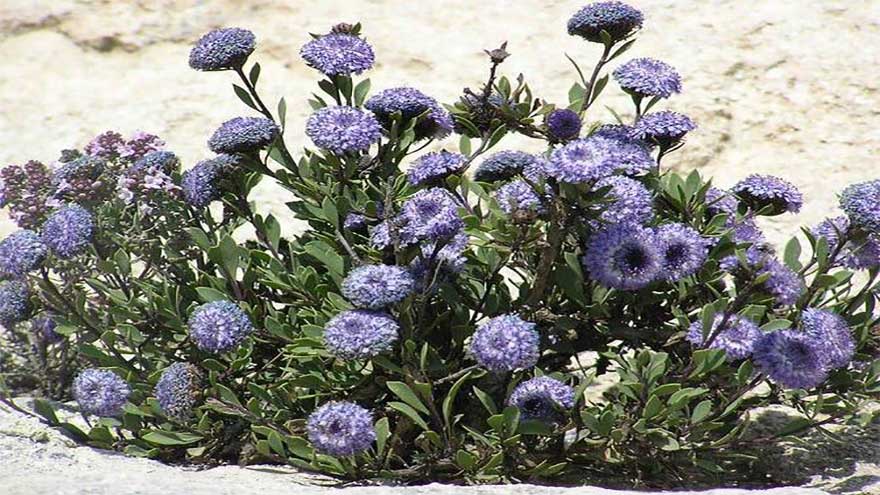
RIYADH – Globularia alypum, a delicate blue-flowered shrub once common across parts of Saudi Arabia, has been recently rediscovered in the Kingdom’s northwest, offering a glimmer of hope for the critically endangered species. Known locally as “Zuraiqa” or “Aynon Kuhli,” the perennial shrub faces threats from overgrazing, land degradation, and neglect, according to environmental consultant Oubaid Alouni.
Typically found in mountainous or rocky regions, Globularia alypum grows between 30 and 80 centimeters tall, forming dense, woody bushes adorned with pale blue to deep violet flowers that bloom from October through June. Its perennial nature allows it to adapt to harsh conditions, with seeds sprouting again in milder winters.
Alouni highlighted the plant’s medicinal value, noting its use as an anti-inflammatory, antidiabetic, anti-rheumatic, and hepatoprotective agent. Scientific studies have confirmed its potential to lower blood glucose levels and improve insulin sensitivity, thanks to its rich polyphenolic content.
To safeguard the species, Alouni recommends replanting it in its natural habitats, promoting home cultivation, raising public awareness, and preserving its seeds in the Ministry of Agriculture’s seed bank. He emphasized the importance of documenting the species within Saudi Arabia’s flora to ensure its conservation and maintain the Kingdom’s botanical heritage.
The rediscovery of Globularia alypum underscores the delicate balance between ecological preservation and human activity, highlighting the urgent need for conservation initiatives to protect the Kingdom’s rare and valuable native plants.