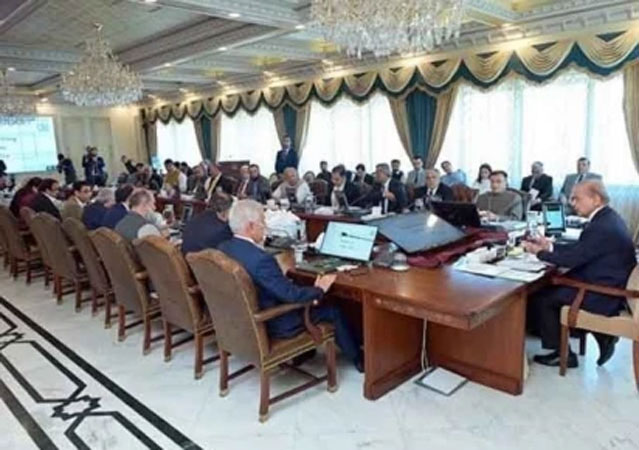
 The federal cabinet meeting scheduled for Friday to approve the draft of the 27th Constitutional Amendment was postponed after the Pakistan Peoples Party (PPP) – a key coalition partner initially rejected major proposals included in the amendment package.
However, the PPP has now given approval to major clauses mentioned in the initial draft after the party held another CEC meeting on Friday.
The meeting, which was to be chaired by Prime Minister Shehbaz Sharif, was summoned to give final approval to the draft of the amendment before tabling it in Parliament. However, due to the PPP’s objections, the 27th Constitutional Amendment Bill was not presented in the Senate on Friday.
The government had planned to table the draft bill in the Senate and refer it to the Senate Committee for review on the same day. However, the postponement of the cabinet meeting has now delayed the entire legislative process.
Officials confirmed that the cabinet meeting will be rescheduled after Prime Minister Shehbaz Sharif’s two-day official visit to Azerbaijan, following which the draft amendment will be taken up again for approval.
The Senate session convened on Friday did not include the 27th Amendment Bill on its formal agenda.
Government sources claim that the numbers in the Senate are complete, even without the support of Jamiat Ulema-e-Islam (JUI-F). In the 96-member Senate, the ruling coalition is confident of having at least 65 votes in favor of the amendment.
The government is also expected to receive support from the Awami National Party (ANP), which has three senators, as well as from independent Senator Naseema Ehsan, who has reportedly assured her backing.
In addition, six other independent senators are likely to vote in favor of the 27th Amendment. Meanwhile, efforts are still underway to win over JUI-F senators to further strengthen the government’s position in the upper house.
Under Article 239 of the Constitution of Pakistan, a rigorous constitutional process must be followed for the approval of any amendment. From the Senate, the draft is to be referred to the relevant standing committee, which will then pass it on to the Parliament’s joint standing committee for final approval.