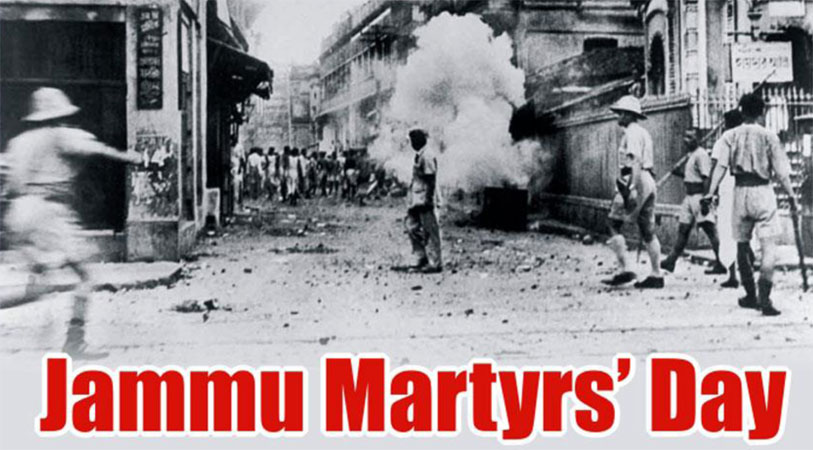
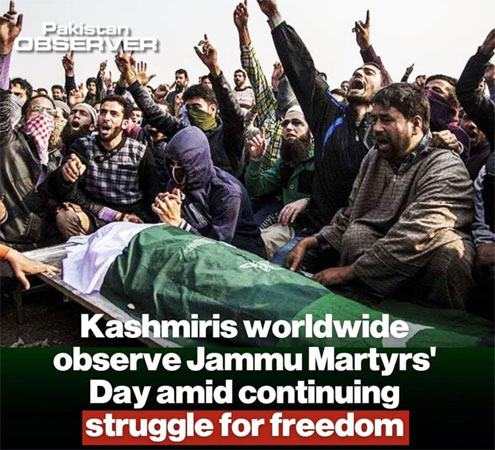
 The world remembers the Holocaust as one of history’s darkest chapters! Every nation pledged “Never Again,” museums immortalize its victims, and global leaders pause to mourn its horror. Yet, hidden beneath the shadows of South Asian history lies another genocide, one that claimed more than a quarter of a million lives in just two months and the world chose silence. In October and November 1947, the plains of Jammu became the killing fields of a forgotten holocaust. Today, as Kashmiris across the world observe 6 November which is etched in history as Jammu Martyrs’ Day, they do so not only to recall the massacre of 1947 but to remind the world of a tragedy long buried under diplomatic indifference and political deceit. The memories of that November remain a haunting symbol of partition’s betrayal and the unending denial of justice to the people of Jammu and Kashmir.
The Prequel to a Tragedy
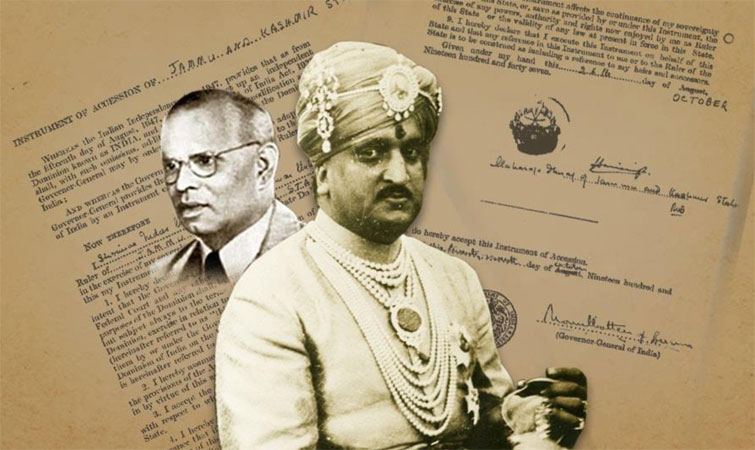
When British India was partitioned in August 1947, princely states were given the right to accede to either Pakistan or India based on geographic contiguity and the demographic will of their people. Jammu and Kashmir, a Muslim-majority state ruled by the Hindu Dogra Maharaja Hari Singh, stood at the heart of this dilemma. While the population overwhelmingly favored accession to Pakistan, Hari Singh hesitated while dreaming of retaining his independence under Dogra rule.
This indecision, coupled with deep-rooted communal bias, sowed the seeds of tragedy. The Maharaja’s administration began disarming Muslim soldiers, purging them from the Dogra army, and empowering Hindu and Sikh militias from the neighboring princely states of Patiala and Kapurthala. In parallel, the Rashtriya Swayamsevak Sangh (RSS) was mobilized across Jammu to execute a chilling strategy: the ethnic cleansing of Muslims to alter the region’s demography.
October 27: The Black Day
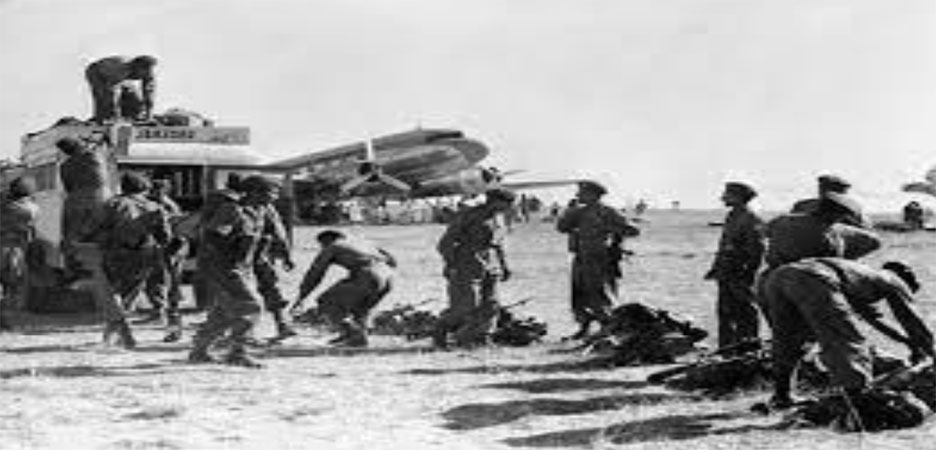
The tragedy deepened when India airlifted troops to Srinagar following Hari Singh’s controversial and still disputed Instrument of Accession. For Kashmiris, that date became the “Black Day” -27 October 1947.
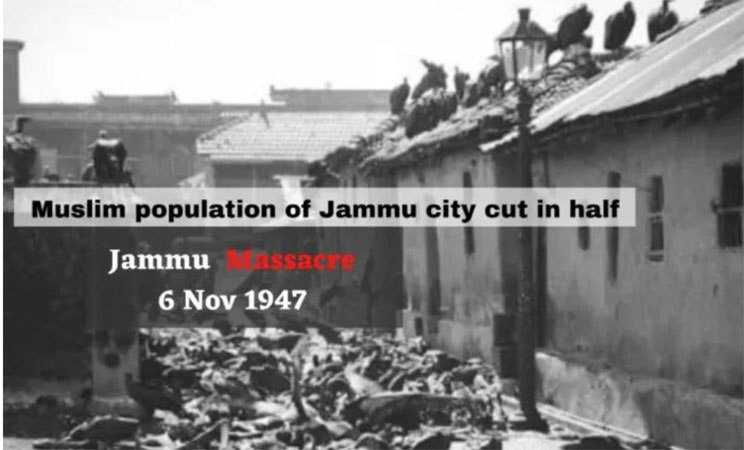
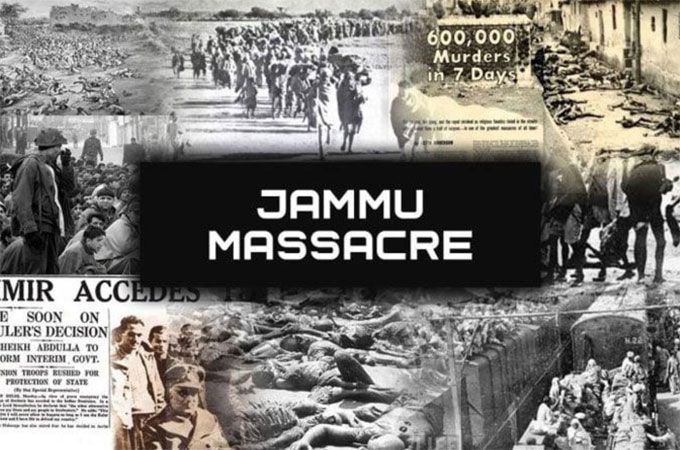
But even before Indian soldiers landed in the valley, massacres had begun in Jammu, carried out under the patronage of the Dogra state and its communal allies. The Times of London, in its 10 August 1948 report, wrote that “237,000 Muslims were systematically exterminated (unless they escaped to Pakistan along the border) by Hindu Dogra forces.” Later estimates placed the number even higher, at over 260,000 lives lost between October and November 1947.
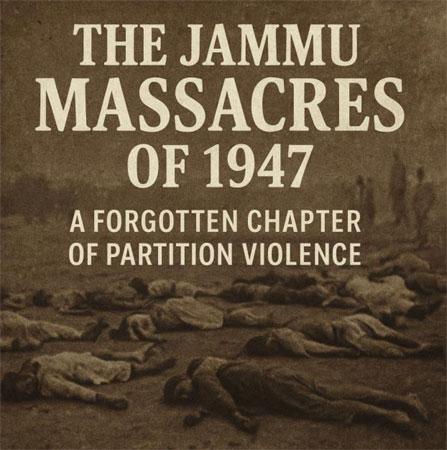
Ian Stephens wrote an editorial in “The Statesman” in 1948 (Calcutta) and claimed that around 500,000 Muslims had been butchered in the Jammu. In a chilling parallel, historians have often compared the Jammu massacre to the Holocaust – pointing out that while the Nazi genocide spanned years, the Jammu killings unfolded in mere weeks. Truckloads of Muslim families, lured by false assurances of safe passage to Pakistan, were ambushed and slaughtered on the roads out of Jammu.
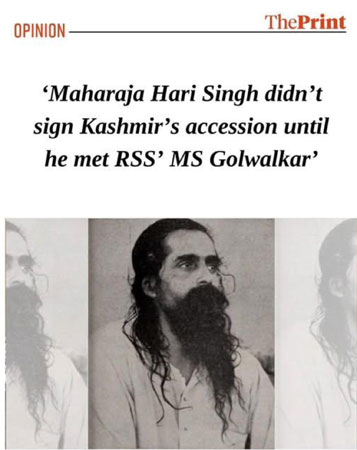
The Orchestrators: Dogra Rule and RSS Extremism
The genocide bore all the hallmarks of a state sponsored campaign.
Testimonies collected by the United Nations Commission for India and Pakistan (UNCIP) in 1949 included the accounts of Maharaja Hari Singh himself ordering that “Muslims were to be exterminated,” and personally witnessed the ruler shoot civilians in Bhimber. Noted Kashmiri Pandit journalist and political activist Ved Bhasin (1929-2015) later described what he saw as a young man in Jammu:
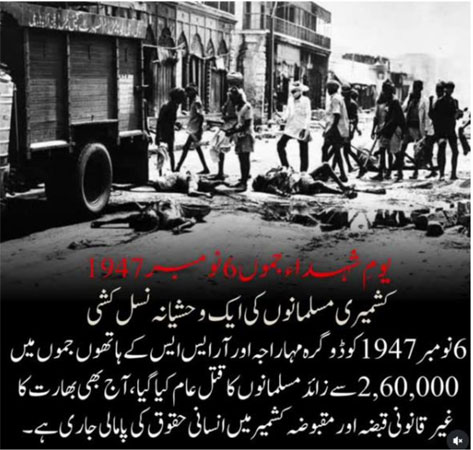
“There was large-scale killing of Muslims in Udhampur district, particularly in proper Udhampur, Chenani, Ramnagar, and Reasi areas. Even in Bhaderwah, a large number of Muslims were the victims of communal marauders. It was a planned genocide by RSS activists who were joined by Sikhs and enjoyed full protection and patronage of the Dogra Maharaja administration.”
On 4 November 1947, India’s Home Minister Sardar Vallabhbhai Patel, accompanied by Sardar Baldev Singh and the Maharaja of Patiala, arrived in Jammu. The following day, Patel publicly announced that Muslims wishing to migrate to Pakistan should gather in the local police lines for their “safe transfer.” Trusting this assurance, thousands of Muslim families – men, women, children, and the elderly – assembled with the little they could carry. On the morning of 6 November, long convoys of hundreds of trucks and lorries began moving toward the Sialkot border under the apparent supervision of Dogra troops. Yet, just a few miles outside Jammu city, those convoys were intercepted and surrounded by armed RSS volunteers, Sikh militias, and Dogra soldiers.
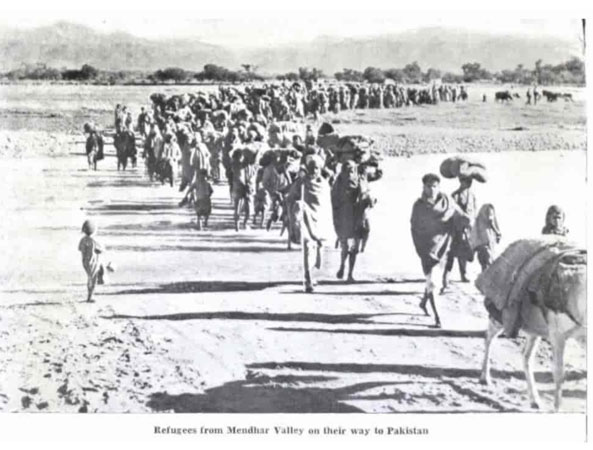
What followed was a scene of unspeakable horror – mass shootings, women assaulted, infants slaughtered, and entire families wiped out. Survivors who managed to flee across the border into Pakistan’s Punjab carried stories of betrayal and butchery that would haunt generations. The entire operation was carried out under official coordination, designed to eliminate the Muslim population from Jammu once and for all.
Even Mahatma Gandhi, in his remarks recorded on 25 December 1947 (Volume 90, Collected Works of Mahatma Gandhi), lamented:
“The Hindus and Sikhs of Jammu and those who had gone there from outside killed Muslims. The Maharaja of Kashmir is responsible for what is happening there. Muslim women have been dishonored.”
The Dogra regime’s complicity was further underlined by Jawaharlal Nehru’s correspondence with Sardar Vallabhbhai Patel in April 1949, where he acknowledged intelligence reports of Hindu agitation in Jammu which was rooted in demographic manipulation through ethnic cleansing. Despite such acknowledgements, the massacre of Jammu’s Muslims never received global recognition – buried beneath the politics of partition and the competing narratives of nationalism.
Demographic Engineering and Displacement
Before 1947, Muslims made up around 61 percent of Jammu’s population. By the end of that year, they had been reduced to a minority. Over half a million survivors fled across the newly drawn border into Pakistan’s Punjab and Azad Kashmir, forming the first wave of Kashmiri refugees.
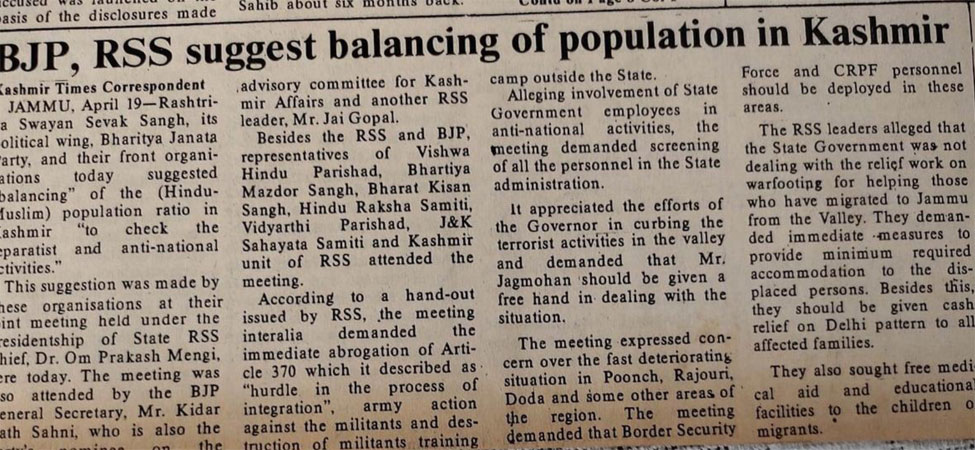
Behind the carnage lay a cold political calculus: by eliminating Muslim presence in Jammu, the Dogra regime aimed to tip the population balance in favor of India during any future plebiscite. What unfolded was not spontaneous communal violence but an organized attempt to rewrite the demographic character of the region – a tactic that continues to echo in Indian Illegally Occupied Kashmir today.
From Hari Singh to Narendra Modi
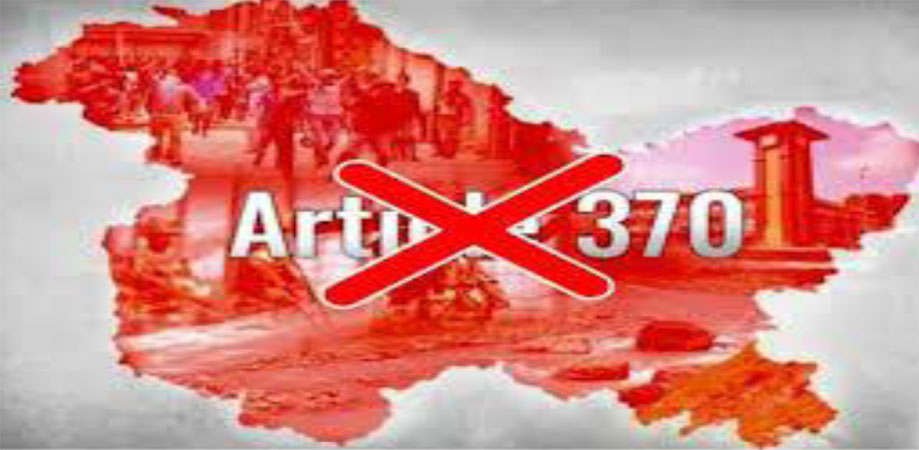
Seven decades later, the ideological heirs of that project – the RSS and its political arm, the Bharatiya Janata Party (BJP) – have reactivated the same playbook under a modern guise. On 5 August 2019, the Modi government abrogated Articles 370 and 35A of the Indian Constitution, stripping Jammu and Kashmir of its semi-autonomous status and opening the region to settlement by non-Kashmiris.
This unilateral move dismantled the legal safeguards protecting Kashmir’s land and identity. Since then, India has pursued a policy of “demographic restructuring” – granting domicile rights to hundreds of thousands of outsiders, altering property laws, and approving urban development plans like the Srinagar Master Plan 2035, which local observers fear will permanently dilute the Muslim-majority character of the region.
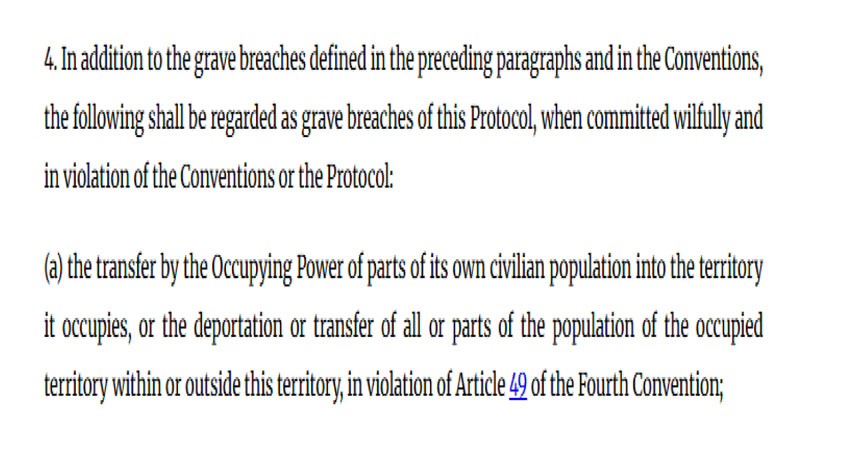
Human rights organizations and legal experts have condemned these measures as violations of international law. The 1977 Additional Protocol I to the Geneva Conventions, Article 85(4)(a), explicitly defines the transfer of an occupier’s population into occupied territory as a “grave breach.”
Yet, India continues to maintain nearly one million troops in IIOJK, making it the most militarized zone in the world – where reports of enforced disappearances, sexual violence, and extrajudicial killings remain rampant.
Renewal of Resolve
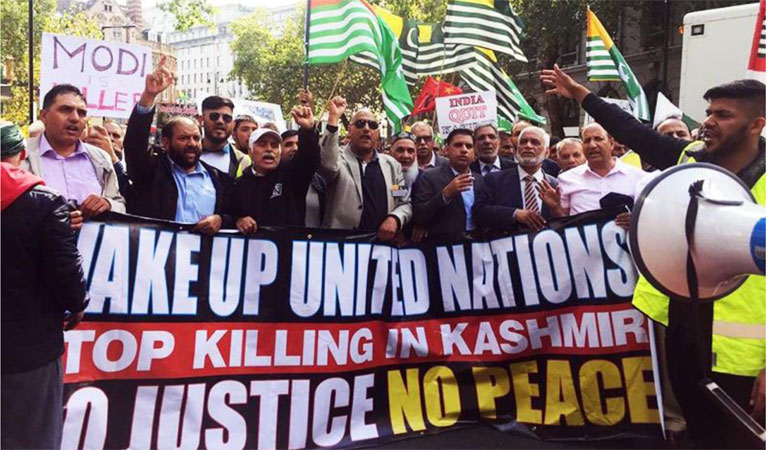
The Jammu massacre of 1947 did not merely annihilate lives – it ignited a resistance that endures. For many Kashmiris, the blood spilled in Jammu became the seed of their freedom movement. The slogans echoing through the valley today – calling for justice, dignity, and self-determination – trace their origins to that dark November. Each year, Kashmiris commemorate Jammu Martyrs’ Day not only as a memorial of loss but as a renewal of resolve. The day symbolizes a collective vow that the sacrifices of those massacred in 1947 will not be forgotten – nor will the demand for self determination be silenced.

Epilogue
As international institutions commemorate tragedies in Europe and the Middle East, the question persists: Why does the world ignore Jammu? The 1947 genocide was not an isolated incident – it was the foundation of a continuing policy of erasure, one that resurfaced in 2019 under the banner of “integration.” For the families of Jammu’s martyrs, justice remains deferred. For the people of Indian Illegally Occupied Jammu and Kashmir (IIOJK), the struggle continues under siege.
The United Nations and human rights organizations must act beyond rhetoric – by initiating an independent investigation, holding India accountable for demographic engineering, and restoring the right of Kashmiris to decide their future freely. The story of Jammu’s martyrs is not only one of grief but of resilience. It reminds the world that freedom is not born in comfort but forged in sacrifice.