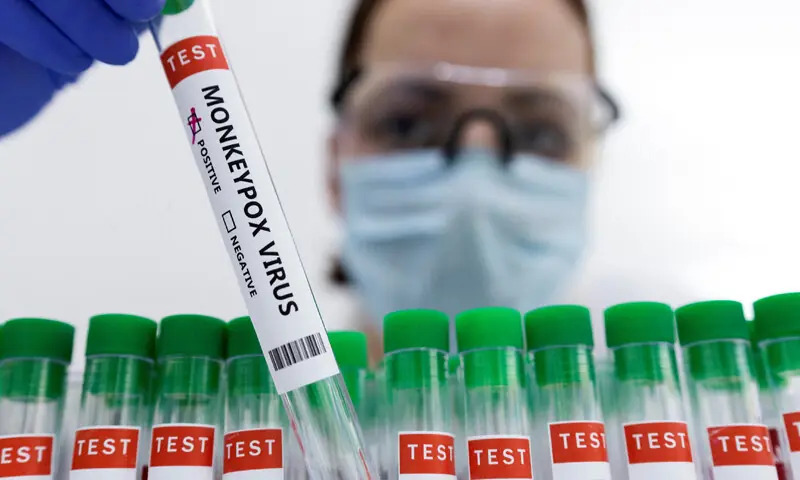
A 14-year-old boy from Mirpurkhas was admitted to Karachi’s Sindh Infectious Diseases Hospital after showing suspected monkeypox symptoms. He had recently returned from Saudi Arabia and suffered from high fever and skin lesions. Doctors quickly transferred him to a specialized ward for observation and treatment. Authorities are closely monitoring his condition.
This year, Pakistan reported its first monkeypox case in January in Peshawar. A 35-year-old traveler from Dubai tested positive. Another case emerged on August 15 when a 42-year-old man from Attock returned from Dubai with confirmed symptoms. Both patients were isolated and treated under strict medical supervision.
The World Health Organization (WHO) approved an emergency-use monkeypox vaccine last November. The LC16m8 vaccine, developed in Japan, is safe for people over one year old. It requires a single dose, but doctors may recommend a second dose if needed. Experts say the vaccine also helps people with weakened immune systems, including HIV patients.
Monkeypox is a rare viral disease that originally spread among monkeys in Africa. Humans can contract it through close contact with infected people or animals. Symptoms include fever, headache, body aches, swollen lymph nodes, and skin rashes that start on the face and spread to the body. The illness usually lasts two to four weeks.
Health experts stress that monkeypox spreads slower than COVID-19 and mainly through close or sexual contact. They advise social distancing, hygiene, and careful monitoring of symptoms. While cases outside Africa are rare, global travel has increased public concern. Authorities urge people to stay alert but avoid panic.