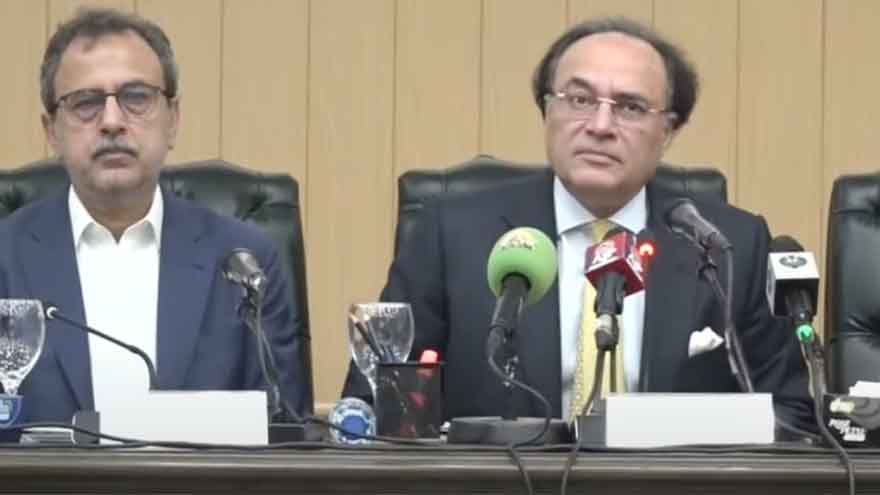
ISLAMABAD – Federal Finance Minister Muhammad Aurangzeb on Monday said Pakistan’s economy is stabilizing and reforms across major sectors are paving the way for sustainable growth. He emphasized that global rating agencies have recognized the country’s economic stabilization, adding that IMF staff-level agreements validate this progress.
Aurangzeb noted that policy rate reductions have positively impacted the economy, while reforms in taxation, pensions, and right-sizing of institutions are underway to ensure long-term fiscal discipline.
Read More: How Pakistan trapped itself in an economic deadlock
FBR Chairman Rashid Mahmood Langrial said tax collections have improved, with the tax-to-GDP ratio rising by 1.5 percent and individual tax filings increasing from 4.9 million to 5.9 million. He added that no new taxes are required as current reforms take time to yield results.
Energy Minister Awais Leghari announced a Rs 1,200 billion debt agreement aimed at reducing circular debt by Rs 700 billion in a year. He highlighted reductions in power tariffs, the introduction of prepaid metering, and automation to save billions of rupees.
Read More: Pakistan’s economic recovery gains pace, inflation under control
Privatization Advisor Muhammad Ali stated that transparency and accountability are top priorities in the privatization process, citing ongoing sales of banks and the upcoming privatization of PIA and DISCOs. Meanwhile, Prime Minister’s Coordinator for Right-Sizing Salman Ahmed said 20 ministries have been restructured, 54,000 vacant posts abolished, and loss-making entities like PASSCO are being closed to reduce fiscal burden.