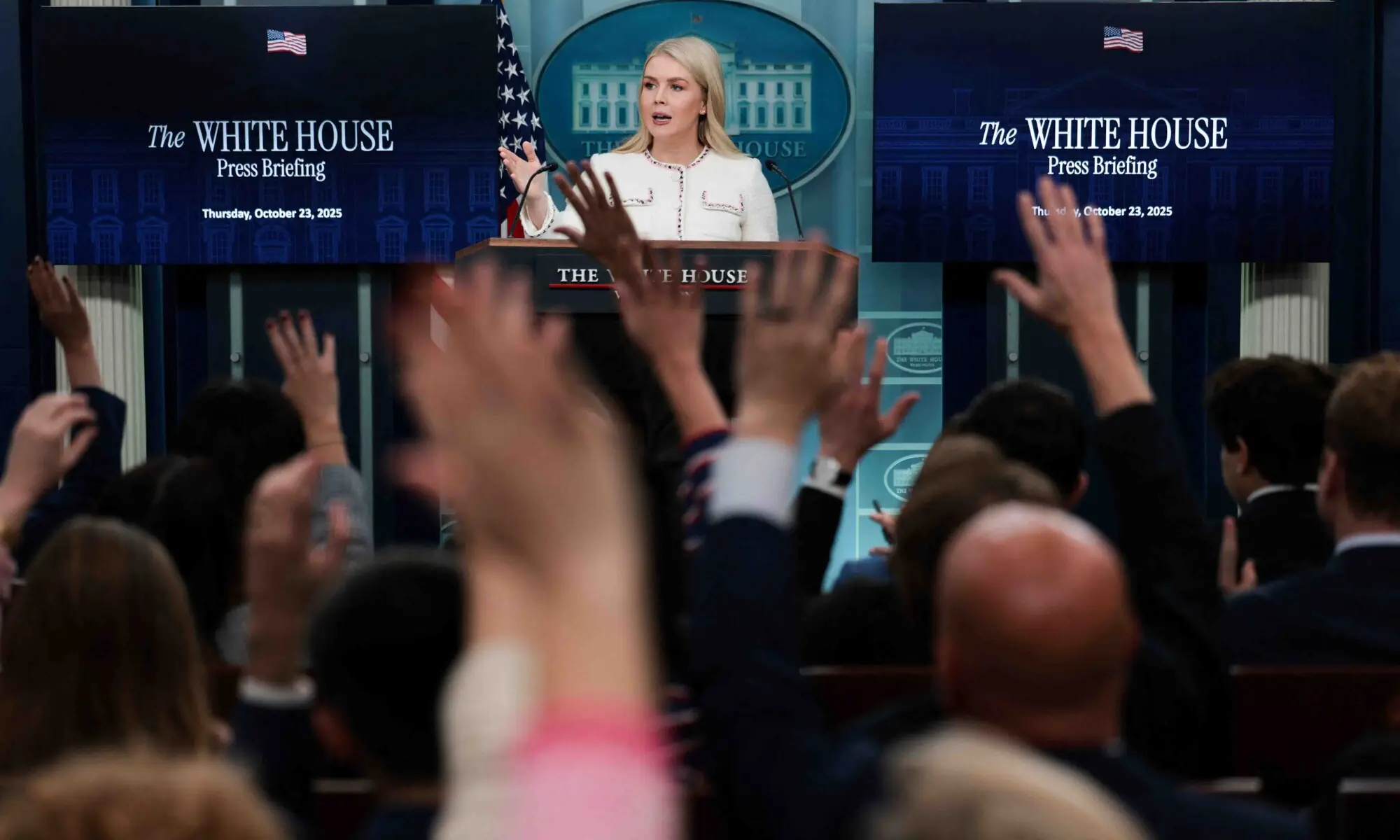
WASHINGTON: The Trump administration on Friday imposed new restrictions on journalists, banning them from entering a key section of the White House press office without an appointment — a move officials said was aimed at protecting “sensitive material.”
Under the new policy, reporters will no longer have free access to the Upper Press area of the West Wing — home to Press Secretary Karoline Leavitt’s office — unless prior approval is granted. The restriction was outlined in a memo issued by the White House National Security Council (NSC).
Read More: Trump orders states to form new National Guard rapid-response forces
The memo stated that the measure was necessary to “protect sensitive material from unauthorized disclosure.” It was addressed to Leavitt and White House Communications Director Steven Cheung, who defended the move by alleging that some journalists had been “ambushing” cabinet members and secretly recording video and audio inside the area.
Cheung claimed on X (formerly Twitter) that reporters had “eavesdropped on private meetings” and “taken pictures of sensitive information,” though he provided no evidence to support these assertions.
Some reporters have been caught secretly recording video and audio of our offices, along with pictures of sensitive info, without permission
Some reporters have wandered into restricted areas (our offices are feet away from the Oval Office)
Some reporters have been caught… https://t.co/tosUqrcKGt
— Steven Cheung (@StevenCheung47) October 31, 2025
The new rule marks another step in the Trump administration’s tightening of press access. Major outlets, including AFP, have already refused to comply with new Pentagon press regulations announced earlier this month. Reporters will still be allowed in the Lower Press section near the briefing room, where junior staffers work.
Read More: Trump administration tightens social media vetting for foreign students
US media outlets noted that a similar access restriction was briefly introduced under Bill Clinton’s administration but later revoked. Since returning to power in January, President Trump has significantly reshaped White House media protocols, giving greater prominence to right-wing outlets while limiting access for mainstream organizations such as AP, which was recently barred from areas where Trump delivers speeches after it refused to recognize his order renaming the Gulf of Mexico as the “Gulf of America.”