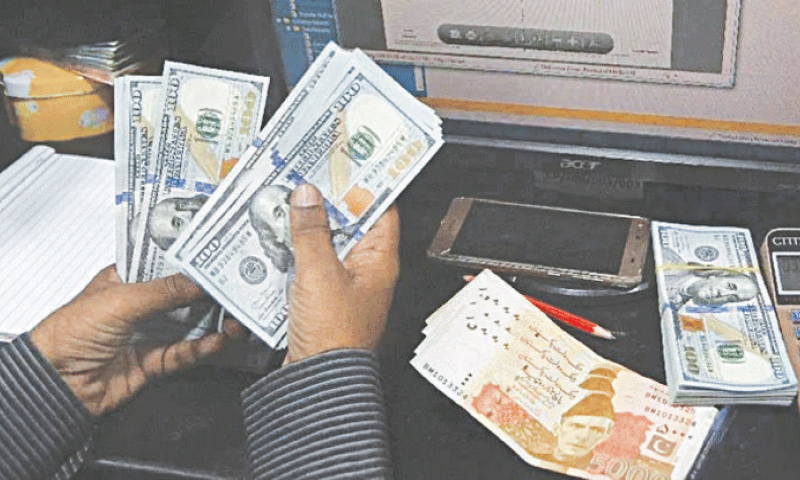
KARACHI: Exporters are increasingly selling dollars in the forward market to hedge against risks tied to Pakistan’s managed exchange rate, currency dealers said on Friday.
Despite a mild appreciation of the rupee against the US dollar, uncertainty over the exchange rate has prompted exporters to lock in future rates, fearing volatility once existing controls are eased.
Dealers in the inter-bank market warned that the rupee-dollar parity could shift sharply if exchange rate management relaxes. The looming International Monetary Fund (IMF) review — expected to scrutinise Pakistan’s currency control measures — has also added to market anxiety.
According to the Exchange Companies Association of Pakistan, the rupee has shown minor daily gains, typically between one and three paisas. However, open-market traders have witnessed a sharp 50–60pc drop in cash dollar sales, signalling reduced inflows of physical greenbacks.
Dollar inflows shrink
Major open-market dealers said dollar inflows have “nearly dried up.” Overseas Pakistanis, who previously sold dollars through exchange companies, are now holding on to their foreign currency — a trend being described as both new and worrying. Some traders speculate that cash may be shifting towards informal or illegal channels.
Read More: UK Health Row Erupts Over NHS Guidance on First-Cousin Marriages
Authorities remain vigilant. The State Bank of Pakistan (SBP) and federal agencies continue to monitor transactions closely to prevent speculative trading or currency hoarding.
Dealers added that sales of dollars by exchange companies to banks have also declined significantly, while inflows through authorised money changers have dropped. However, remittance inflows via formal banking channels remain stable compared to the same period last fiscal year.
Stability and speculation
Bankers stressed that the fall in open-market dollar sales is not linked to changes in government incentives for banks or exchange firms. Official SBP data shows no dip in remittances during July and August.
Although the government has tried to push the rupee stronger through administrative actions, results have been mixed. Following anti-smuggling crackdowns earlier in FY25, the dollar weakened temporarily against the rupee in both inter-bank and open markets.
Analysts say currency stability has been supported by higher foreign exchange reserves, steady remittance inflows, and improved diplomatic engagement with the United States and China.
However, exporters’ growing use of forward contracts suggests deep-seated concerns about the sustainability of current exchange rate management.
The SBP has maintained market liquidity instead of suppressing it to artificially lower the rupee-dollar rate. Still, dealers warn that any renewed central bank intervention or dollar buying could trigger another wave of hedging in the forward market.